
7 The sons of Jacob had come in from the field as soon as they heard of it, and the men were indignant and very angry, because he had done an outrageous thing in Israel by lying with Jacob’s daughter, for such a thing must not be done.
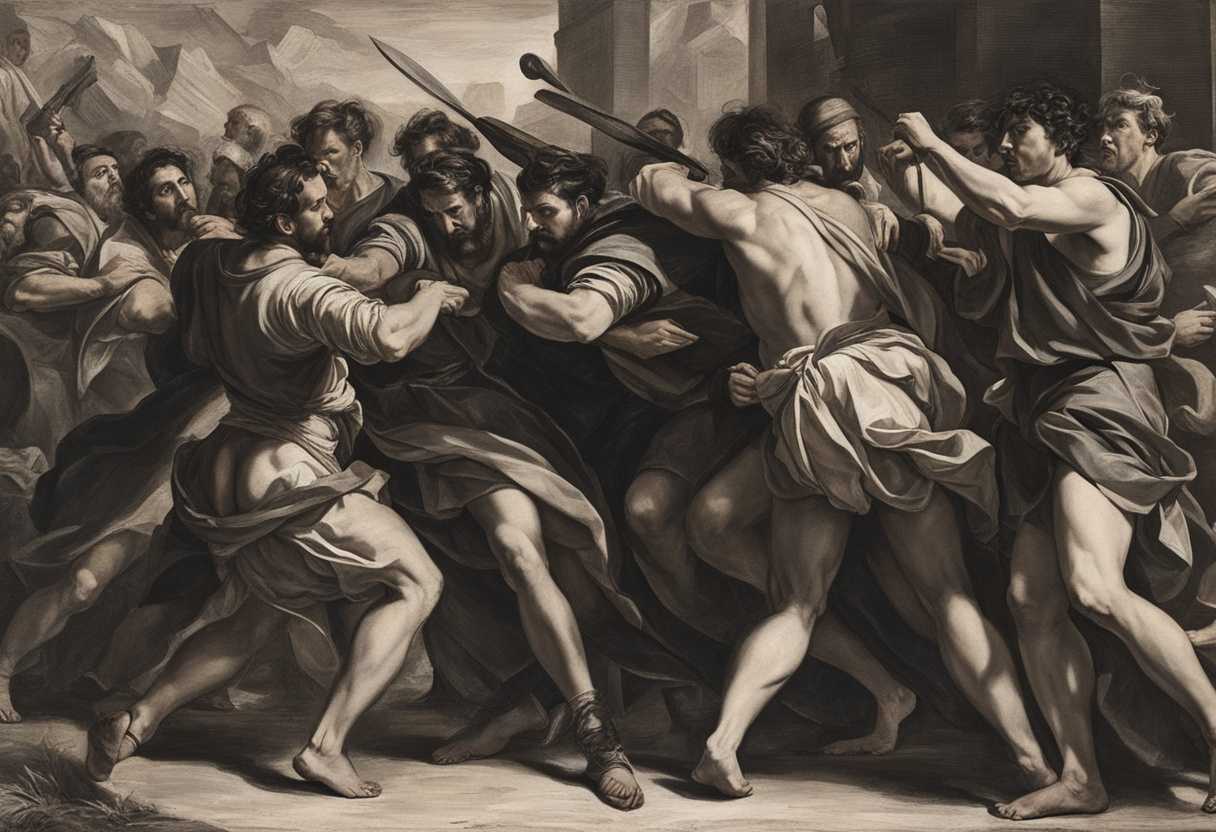
Setting the Scene for Genesis 34:7
In Genesis chapter 34, we find the story of Dinah, the daughter of Jacob and Leah. The scene unfolds in the city of Shechem, where Dinah goes out to visit the daughters of the land. While she is there, Shechem, the son of Hamor the Hivite, sees her, takes her, and defiles her. Shechem then speaks to his father, Hamor, about marrying Dinah.
The scene is tense as Jacob’s sons, Simeon and Levi, hear about what happened to their sister. They are filled with anger and grief over the violation of their sister’s honor. Jacob is also present, grappling with the situation and trying to navigate the delicate balance of seeking justice for his daughter while also considering the potential alliances and consequences of their actions in the land.
The surroundings are likely a mix of the bustling city of Shechem, with its inhabitants going about their daily lives, and the tense atmosphere within Jacob’s camp as they discuss how to respond to the dishonor brought upon their family. Emotions are running high as they weigh their options and consider the implications of their next steps in this troubling situation.
What is Genesis 34:7 about?
This verse from the Bible tells a troubling story of a young woman named Dinah who experiences a great injustice at the hands of Shechem. It highlights the vulnerability of women in a patriarchal society and the devastating consequences of unchecked power dynamics. Readers are invited to reflect on issues of consent, agency, and the importance of standing up against oppression and abuse.
Have you ever considered the significance of this story in relation to contemporary issues of gender-based violence and the rights of women? How can we learn from Dinah’s story to advocate for justice and equality in our own communities? This verse challenges us to examine our own attitudes towards gender, power, and respect, and to actively work towards creating a world where everyone is treated with dignity and compassion.
Understanding what Genesis 34:7 really means
To provide a meaningful commentary on Genesis 34:7, it’s crucial to break it down into structural steps: first, understanding and interpreting the verse, referencing other Scriptures, explaining its relevance today, and finally providing an illustrative anecdote. Let’s follow this structure meticulously to gain a well-rounded understanding.
Context and Interpretation
Genesis 34:7 describes a moment of intense emotion and moral outrage among Jacob’s sons when they discover the violation of their sister Dinah. This reaction underscores themes of family honor and justice. The brothers’ anger and grief are not just personal but also cultural, reflecting the values of their time. The phrase “were grieved and very wroth” captures their profound pain and fury.
Other Biblical References
Exploring other parts of the Bible can shed more light on this verse. For example, Deuteronomy 22:25-27 also addresses the seriousness of sexual violations, echoing the same sense of injustice. Likewise, 2 Samuel 13:21-22 recounts how King David reacts to his daughter Tamar’s violation with anger and silence, leaving unresolved emotions that lead to further familial strife. A pattern emerges in how violations against women evoke not only personal pain but also communal and familial outrage by comparing these passages.
Relevance Today
Today, the underlying message of Genesis 34:7 remains pertinent as societies continue to grapple with issues of sexual violence and justice. This verse challenges us to consider our responses to injustice—are we moved to compassion and action, or do we remain indifferent? The emotional turmoil and call for justice that Jacob’s sons experience remind us that those who suffer violations are not alone in their grief and that their pain should motivate us towards righteous action.
Detailed Explanations
The phrases “grieved and very wroth” illustrate layers of emotion—grief pointing to deep sorrow, and wrath denoting intense anger. Both emotions signal a disruption of peace and justice. The ‘defiling of Dinah’ is more than a physical act; it’s a profound societal and moral transgression. The word ‘defiled’ should be considered.’ It implies a desecration of something sacred, a violation of innocence and integrity, which in turn mandates a serious response.
Practical Application
Imagine a modern story: a small community learns that one of their members has been deeply wronged. Initial reactions might vary from shock to anger to a desire for justice. Similarly, the story of Dinah calls on communities to confront injustices, ensuring that victims are not left to suffer alone. Christians can advocate for justice reforms, support survivors, or simply refuse to turn a blind eye to issues around us.
Reflection and Engagement
How do we respond when we encounter injustice? Do we, like Jacob’s sons, feel a righteous anger that motivates us to action? Or do we become complacent, assuming someone else will address the issue? Reflect on how your community deals with moral outrages, and think about ways you can contribute to creating a just and compassionate environment. We can better empathize with those suffering injustice today by understanding the grief and wrath felt by Jacob’s sons. This passage pushes us to move from empathy to action, advocating for justice in meaningful, concrete ways. What will your response be when confronted with injustice?
How can we respond with wisdom in conflict?
Remaining calm and composed in times of conflict is important, not allowing emotions to control our actions. We can navigate through challenging situations with clarity and understanding by seeking wisdom and guidance. It is crucial to approach conflicts with humility and a willingness to listen to different perspectives, being open to reconciliation and finding common ground.
Striving for peace and seeking to understand the root of the conflict can lead to more sustainable resolutions. Instead of reacting impulsively, take the time to reflect on the situation and consider the consequences of your actions. Responding with wisdom involves patience, empathy, and a commitment to finding a peaceful solution that respects the dignity of all involved parties.
Application
Think about your daily grind at work and your commitments to family. Just as Jacob’s sons defended their family’s honor, you too must guard your beliefs. Embrace the wisdom in Genesis 34:7 and stand firm in your convictions. Life will test your values—will you rise to the challenge and protect what you hold dear?

Reverend Michael Johnson is an experienced Church Minister with a profound expertise in spirituality and guidance. With a serene presence and a compassionate heart, he has faithfully served his congregation for over 20 years, leading them on a spiritual journey towards inner peace and enlightenment. Reverend Johnson’s extensive knowledge of religious philosophies and profound understanding of human nature have made him a trusted confidant and mentor to many, as he seamlessly weaves his profound wisdom into life teachings. Reverend Johnson’s calming demeanor and empathetic nature continue to uplift and heal souls, nurturing a sense of unity and tranquility within his community.