
1 God said to Jacob, “Arise, go up to Bethel and dwell there. Make an altar there to the God who appeared to you when you fled from your brother Esau.”
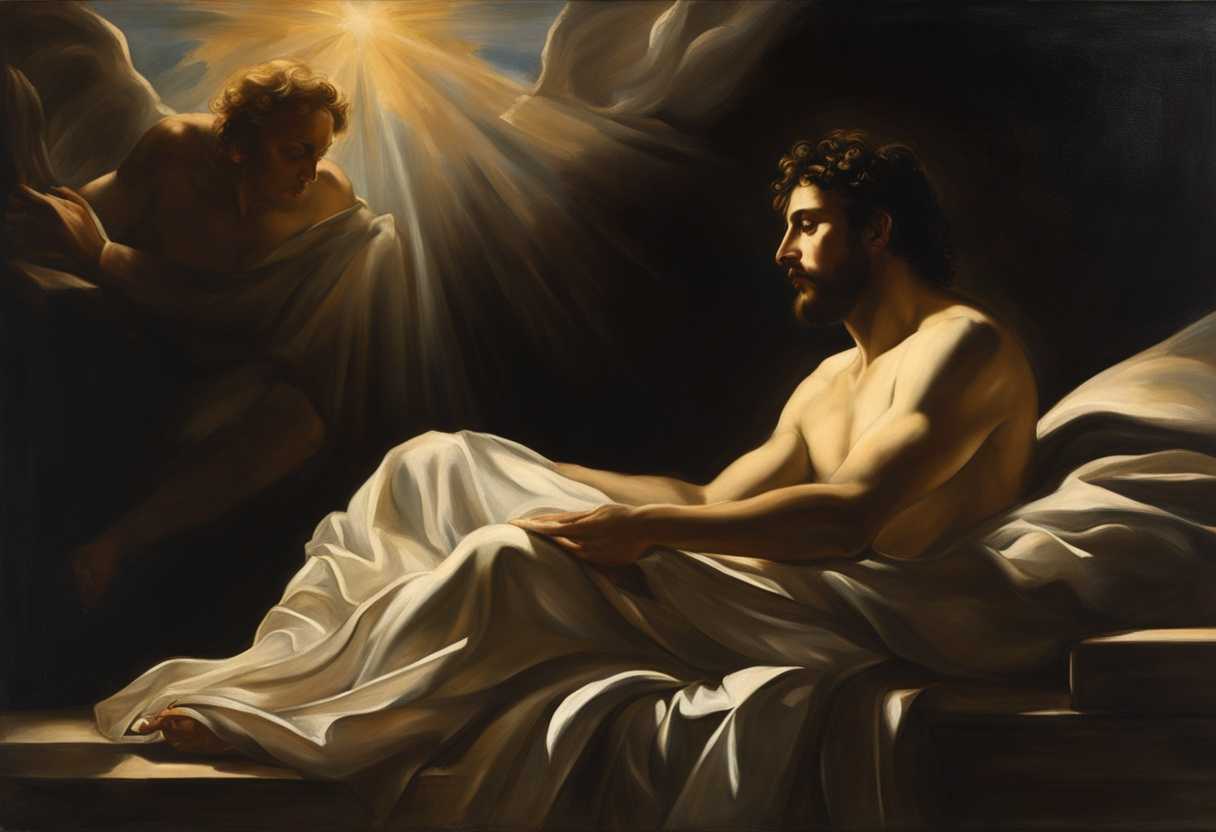
Setting the Scene for Genesis 35:1
In Genesis 35, we find Jacob and his family on a journey to Bethel. After the tumultuous events involving his daughter Dinah and the subsequent revenge taken by his sons Simeon and Levi, Jacob receives a divine command to go to Bethel and build an altar to God. The scene is set in the wilderness as Jacob, his wives Leah and Rachel, his children, and all those with him make their way to Bethel.
The group is weary from their travels, the sun beating down on them as they traverse the rugged terrain. The air is filled with a sense of anticipation and reverence as they approach the sacred place where Jacob had his dream of a ladder reaching to heaven years before. The atmosphere is charged with a mix of emotions – repentance, gratitude, and hope for the future.
As they finally arrive at Bethel, Jacob instructs his household to rid themselves of all foreign gods and purify themselves. The scene is one of solemnity and devotion as they gather stones to build an altar to the God who has been with them through all their trials and tribulations. It is a moment of spiritual renewal and recommitment to their faith as they offer sacrifices and worship the Lord in this holy place.
What is Genesis 35:1 about?
Jacob’s commitment to fulfilling his vow to God is seen in this verse. Despite facing danger and uncertainty, Jacob remains faithful to his promise to God by returning to Bethel. This act of returning to the place where he made his vow symbolizes Jacob’s growth in his faith and his understanding of the importance of keeping promises made to God. We can ask ourselves: How often do we remember the promises we have made to God in times of need or danger as we reflect on this verse? Do we remain steadfast in our faith and commitment, like Jacob did, even when faced with challenges and obstacles? Jacob’s actions remind us of the importance of honoring our vows and staying true to our beliefs, especially in times of trial and difficulty.
Let Jacob’s example inspire us to always remember our promises to God and to trust in His protection and guidance, even when the path ahead may seem uncertain. Let us follow Jacob’s example of faithfulness and dedication as we navigate our own journeys of faith.
Understanding what Genesis 35:1 really means
Commentary Structure:
1. Introduction and Context
2. Key Phrases and Their Meanings
3. Reference to Related Passages
4. Relevance to Modern Life
5. Anecdote for Illustration
6. Conclusion and Reflection
-
God instructs Jacob to arise, go to Bethel, build an altar, and dwell there in Genesis 35:1. This verse comes at a pivotal moment in Jacob’s life. He’s been through numerous challenges, including deceit, family strife, and fear of retribution. Bethel, which means “House of God,” is where Jacob previously encountered God in a dream, and it marks a place of divine revelation and promise.
-
Key Phrases and Their Meanings:
- “Arise, go up to Bethel”: This command signifies not just a physical journey, but also a spiritual ascent. It’s a call to return to a place of divine encounter and restoration.
- “Dwell there”: God asks Jacob to make a home in this sacred space, indicating a lasting commitment rather than a temporary visit.
-
“Make an altar”: Building an altar symbolizes worship and dedication to God, a tangible act of honor and remembrance.
-
Reference to Related Passages:
The theme of returning to a place of an encounter with God echoes throughout scripture. For instance, in Genesis 28:19, Jacob initially names the place Bethel after his dream of the ladder. Similarly, Psalm 46:10 advises, “Be still, and know that I am God,” emphasizing the importance of recognizing and returning to divine presence. God’s role as a refuge and guide is the focus in each instance. -
Relevance to Modern Life:
Today, people often find themselves detached from their spiritual roots amidst life’s chaos. This verse encourages us to seek out and return to our foundational places of faith and worship, much like Jacob was instructed to do. While our ‘Bethel’ may not be a physical location, it can be a state of mind or a spiritual practice that reconnects us with God. -
Sarah, a young woman overwhelmed by her hectic work schedule and personal challenges, is considered. Feeling spiritually adrift, she remembered her childhood church, a place where she once felt profound peace and connection. Sarah found renewed strength and direction, much like Jacob at Bethel, by attending a service there and engaging in prayer. Her ‘return’ was a turning point that revitalized her faith and purpose.
-
Conclusion and Reflection:
Genesis 35:1 is a clarion call to rediscover the sacred spaces in our lives where we’ve encountered God. It challenges us to identify and return to these sanctuaries, not just physically but mentally and spiritually. How can you create a ‘Bethel’ in your life today? What steps will you take to build an altar and dwell in God’s presence? Let’s consider the lasting impact of our spiritual encounters and the importance of repeatedly returning to them as we reflect on this passage. We ground ourselves in God’s promises and guidance by doing so, no matter the circumstances we face.
How can we cultivate an authentic relationship with God?
To cultivate an authentic relationship with God, we can take a cue from the verse by seeking to establish a regular and intimate connection with Him. Just as Jacob was instructed to build an altar to God at Bethel, we can create sacred spaces in our lives for prayer, worship, and reflection. We can deepen our relationship with God by setting aside time and physical reminders to commune with Him.
Furthermore, we can cultivate authenticity in our relationship with God by being honest and open with Him. Just as Jacob instructed his household to put away their foreign gods and purify themselves, we can approach God with pure hearts and genuine intentions. We can foster a transparent and genuine connection with God by confessing our sins, expressing our doubts and struggles, and seeking His guidance and healing.
Lastly, to cultivate authenticity in our relationship with God, we can prioritize obedience and commitment. Just as Jacob obeyed God’s command to go to Bethel and build an altar, we can demonstrate our love for God by obeying His word and following His ways. Through consistent obedience and a steadfast commitment to walk with God, we can grow closer to Him and experience the depth of His love and presence in our lives.
Application
Think about your spiritual journey as you would your career or family life. Just like Jacob returned to Bethel, it’s time for you to check in with your spiritual self. Prioritize your faith like you do your work deadlines or family responsibilities. Recommit to God and seek His guidance in every aspect. Are you ready to renew your faith and walk closely with the Creator?

Reverend Michael Johnson is an experienced Church Minister with a profound expertise in spirituality and guidance. With a serene presence and a compassionate heart, he has faithfully served his congregation for over 20 years, leading them on a spiritual journey towards inner peace and enlightenment. Reverend Johnson’s extensive knowledge of religious philosophies and profound understanding of human nature have made him a trusted confidant and mentor to many, as he seamlessly weaves his profound wisdom into life teachings. Reverend Johnson’s calming demeanor and empathetic nature continue to uplift and heal souls, nurturing a sense of unity and tranquility within his community.