
Genesis 35:22-26 is about the genealogy of the twelve sons of Jacob, symbolizing the formation and foundation of the twelve tribes of Israel.
22 While Israel lived in that land, Reuben went and lay with Bilhah his father’s concubine. And Israel heard of it.
23 The sons of Leah: Reuben (Jacob’s firstborn), Simeon, Levi, Judah, Issachar, and Zebulun.
24 the sons of Rachel: Joseph and Benjamin.
25 The sons of Bilhah, Rachel’s servant, were Dan and Naphtali.
26 The sons of Zilpah, Leah’s maidservant: Gad and Asher.
Setting the Scene for Genesis 35:22-26
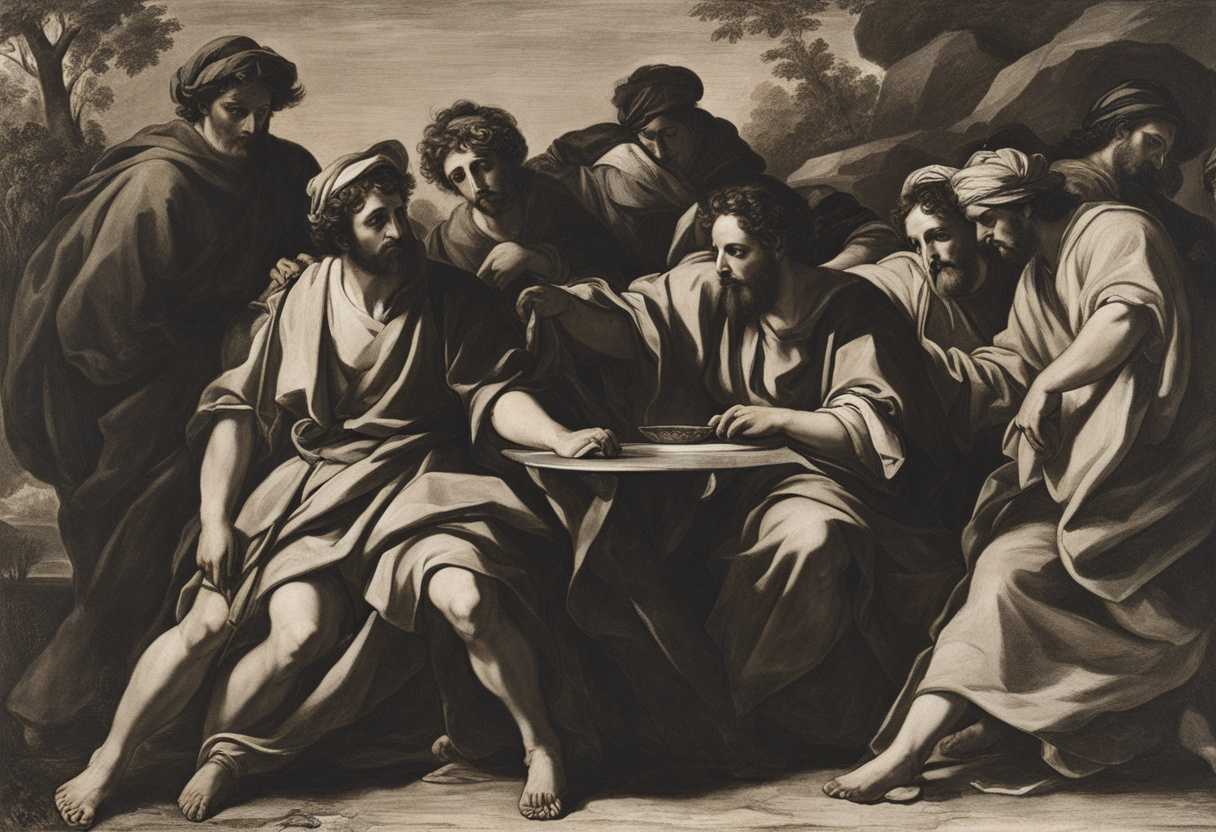
In Genesis 35:22-26, we find Jacob and his twelve sons in the midst of their journey. The scene takes place as they are traveling back to Canaan after Jacob’s return from Paddan-aram. The group is weary from their travels, and they decide to set up camp for the night. As the evening settles in, the brothers gather around the fire, their faces illuminated by the flickering flames.
The twelve sons of Jacob are named Reuben, Simeon, Levi, Judah, Issachar, Zebulun, Dan, Naphtali, Gad, Asher, Issachar, and Benjamin. Each of them carries the weight of their own unique personalities and experiences, adding depth to the scene. The air is filled with a mix of exhaustion and anticipation as they draw closer to their homeland. The surroundings are rugged and wild, with the vast expanse of the desert stretching out around them, a stark contrast to the warmth of the fire that unites them in this moment of rest and reflection.
What is Genesis 35:22-26 about?
The verse mentions the genealogy of Jacob’s sons, listing the twelve tribes of Israel. The significance of this verse lies in the fact that it solidifies the foundation of the nation of Israel by tracing its roots back to the twelve sons of Jacob. It serves as a historical record of the origins of the twelve tribes, each of which played a vital role in the development of the Israelite nation. Understanding the genealogy of Jacob’s sons and the formation of the twelve tribes of Israel gives us insight into the complexity and richness of Israel’s history and heritage. It allows us to appreciate the diversity within the Israelite nation and the unique characteristics of each tribe. Reflecting on this verse prompts us to ponder on the importance of lineage, heritage, and the interconnectedness of past and present. How does knowing the genealogy of Jacob’s sons shape our understanding of the nation of Israel? What lessons can we draw from the formation of the twelve tribes in terms of unity, identity, and legacy?
Understanding what Genesis 35:22-26 really means
In the narrative of Jacob’s family in Genesis 35:22-26, we delve into the lineage and events shaping the tribes of Israel. Understanding Jacob’s life with his wives Leah and Rachel, along with concubines Bilhah and Zilpah, provides crucial context. The phrase “While Israel lived in that land” signifies a period of settlement and stability for Jacob and his family, setting the stage for the unfolding events. However, Reuben’s grievous act of laying with Bilhah, his father’s concubine, disrupts this peace, highlighting the gravity of his transgression against family and societal norms.
The enumeration of Jacob’s twelve sons in the passage emphasizes their pivotal role as the future patriarchs of the twelve tribes of Israel. This listing foreshadows the significance of each son in the unfolding narrative of God’s chosen people. Jacob’s final blessings in Genesis 49:3-4 address the repercussions of Reuben’s actions, showcasing the enduring consequences of his misdeed. The transfer of Reuben’s birthright to Joseph’s sons in 1 Chronicles 5:1-2 further underscores the lasting impact of Reuben’s wrongdoing on future generations.
Relevant to contemporary audiences, this passage illuminates themes of family dynamics, accountability for one’s actions, and the enduring legacy we leave behind. It serves as a poignant reminder that our choices today can reverberate through generations, shaping the trajectory of our families and communities. Just as Jacob’s family navigated the fallout of Reuben’s actions, modern families grapple with the repercussions of mistakes, often witnessing unexpected leaders emerge in the face of adversity.
Drawing parallels to a modern family business scenario, where the eldest son’s misstep jeopardizes the company’s future, mirrors the familial tensions and realignments seen in Jacob’s household. This anecdote underscores the timeless relevance of the biblical narrative, showcasing the intricate interplay of human frailty, consequences, and the resilience required to forge ahead. Ultimately, Genesis 35:22-26 prompts introspection on the enduring impact of our choices and the redemptive power of God’s providence in weaving His purposes through imperfect individuals.
What significance does lineage have in spiritual relation?
Lineage plays a significant role in spiritual relation as it can bring about a sense of continuation and connection to a particular spiritual tradition or ancestry. Understanding one’s lineage in a spiritual context can provide a sense of identity, guidance, and belonging as individuals trace the spiritual practices, beliefs, and teachings that have been passed down through generations. It can also serve as a source of inspiration, providing a link to the wisdom and experiences of those who came before. The genealogy of the twelve sons of Jacob, who later become the twelve tribes of Israel, highlights lineage in the context of Genesis 35:22-26. Each son represents a distinct lineage that plays a crucial role in the spiritual history and development of the Israelite people. This genealogy serves to connect the present generation to the past, emphasizing the importance of lineage in understanding one’s spiritual roots and history. Individuals can deepen their spiritual connection and appreciation for the traditions and teachings that have been handed down to them by acknowledging and honoring their lineage. Lineage in a spiritual sense is not just about tracing one’s ancestry, but about recognizing the spiritual heritage and legacy that has been passed down through generations. It serves as a reminder of the interconnectedness of all beings and the continuity of spiritual wisdom that transcends time and space. Individuals can navigate their spiritual journey with a deeper sense of purpose, gratitude, and reverence for the wisdom of their ancestors by embracing and understanding their lineage.
Application
Take a moment to ponder your family’s dynamics, just like how Jacob’s sons’ actions altered their family. Address any rifts or conflicts before they deepen. Work on repairing and strengthening these familial bonds. What actions will you take today to foster unity in your family circle?

Reverend Michael Johnson is an experienced Church Minister with a profound expertise in spirituality and guidance. With a serene presence and a compassionate heart, he has faithfully served his congregation for over 20 years, leading them on a spiritual journey towards inner peace and enlightenment. Reverend Johnson’s extensive knowledge of religious philosophies and profound understanding of human nature have made him a trusted confidant and mentor to many, as he seamlessly weaves his profound wisdom into life teachings. Reverend Johnson’s calming demeanor and empathetic nature continue to uplift and heal souls, nurturing a sense of unity and tranquility within his community.