
Genesis 36:40-43 is about the descendants of Esau, who are listed as chiefs of different Edomite tribes, highlighting the fulfillment of God’s promise to bless Esau with prosperity and power despite his strained relationship with his brother Jacob.
40 These are the names of the chiefs of Esau, according to their clans and their dwelling places, by their names: the chiefs Timna, Alvah, Jetheth,
41 These are the kings who reigned in the land of Edom before any king reigned over the people of Israel.
42 The sons of Esau: the chiefs of their families by their clans were: Timna, Alvah, Jetheth,
43 Magdiel, Iram.
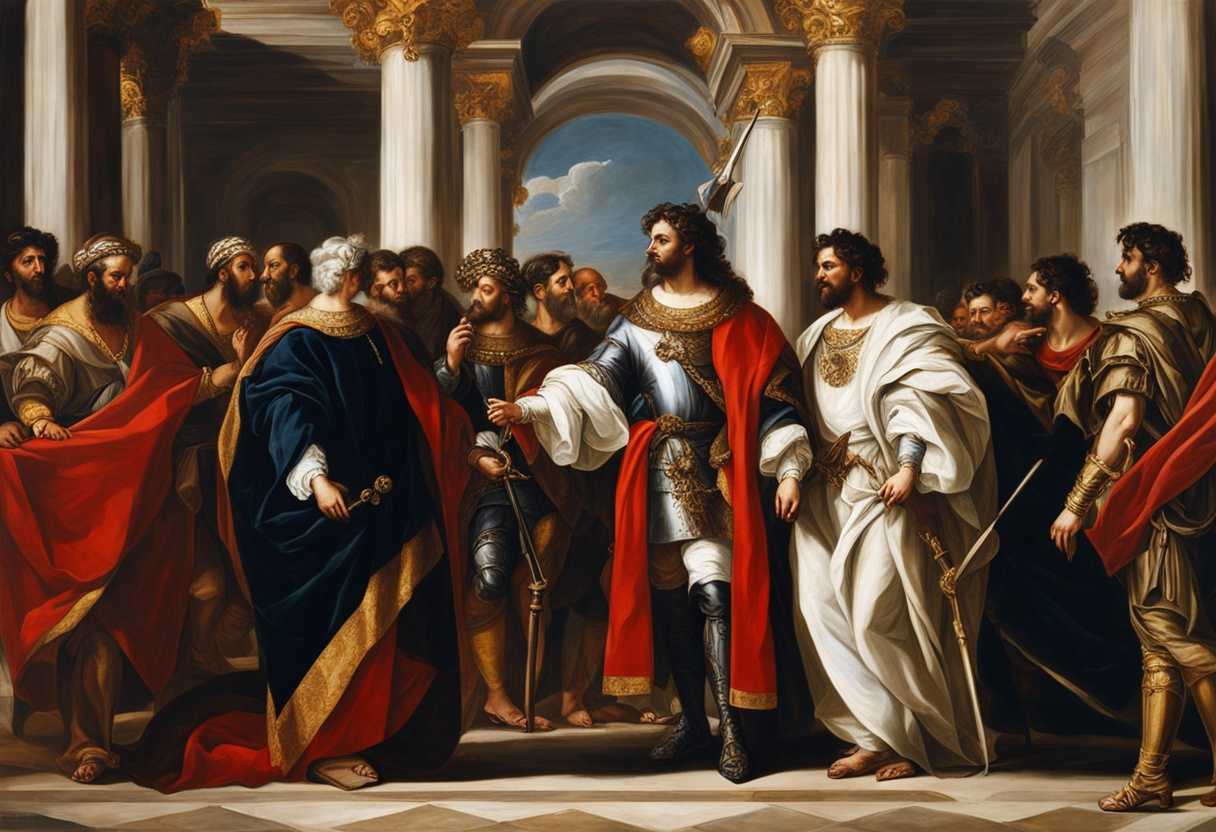
Setting the Scene for Genesis 36:40-43
In Genesis chapter 36, we find a detailed genealogy of Esau, the brother of Jacob. The verses 40-43 specifically mention a chief named Jobab, who is the son of Zerah from Bozrah. Jobab is one of the chiefs descended from Esau, who is also known as Edom. The scene unfolds in the land of Edom, a region located to the southeast of the Dead Sea.
The setting is a gathering of the chiefs of Edom, including Jobab, who have come together to discuss matters of leadership and governance within their territory. The chiefs are seated in a circle, with Jobab at the center, as they deliberate on important decisions that will impact their people. The atmosphere is solemn yet dignified, with the chiefs adorned in traditional garments befitting their status.
Surrounded by the rugged beauty of the Edomite landscape, the chiefs of Edom engage in discussions that will shape the future of their nation. The sun sets in the distance, casting a warm glow over the assembly as they debate and strategize. The scene captures a moment of unity and purpose among the leaders of Edom, as they navigate the complexities of ruling over their land and people.
What is Genesis 36:40-43 about?
This verse provides a historical background on Esau’s descendants, who later formed the nation of Edom. It shows the lineage of the chiefs of Edom before Israel had established a monarchy. This genealogy helps us understand the origins and leadership structure of the Edomites, who were a neighboring nation to the Israelites.
Have you ever wondered about the roots of different nations and how they were governed before the era of kings and monarchies? This verse gives us a glimpse into the early organization of Edom, shedding light on their leadership hierarchy and societal structure. We can better appreciate the context in which Esau’s descendants and the chiefs of Edom existed and how their history intertwined with that of Israel by learning about them.
Understanding the genealogy of Esau’s descendants not only enriches our knowledge of ancient history but also highlights the interconnectedness of different nations and peoples in the biblical narrative. It prompts us to reflect on the significance of lineage, leadership, and the passage of time in shaping the course of history. Next time you read about genealogies in scripture, remember the depth of meaning and historical context they provide, offering valuable insights into the complex tapestry of human civilization.
Understanding what Genesis 36:40-43 really means
To provide a structured and thorough commentary on Genesis 36:40-43, let’s break down our approach into clear sections: Introduction, Context, Detailed Analysis, Cross-references, Relevance Today, and Conclusion.
Introduction
Genesis 36:40-43 lists the chiefs of Esau, providing a genealogical record of the Edomites. These verses may seem like a simple genealogical account, but they hold deeper significance in understanding the broader biblical narrative and its lessons for us today. The lineage of Esau, also known as Edom, is detailed in Genesis 36. This chapter highlights the descendants of Esau and their roles as leaders or chiefs. Understanding the context of these genealogies helps us appreciate the historical and spiritual significance of Esau’s lineage.
Detailed Analysis
The verses mention specific names and their roles as chiefs of Edom. The phrase “according to their settlements in the land they occupied” emphasizes the territorial and social organization of Esau’s descendants. Each name represents not just an individual but a clan or tribe, indicating a structured community.
Cross-references
To deepen our understanding, let’s look at other scriptures. God tells Rebekah in Genesis 25:23 that two nations are in her womb, referring to Esau and Jacob. This prophecy is fulfilled in the genealogies of Genesis 36 and the subsequent history of Israel and Edom. Additionally, Obadiah 1:1-4 provides a prophetic vision concerning Edom, highlighting the ongoing tension between the descendants of Esau and Jacob.
Relevance Today
Why does this genealogy matter today? It reminds us of the enduring impact of our actions and decisions, as seen in the lives of Esau and Jacob. Our legacies, like theirs, can influence generations. Reflecting on these verses prompts us to consider our own lives and the legacy we are building. The story of a family business passed down through generations is considered. Each generation’s decisions shape the future of the business and its reputation. Similarly, the genealogies in the Bible show how the choices of Esau and Jacob reverberated through their descendants’ lives.
Conclusion
Genesis 36:40-43 offers more than a list of names; it provides insights into the fulfillment of God’s prophecies and the importance of our legacy. We see a broader picture of God’s plan and our role in it by examining these verses and related scriptures. This passage encourages us to reflect on our lives and the lasting impact of our choices, urging us to live with purpose and faithfulness. You are considering the legacy you are leaving behind in what ways? How do the decisions you make today shape the future for those who come after you? Reflecting on these questions can provide profound personal insights.
How can we prioritize relationships over material possessions?
The passage from Genesis shows the importance of valuing relationships over material possessions. The genealogy and history of Esau’s descendants are highlighted, showcasing the legacy of a family and the connections that endure through generations. This serves as a reminder that relationships and the bonds we form with others are lasting and meaningful compared to temporary material possessions. We can cultivate deeper connections with our loved ones and create a sense of belonging and support that transcends material wealth by focusing on relationships. Investing time and effort in nurturing relationships can bring more fulfillment and happiness than the accumulation of material possessions. The bonds we form with others ultimately provide us with a sense of purpose and enrich our lives in ways that material possessions cannot.
When we prioritize relationships over material possessions, we shift our focus from the temporary to the enduring. We can create a sense of community and build a legacy that extends beyond material wealth by valuing and nurturing the connections we have with others. This can lead to more meaningful and fulfilling lives as we focus on the people around us and the impact we have on their lives, rather than on material possessions that ultimately hold little lasting value.
Application
Imagine balancing your career and family while trying to keep everything in harmony. Just like that, prioritizing your relationship with God is crucial in the chaos of life. Genesis 36:40-43 reminds us to stay faithful and committed, no matter the challenges. Will you let God’s call guide your steps today?

Reverend Michael Johnson is an experienced Church Minister with a profound expertise in spirituality and guidance. With a serene presence and a compassionate heart, he has faithfully served his congregation for over 20 years, leading them on a spiritual journey towards inner peace and enlightenment. Reverend Johnson’s extensive knowledge of religious philosophies and profound understanding of human nature have made him a trusted confidant and mentor to many, as he seamlessly weaves his profound wisdom into life teachings. Reverend Johnson’s calming demeanor and empathetic nature continue to uplift and heal souls, nurturing a sense of unity and tranquility within his community.