
Genesis 37:26-28 is about how Joseph’s brothers sold him into slavery, illustrating the themes of jealousy, betrayal, and the consequences of acting on negative emotions.
26 Then Judah said to his brothers, “What profit is it if we kill our brother and conceal his blood?
27 Come, let us sell him to the Ishmaelites, and let not our hand be upon him, for he is our brother, our own flesh. And his brothers listened to him.
28 Then Midianite traders passed by. And they drew Joseph up and lifted him out of the pit, and sold him to the Ishmaelites for twenty shekels of silver. They took Joseph to Egypt.
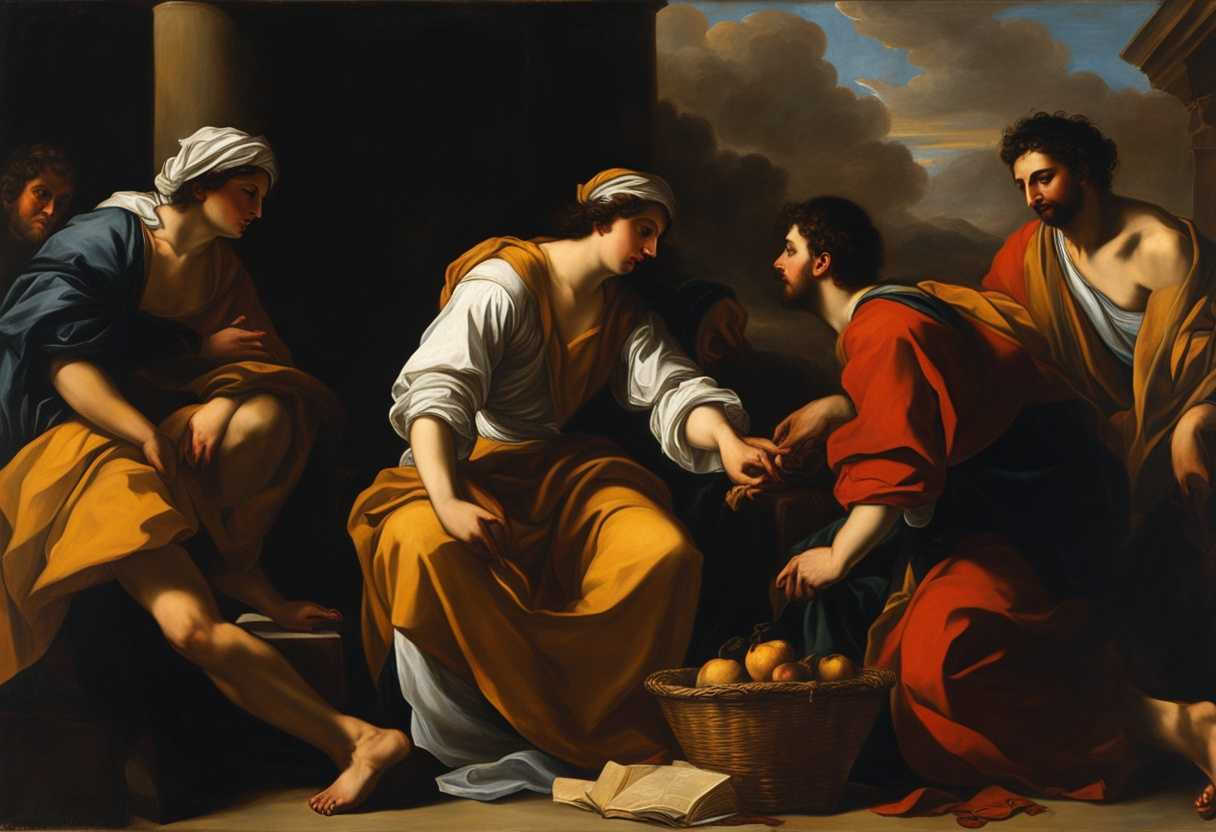
Setting the Scene for Genesis 37:26-28
In the scene described in Genesis 37:26-28, we find Joseph, the beloved son of Jacob, in a troubling situation. Joseph’s brothers, led by Judah, have conspired against him out of jealousy and resentment. The brothers are in the midst of a heated discussion about what to do with Joseph, who they see as a threat due to his dreams of authority over them. Reuben, the eldest brother, initially tries to protect Joseph by suggesting they throw him into a pit instead of killing him outright.
The setting is a desolate area, possibly a rocky terrain, where the brothers had taken the flock to graze. The sun is beginning to set, casting long shadows as the tension among the brothers rises. The air is thick with betrayal and animosity as they grapple with their decision. The scene is fraught with emotion as the brothers grapple with their conflicting feelings of envy towards Joseph and the guilt of what they are about to do. Joseph, unaware of their sinister intentions, is about to have his life changed forever as his brothers make the fateful decision to sell him into slavery.
What is Genesis 37:26-28 about?
This verse reminds us of the betrayal and jealousy Joseph faced from his own brothers. Imagine being mistreated and sold into slavery by your own family. How would that feel? The brothers’ actions were fueled by envy and resentment, leading to a cruel act against Joseph. This verse serves as a powerful reminder of the destructive nature of jealousy and the depths to which it can drive people to harm others.
Despite the adversity Joseph faced, his story does not end in despair. It ultimately shows the power of resilience, forgiveness, and faith. Joseph’s journey from slavery to becoming a powerful ruler in Egypt is a testament to his unwavering trust in God and his ability to overcome challenges. It prompts us to reflect on how we respond to adversity and injustice in our own lives. Do we hold onto grudges and seek revenge, or do we strive to forgive and find strength in faith, like Joseph did? This verse teaches us valuable lessons about the importance of forgiveness, resilience, and trusting in a higher power in times of hardship.
Understanding what Genesis 37:26-28 really means
In the narrative of Joseph from the book of Genesis, we encounter a tale of jealousy, betrayal, and ultimately, divine providence. Joseph, favored by his father Jacob and gifted with dreams of authority over his brothers, becomes the target of their envy. Initially, the brothers’ hearts are filled with murderous intent towards Joseph, but a pragmatic voice, that of Judah, questions the profit in killing their brother and suggests selling him into slavery instead. This shift from violence to deceit marks a pivotal moment in the story, showcasing the moral struggle within the brothers.
As the brothers decide to sell Joseph to the Ishmaelites, we witness a compromise born out of self-interest and a desire to rid themselves of a perceived threat. The act of drawing Joseph out of the pit where they had cast him symbolizes a turning point in his life, from the depths of despair to a new and challenging chapter in Egypt. This decision sets the stage for Joseph’s journey, a journey that will ultimately lead to the fulfillment of God’s plan, despite the brothers’ malicious intentions.
In later biblical passages, such as Genesis 50:20 and Romans 8:28, we see echoes of Joseph’s story, emphasizing God’s ability to turn even the darkest moments into opportunities for good. Joseph’s words to his brothers, “You intended to harm me, but God intended it for good,” resonate with the broader theme of God’s providential care and purpose in our lives. Similarly, the New Testament verse in Romans underscores the belief that God works all things for the good of those who love Him, aligning with the overarching message of Joseph’s story.
The relevance of Joseph’s story extends to our lives today, where betrayal and hardship are not uncommon. Just as Joseph’s suffering led to the salvation of many lives, our own trials can serve a greater purpose in God’s plan. This narrative challenges us to trust in God’s sovereignty, even when faced with adversity and uncertainty. It reminds us that there may be a divine design at play, guiding us through the darkest moments towards a brighter future.
Consider the anecdote of a man who, after losing his job unexpectedly, found himself at a crossroads of despair and uncertainty. Yet, through that loss, he discovered a dormant passion that eventually blossomed into a successful business, benefiting not only himself but also others. Like Joseph, his initial setback became a stepping stone towards a greater purpose, illustrating how God can use even our most challenging experiences for good.
In conclusion, the story of Joseph being sold by his brothers serves as a poignant reminder of the complexities of human relationships and the unwavering sovereignty of God. It prompts us to look beyond immediate circumstances, trusting in God’s overarching plan for our lives, even when faced with betrayal and hardship. Just as Joseph’s story unfolded according to God’s divine purpose, may we too find comfort and hope in the belief that God can transform our trials into triumphs.
How do we respond to jealousy and betrayal?
When faced with jealousy and betrayal, it is important to remember that these actions are often driven by the insecurities and shortcomings of others rather than reflecting on our own worth. Instead of reacting with anger or seeking revenge, it is crucial to have patience and understanding towards those who have wronged us. Forgiveness and grace can be powerful tools in overcoming such challenges, allowing us to move forward with a sense of peace and inner strength. We can heal our own wounds and prevent the cycle of negativity from continuing by choosing forgiveness over resentment. It is also a reminder that we are all flawed individuals in need of compassion and second chances. Responding to jealousy and betrayal with kindness and empathy not only reflects our own character and integrity but also has the potential to inspire growth and reconciliation in others.
Application
Don’t let envy and bitterness sell you short in life. Just like in the story of Joseph and his brothers, unforgiveness can enslave your heart. Take a moment to cleanse your spirit from any grudges. Are you ready to toss away jealousy and embrace a journey of love and healing in your relationships?

Reverend Michael Johnson is an experienced Church Minister with a profound expertise in spirituality and guidance. With a serene presence and a compassionate heart, he has faithfully served his congregation for over 20 years, leading them on a spiritual journey towards inner peace and enlightenment. Reverend Johnson’s extensive knowledge of religious philosophies and profound understanding of human nature have made him a trusted confidant and mentor to many, as he seamlessly weaves his profound wisdom into life teachings. Reverend Johnson’s calming demeanor and empathetic nature continue to uplift and heal souls, nurturing a sense of unity and tranquility within his community.