
3 Now Israel loved Joseph more than any other of his sons, because he was the son of his old age. And he made him a robe of many colors.
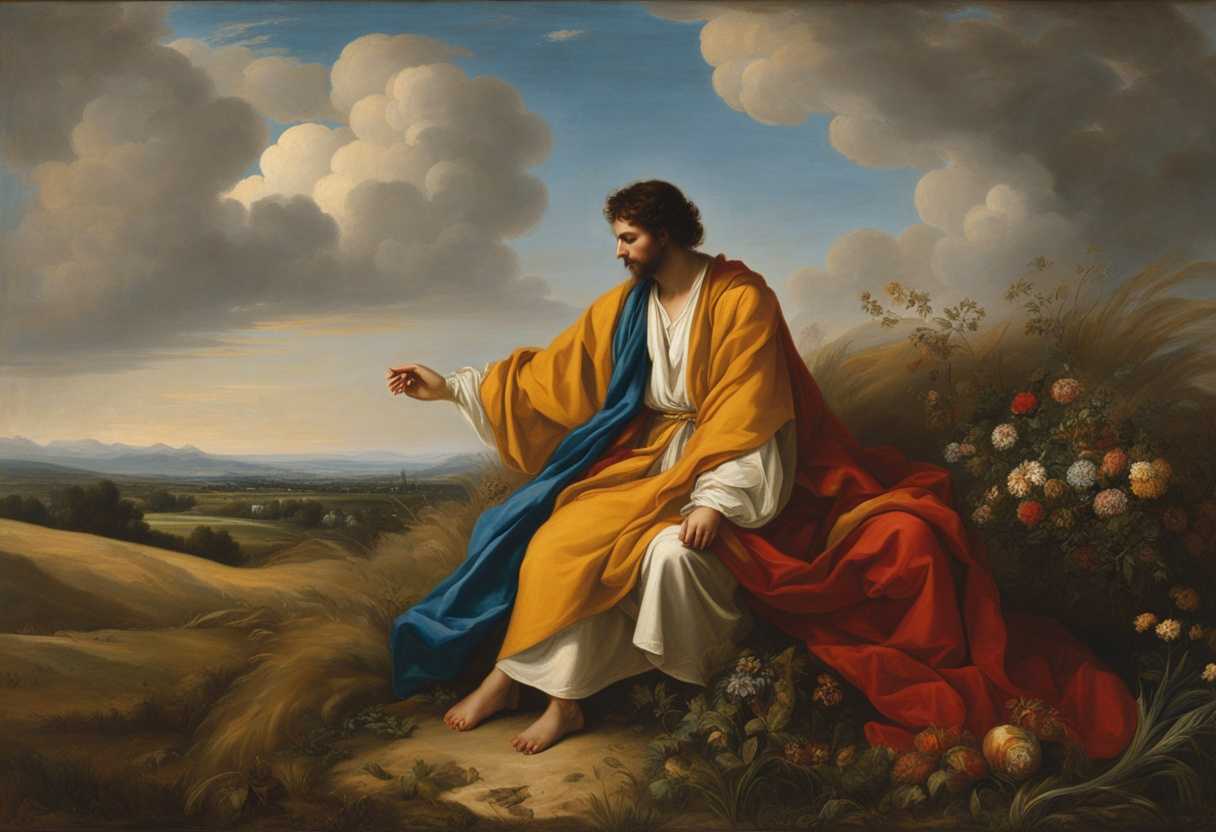
Setting the Scene for Genesis 37:3
In Genesis chapter 37, we find Joseph, the son of Jacob, in the land of Canaan. Joseph was the favorite son of Jacob, which caused jealousy among his brothers. One day, Jacob sent Joseph to check on his brothers who were tending to their flocks in Shechem. As Joseph approached them, his brothers saw him from a distance and conspired to kill him out of envy and resentment.
The scene is set in a vast, open field in Shechem, with rolling hills and a clear blue sky overhead. Joseph, dressed in his colorful coat given to him by his father, walks confidently towards his brothers, unaware of the danger that awaits him. His brothers, including Reuben, Simeon, Levi, Judah, and the others, are gathered together, their faces twisted with anger and jealousy as they plot against Joseph. The tension in the air is palpable as the brothers’ resentment towards Joseph reaches its boiling point, setting the stage for the dramatic events that will unfold in the following verses.
What is Genesis 37:3 about?
This verse from the Bible illustrates the complexities of family dynamics and the consequences of favoritism. It shows how Jacob’s preference for Joseph over his other sons led to feelings of jealousy and discord among the siblings. Jacob unintentionally created a toxic environment within his family, causing emotional pain and conflict among his children by openly showing favoritism.
Have you ever experienced favoritism or witnessed it in others? How did it make you feel or how do you think it affected those involved? Favoritism can often sow seeds of resentment, breed competition, and damage relationships within families or any group setting. It serves as a reminder of the importance of treating others with fairness and equality, and the impacts that favoritism can have on individuals and their relationships. It is a cautionary tale of the consequences of playing favorites and the need for empathy, understanding, and unity in our interactions with others.
Understanding what Genesis 37:3 really means
Structure for Commentary:
- Introduction and Context
- Phrase Analysis
- Cross-References and Further Meaning
- Relevance Today
- Anecdotal Reflection
- We highlight Joseph’s relationship with his father, Jacob, as we delve into the beginnings of his story in Genesis 37:3. This verse serves as a critical point in understanding the familial dynamics that lead to Joseph’s eventual trials and triumphs. By grasping the deeper meanings in this passage, readers can better appreciate the overarching themes of favoritism, jealousy, and God’s providence in Joseph’s life.
Phrase Analysis
One key phrase in the verse is “Israel loved Joseph more than any of his other sons.” This love isn’t merely a sentiment but is demonstrated through tangible favoritism, symbolized by the “richly ornamented robe” or “coat of many colors.” This robe becomes a visual representation of Jacob’s preferential treatment, which later incites jealousy and conflict among Joseph’s brothers.
Cross-References and Further Meaning
To understand the implications of favoritism better, we might look at Proverbs 28:21, which warns against showing partiality, as it leads to negative outcomes. James 2:1-4 advises believers in the New Testament to avoid favoritism, urging equal treatment for all. These passages enforce the biblical principle that favoritism can be destructive and divisive, a lesson vividly reflected in Joseph’s story.
Relevance Today
Favoritism exists in many forms today—in families, workplaces, and communities—often leading to strife. Reflecting on this verse encourages us to examine our own biases and consider how our actions can affect those around us. Are we, like Jacob, unknowingly (or knowingly) playing favorites in ways that could hurt others? Equitable treatment can foster harmony and unity, values that are increasingly critical in our diverse and interconnected world.
Anecdotal Reflection
I recall a family in our church community where one child was consistently praised and celebrated over the others, albeit unintentionally. The parents only meant to encourage, but it resulted in feelings of inadequacy and resentment among the other children. Once they recognized this, they made a concerted effort to distribute their praise and attention more fairly, which improved the family dynamic significantly. This story mirrors Jacob’s partiality towards Joseph, reminding us of the tangible impacts of favoritism.
Thought-Provoking Conclusion
Genesis 37:3 offers a profound lesson about the dangers and consequences of favoritism, prompting us to self-examine and seek fairness in our relationships. Joseph’s tale ultimately reveals God’s ability to use even flawed human behavior to fulfill His divine purposes. So, let’s ask ourselves: How can we ensure that we aren’t showing favoritism, and how can we promote fairness and love in our own circles? Reflecting on these questions might not just transform our relationships but also align us more closely with the values espoused by our faith.
Whose favor are you seeking: man’s or God’s?
We prioritize aligning our hearts with God’s will and living in a way that pleases Him over seeking man’s favor. Seeking God’s favor involves living a life of faith, obedience, and humility, trusting in His guidance and seeking to fulfill His purposes for our lives. When we prioritize seeking God’s favor, we acknowledge His sovereignty and depend on His grace and provision in all circumstances.
Choosing to seek God’s favor over man’s means valuing eternal rewards over temporary approval or recognition. While seeking man’s favor may bring temporary success or satisfaction, seeking God’s favor leads to lasting peace, joy, and fulfillment that transcends earthly circumstances. We can experience God’s presence, blessings, and favor in ways that far surpass any approval or validation we may receive from others by investing in our relationship with Him and living according to His word.
Application
Jacob favored Joseph, and it didn’t lead anywhere good. Reflect on your relationships at work, at home, and among friends. Are you giving everyone the fairness they deserve? God’s way is fairness and equality. Can you look around and commit to treating everyone with love and respect? Your actions matter. Will you choose to show kindness and impartiality today?

Reverend Michael Johnson is an experienced Church Minister with a profound expertise in spirituality and guidance. With a serene presence and a compassionate heart, he has faithfully served his congregation for over 20 years, leading them on a spiritual journey towards inner peace and enlightenment. Reverend Johnson’s extensive knowledge of religious philosophies and profound understanding of human nature have made him a trusted confidant and mentor to many, as he seamlessly weaves his profound wisdom into life teachings. Reverend Johnson’s calming demeanor and empathetic nature continue to uplift and heal souls, nurturing a sense of unity and tranquility within his community.