
8 But he refused and said to his master’s wife, “Behold, because of me my master has no concern about anything in the house, and he has put everything that he has in my charge.
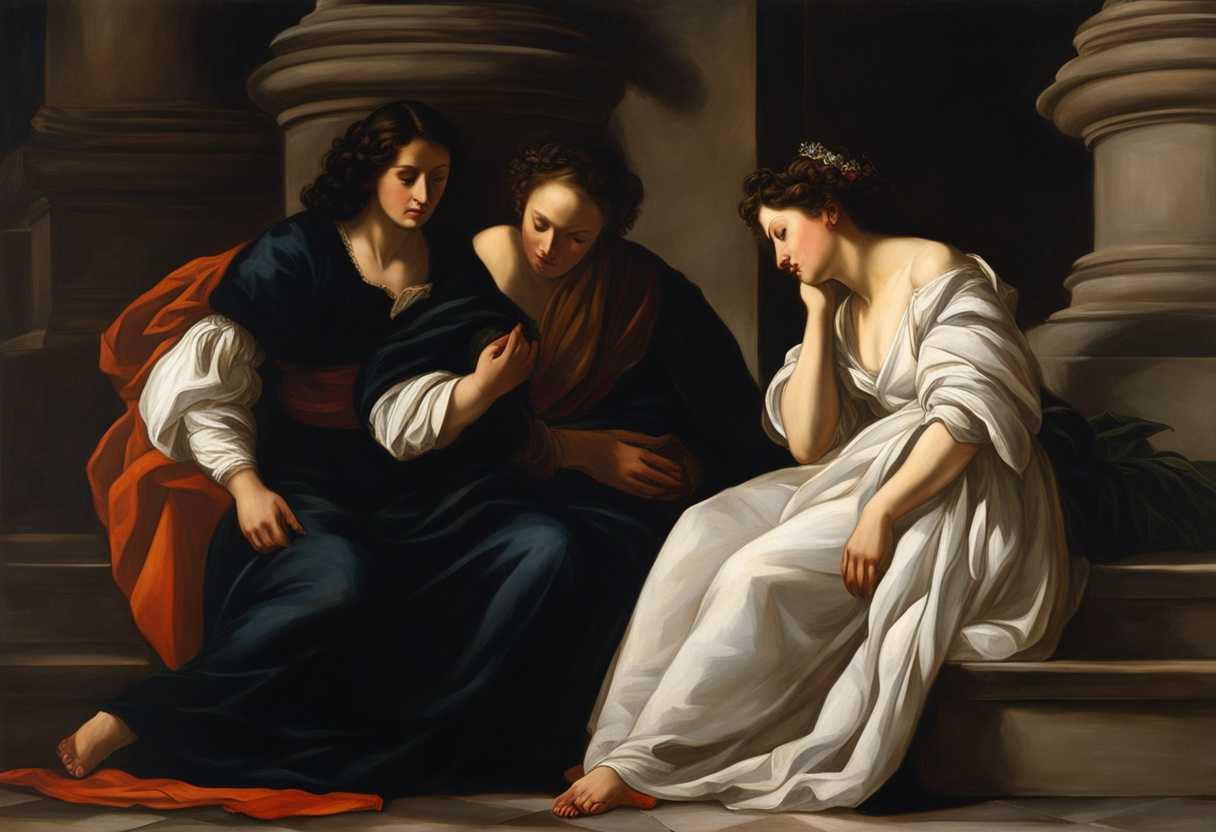
Setting the Scene for Genesis 39:8
In Genesis chapter 39, we find Joseph, a young Hebrew man who had been sold into slavery by his jealous brothers, now serving as a slave in the house of Potiphar, an officer of Pharaoh in Egypt. Potiphar had noticed that the Lord was with Joseph and had caused all that he did to prosper. Because of this, Potiphar put Joseph in charge of his household, entrusting him with everything he owned.
The scene unfolds in Potiphar’s lavish Egyptian home, with its grand architecture and opulent decorations. Joseph, a man of integrity and faith, diligently carries out his duties, managing the household affairs with wisdom and skill. Potiphar’s wife, whose name is not mentioned in the Bible, is also present in the scene. She becomes infatuated with Joseph’s handsome appearance and tries to seduce him repeatedly, but Joseph, faithful to his master and to God, resists her advances, refusing to betray the trust placed in him.
The tension between Joseph and Potiphar’s wife builds as she continues to pursue him, leading to a climactic moment where she seizes Joseph by his garment, demanding that he lay with her. However, Joseph flees, leaving his garment behind as he chooses to remain faithful to God and honor his master’s trust. This pivotal moment sets the stage for the events that follow in Joseph’s life, showcasing his unwavering commitment to righteousness and his steadfast faith in the face of temptation.
What is Genesis 39:8 about?
Joseph exhibits an incredible display of moral fortitude and steadfast faith in God in this verse. Despite facing a powerful temptation in the form of Potiphar’s wife, Joseph chooses to remain faithful to his beliefs and principles. Instead of succumbing to sin, he makes the conscious decision to honor God and uphold his moral integrity. This act of resistance highlights Joseph’s unwavering commitment to righteousness and his ability to stay true to his values even in the face of adversity. We are challenged to consider our own responses to temptation and moral dilemmas as we reflect on Joseph’s actions. Are we able to stay true to our principles and values when faced with difficult choices? Do we possess the strength and conviction to resist temptation and stand firm in our faith, like Joseph did? Joseph’s example serves as a powerful reminder of the importance of staying grounded in our beliefs and relying on our faith to guide us through challenging circumstances. Let us draw inspiration from Joseph’s unwavering resolve and strive to emulate his courage and moral integrity in our own lives.
Understanding what Genesis 39:8 really means
Commentary Structure:
1. Context and Background
2. Key Phrases and Their Meanings
3. Cross-References to Other Biblical Passages
4. Relevance to Contemporary Life
5. Anecdote and Reflection
6. Conclusion and Call to Action
Context and Background:
Genesis 39:8 is set within the narrative of Joseph, a key figure in the Old Testament. Joseph, having been sold into slavery by his jealous brothers, finds himself in Egypt in the household of Potiphar, an officer of Pharaoh. Despite his dire circumstances, Joseph earns Potiphar’s trust and is put in charge of his entire household. It’s here that he faces a significant moral test.
Key Phrases and Their Meanings:
The verse reveals Joseph’s refusal of Potiphar’s wife’s advances. The phrases “he refused” and “my master does not concern himself with anything” demonstrate Joseph’s loyalty and integrity. He recognizes the trust Potiphar places in him and understands the gravity of violating that trust. This highlights fundamental virtues such as loyalty, self-control, and the fear of God.
Cross-References to Other Biblical Passages:
Joseph’s resistance can be compared to Psalm 119:11, which states, “I have hidden your word in my heart that I might not sin against you.” This reflects Joseph’s inner commitment to living by God’s principles. Additionally, Proverbs 5:8 advises to “Keep to a path far from her; do not go near the door of her house.” Such verses fortify the idea of avoiding temptations and safeguarding one’s morality.
Relevance to Contemporary Life:
Even today, people face temptations in various forms, whether it’s in professional, personal, or social circumstances. Joseph’s example is a powerful reminder of the importance of maintaining integrity. His steadfastness serves as a beacon of righteousness and a call to align our actions with our values, even when nobody is watching in a world where moral boundaries are often blurred. A modern-day whistleblower who refuses to engage in or ignore unethical practices within their organization is the subject of consideration in this anecdote and reflection. Despite the potential consequences, they choose honesty and integrity over complicity. Much like Joseph, their actions can remind us that personal integrity often requires courage and can lead to greater respect and trust, both from others and from oneself.
Conclusion and Call to Action:
Genesis 39:8 provides a powerful lesson about the importance of ethical behavior and personal integrity. Joseph’s example inspires us to be steadfast in our values as we navigate our own lives. Reflect on the situations where you face temptations or ethical dilemmas, and think about how you can uphold the principles of integrity and loyalty. Our true character is revealed and fortified in these moments.
How can we align our actions with God’s will?
One way to align our actions with God’s will can be through practicing self-control and avoiding temptation. We can remain faithful and in alignment with His will by recognizing the difference between right and wrong and choosing to do what is pleasing to God. Just as Joseph in the verse demonstrated self-control and righteousness by resisting temptation, we too can follow his example in our own lives.
Another way to align our actions with God’s will is by living a life of integrity and honesty. Joseph’s refusal to betray his master and act unjustly showcases the importance of staying true to our values and principles. We can reflect God’s character and bring glory to His name through our actions by conducting ourselves with honesty and integrity.
Furthermore, seeking guidance through prayer and studying the Word of God can help us discern His will for our lives. We can gain clarity and direction on how to act in accordance with His plans and purposes by immersing ourselves in His teachings and spending time in communion with Him. Through prayer and seeking wisdom from the Scriptures, we can cultivate a closer relationship with God and align our actions with His will.
Application
Think of your life as a balancing act between work and family, like Joseph in Genesis 39:8. He faced temptation but held onto his integrity. Can you do the same when faced with ethical dilemmas at work or in personal relationships? Stand firm in your values and let this story inspire you to act with honor and faith. How will you prove your character today?

Reverend Michael Johnson is an experienced Church Minister with a profound expertise in spirituality and guidance. With a serene presence and a compassionate heart, he has faithfully served his congregation for over 20 years, leading them on a spiritual journey towards inner peace and enlightenment. Reverend Johnson’s extensive knowledge of religious philosophies and profound understanding of human nature have made him a trusted confidant and mentor to many, as he seamlessly weaves his profound wisdom into life teachings. Reverend Johnson’s calming demeanor and empathetic nature continue to uplift and heal souls, nurturing a sense of unity and tranquility within his community.