
1 Now the serpent was more crafty than any other beast of the field that the Lord God had made.
2 And the woman said to the serpent, “We may eat the fruit of the trees of the garden,
3 but God said, ‘You shall not eat of the fruit of the tree that is in the midst of the garden, neither shall you touch it, lest you die.’”
4 But the serpent said to the woman, “You will not surely die.
5 For God knows that when you eat of it your eyes will be opened, and you will be like God, knowing good and evil.
6 So when the woman saw that the tree was good for food, and that it was a delight to the eyes, and that the tree was to be desired to make one wise, she took of its fruit and ate, and she also gave some to her husband who was with her, and he ate.
Setting the Scene for Genesis 3:1-6
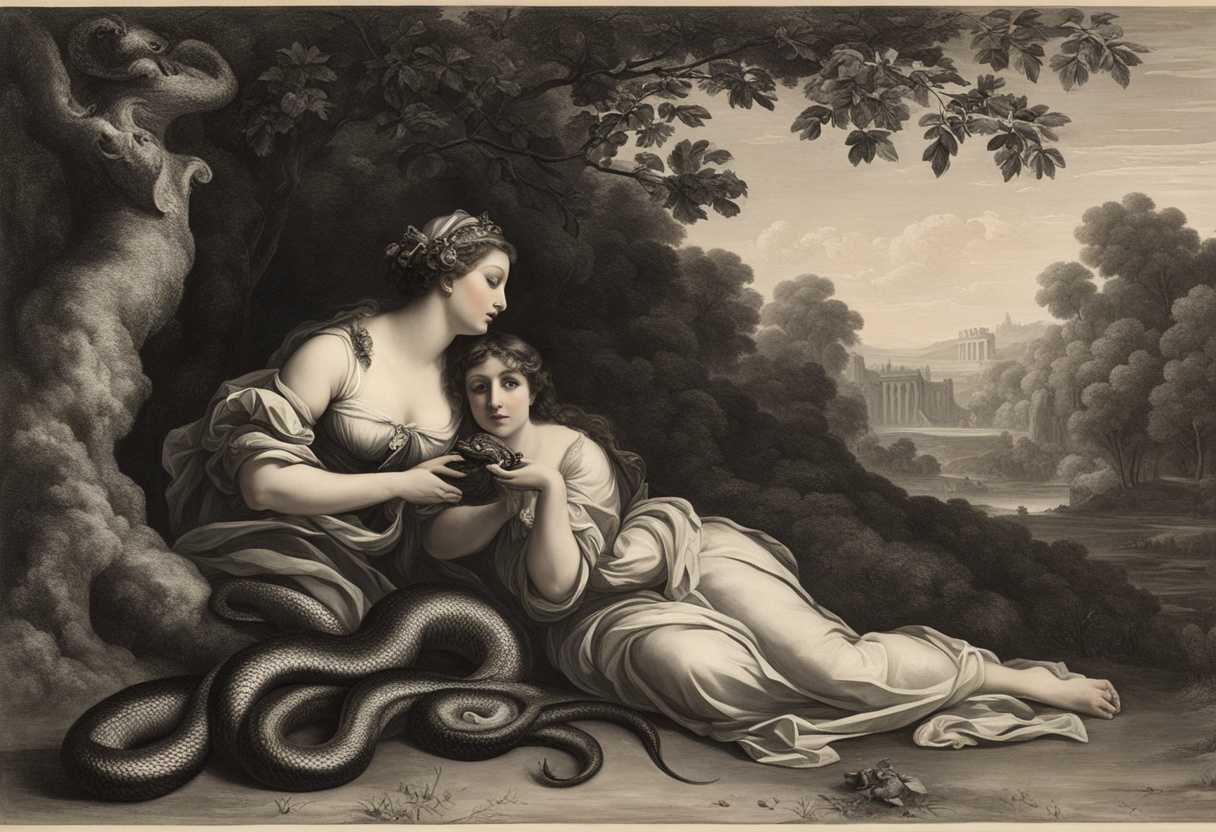
In the Garden of Eden, a lush paradise filled with vibrant flora and fauna, we find Eve, the first woman created by God, wandering near the Tree of the Knowledge of Good and Evil. The sun filters through the dense canopy above, casting dappled light on the ground below as Eve marvels at the beauty surrounding her. She is joined by the serpent, a cunning creature who slithers towards her with deceptive charm.
As Eve listens intently, the serpent begins to question the instructions given by God regarding the forbidden fruit from the tree. Doubt creeps into Eve’s mind as the serpent skillfully plants seeds of curiosity and desire. The scene is set for a pivotal moment in biblical history, as Eve succumbs to temptation and plucks the fruit from the tree, ultimately leading to the fall of humanity.
In this tranquil yet fateful setting, the innocence of the Garden of Eden is shattered by Eve’s disobedience, setting off a chain of events that will forever alter the course of mankind. The lush greenery and gentle rustling of leaves provide a stark contrast to the weight of the decision Eve is about to make, a decision that will echo throughout the ages.
What is Genesis 3:1-6 about?
This verse is a foundational story that explains the origin of sin and mankind’s separation from God. It depicts how the first human couple, Adam and Eve, were tempted by the serpent (Satan) to disobey God’s command by eating the forbidden fruit from the tree of the knowledge of good and evil. The consequences of their disobedience led to their expulsion from the Garden of Eden, symbolizing the breaking of the intimate relationship between God and humanity. This fall of humanity into sin was a turning point in history, highlighting the vulnerability of humans to temptation and the consequences of disobedience. We can ponder on the nature of temptation and the importance of obedience to God’s commands as we reflect on this story. It serves as a reminder of the choices we make and the impact they have on our lives and relationship with God. Through this verse, we are encouraged to strive for obedience, resist temptation, and seek forgiveness and reconciliation with God when we fall short. It prompts us to reflect on our own vulnerabilities and to rely on God’s grace and guidance to navigate the challenges and temptations we face in our daily lives. What lessons can we learn from Adam and Eve’s disobedience? How can we apply these insights to our own lives and choices? Let us reflect on this foundational story of humanity’s fall from grace to deepen our understanding of God’s will and grow in obedience and faithfulness.
Understanding what Genesis 3:1-6 really means
Let’s delve into this poignant passage from Genesis. We’ll structure our commentary into several key sections: Context and Background, Detailed Analysis, Cross-Referencing, Relevance Today, and Personal Reflection.
Context and Background
Genesis 3:1-6 recounts a crucial moment in the Biblical narrative known as “The Fall of Man. The serpent tempts Eve to eat from the Tree of the Knowledge of Good and Evil, which God had commanded Adam and Eve not to eat from in this passage. This event marks the introduction of sin into the world. Understanding this context is vital as it sets the stage for the entire redemptive history that follows. Certain phrases stand out in these verses: “Did God actually say,” “You will not surely die,” and “Your eyes will be opened.”” The serpent’s question, “Did God actually say,” introduces doubt and challenges God’s command. This seed of doubt is potent. How often do we find ourselves questioning foundational truths in moments of temptation? The next phrase, “You will not surely die,” directly contradicts God’s warning, illustrating the deceptive nature of sin. Lastly, “Your eyes will be opened,” appeals to human curiosity and the desire for wisdom, signifying how temptation often masquerades as enlightenment. Paul reflects on this event in Romans 5:12, saying, “sin came into the world through one man, and death through sin.”” This connects Adam’s transgression to the broader narrative of sin and redemption. Additionally, Jesus’ temptation in the wilderness (Matthew 4:1-11) echoes the themes of temptation and obedience. Unlike Adam and Eve, Jesus resists, providing a model of steadfast faith.
Relevance Today
The relevance of this passage in contemporary life cannot be overstated. Every day, individuals encounter situations that challenge their integrity and faith. Much like the serpent’s cunning questions, modern temptations often come cloaked in reason and partial truths. For instance, in today’s world of instant gratification and blurred moral lines, the temptation to prioritize personal gain over ethical considerations is ever-present. A person working in corporate finance is offered the chance to manipulate earnings reports to make the company look more profitable in a modern anecdote. It’s tempting, perhaps even reasonable given the pressure, but it contradicts ethical principles. Here, the struggle mirrors Eve’s dilemma—short-term gain versus obedience to a moral code. This passage encourages deep reflection on personal faith and decision-making for readers. What are the “serpents” in your life, subtly questioning the truths you hold dear? How do you respond to temptations that appeal to your desires for knowledge, power, or pleasure? This text challenges us to remain vigilant and faithful, even when confronted with seductive reasoning. Genesis 3:1-6 is a profound narrative that continues to resonate. It points to the origins of human sin, the nature of temptation, and the persistent relevance of God’s commandments. Its lessons are timeless, urging us to discernment and faithfulness in our walk with God. Reflect deeply on its messages, and consider how they apply to the challenges and “serpents” you face today.
How can we resist the temptation of sin?
We can resist the temptation of sin by recognizing and understanding the tactics of the tempter. Just as in the story of Adam and Eve, the serpent uses deception and questioning to lead them astray. We can better guard ourselves against falling into sin’s trap by being aware of the ways in which it can be tempting and deceptive.
Additionally, it is important to strengthen our faith and trust in God. Adam and Eve fell into sin because they doubted God’s goodness and believed the lies of the serpent. We can find the strength and guidance needed to resist temptation by cultivating a strong relationship with God through prayer, study of scripture, and participation in a faith community. Trusting in God’s promises and seeking His help in times of struggle can help us stay on the right path.
Furthermore, having accountability and support from fellow believers can also help us resist temptation. Surrounding ourselves with like-minded individuals who can encourage and challenge us in our faith can provide a strong defense against the allure of sin. We can find strength in community to resist temptation and stay true to our convictions by fostering relationships with others who share our beliefs and values.
Application
Imagine your life as a delicate balancing act between work and family, where every choice matters. The story of Eve and the serpent in Genesis 3:1-6 isn’t just ancient text—it’s a poignant reminder of how easily we can be swayed by tempting distractions. Stay grounded in your core values and beliefs. Pause and ask yourself—when temptation knocks, will you stand firm and stay true to your path, or will you let yourself be led astray? How will you shield your life from deception today?

Reverend Michael Johnson is an experienced Church Minister with a profound expertise in spirituality and guidance. With a serene presence and a compassionate heart, he has faithfully served his congregation for over 20 years, leading them on a spiritual journey towards inner peace and enlightenment. Reverend Johnson’s extensive knowledge of religious philosophies and profound understanding of human nature have made him a trusted confidant and mentor to many, as he seamlessly weaves his profound wisdom into life teachings. Reverend Johnson’s calming demeanor and empathetic nature continue to uplift and heal souls, nurturing a sense of unity and tranquility within his community.