
14 The Lord God said to the serpent, “Because you have done this, cursed are you above all livestock and above all beasts of the field; on your belly you shall go, and dust you shall eat all the days of your life.
15 I will put enmity between you and the woman,
and between your offspring and her offspring;
he shall bruise your head,
and you shall bruise his heel.”
16 To the woman he said, “I will surely multiply your pain in childbearing; in pain you shall bring forth children. Your desire shall be contrary to your husband, but he shall rule over you.”
17 And to Adam he said, “Because you have listened to the voice of your wife and have eaten of the tree of which I commanded you, ‘You shall not eat of it,’ cursed is the ground because of you; in pain you shall eat of it all the days of your life;
18 thorns and thistles it shall bring forth for you; and you shall eat the plants of the field.
19 By the sweat of your face you shall eat bread, till you return to the ground, for out of it you were taken; for you are dust, and to dust you shall return.
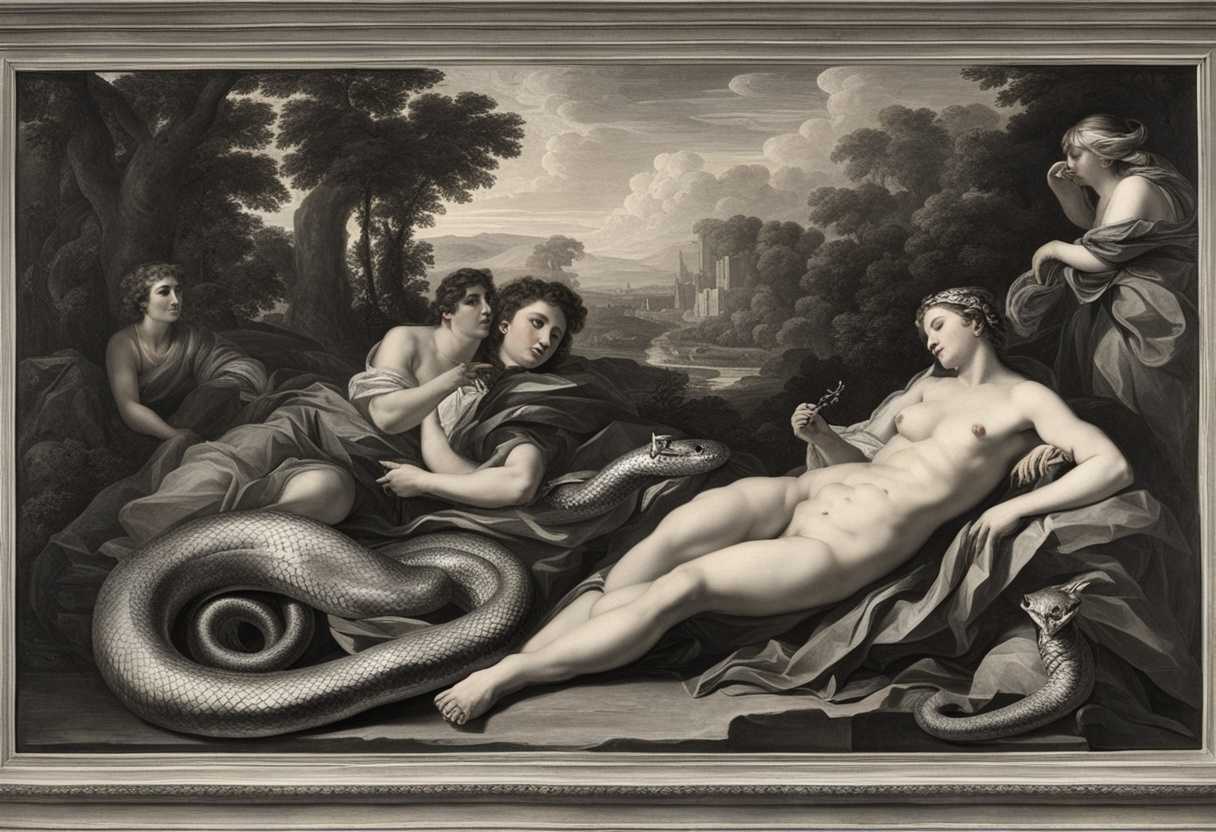
Setting the Scene for Genesis 3:14-19
In Genesis chapter 3, we find ourselves in the Garden of Eden, a paradise created by God for Adam and Eve. The scene is set shortly after Adam and Eve have eaten the forbidden fruit from the Tree of Knowledge of Good and Evil, disobeying God’s command. As a consequence of their actions, God is addressing the serpent, Eve, and Adam, each in turn, pronouncing the punishments they will face.
Adam and Eve stand before God, their faces filled with shame and regret for their disobedience. The once peaceful and harmonious garden now feels heavy with the weight of sin. The serpent, who deceived Eve, is cursed to crawl on its belly for the rest of its days. Eve is told that she will experience pain in childbirth, and Adam is informed that he will toil the ground for his sustenance, facing hardship and sweat in his labor. The atmosphere is tense, as the consequences of their actions sink in, forever changing the course of humanity. The lush garden now serves as a stark reminder of the fall of man and the separation from God’s perfect plan.
What is Genesis 3:14-19 about?
This verse from the Bible, Genesis 3:16-19, dives deep into the consequences that Adam and Eve faced as a result of their disobedience to God. It speaks to the very core of human existence – the pain and struggles that we are destined to face as a result of sin. The pain in childbirth, the toil in work, and the inevitability of death are all outcomes of the separation from God that occurred in the Garden of Eden.
Why do you think these specific consequences were pronounced by God? What do they reveal about the nature of sin and its impact on humanity? We can gain a deeper understanding of the significance of this verse and how it relates to our own lives by exploring these questions. It serves as a reminder of the importance of obedience to God and the consequences that can come from straying away from His will. We find redemption and restoration through the grace and mercy of God, which this verse ultimately points towards.
Understanding what Genesis 3:14-19 really means
God pronounces curses following Adam and Eve’s sin in the verses Genesis 3:14-19, depicting the grave consequences of disobedience. This segment of the Scripture not only vividly illustrates the immediate effects of sin but also sets the stage for the enduring human struggle and God’s redemptive plan.
Firstly, in condemning the serpent to crawl on its belly, this image symbolizes debasement and serves as a perpetual reminder of the consequences of deviating from God’s commands. It is a striking depiction of downfall from a position of subtlety and cunning to one of disgrace. Reflecting on this, have you ever experienced a fall from grace that forced you to reassess your actions?
Moving to Adam and Eve, the curses they receive are profoundly interconnected with the natural world and their roles. Eve’s pain in childbirth and subjection to her husband encapsulates not only physical suffering but also relational dynamics marked by struggle and domination. Adam’s curse affects his environment, making his role as a cultivator laborious and fraught with frustration. This directly reflects how our choices can corrupt and complicate our interactions and the natural order. Your choices have impacted your environment or relationships in your life.
These verses starkly contrast with the earlier harmony of Eden, underscoring a theme that resonates deeply with human experience: actions have consequences. They also foreshadow the redemption narrative later fulfilled in Christ, as articulated in Romans 5:12-21, where Paul contrasts Adam’s disobedience with Jesus’ obedience.
The relevance of these verses today is undeniable. They invite us to consider how our actions ripple through our lives and the lives of others. A small decision brought unforeseen consequences at a time. This narrative invites us into a reflective journey on causality and morality, urging us to align closer with divine guidance to avoid the pitfalls of misguided choices.
Furthermore, these verses challenge contemporary readers to ponder the nature of suffering and redemption. Just as Adam and Eve’s actions had long-term implications, so do ours in the modern world. Reflecting on this narrative aligns our understanding of moral law and consequence, shaping a life that seeks redemption through every small act of obedience. Contemplate the areas of your life that may benefit from re-alignment towards more godly decisions as you move through your week, remembering always that each choice sets the stage for consequences that extend beyond our immediate perception.
How does sin affect our relationship with God?
Sin disrupts our relationship with God by creating a barrier between us and Him. Disobedience to God’s command allowed sin to enter the world in the situation described in Genesis 3:14-19. This disobedience led to consequences that affected not only the individuals involved but also the entire human race. Sin has caused a separation between humanity and God, straining our relationship with Him.
The effects of sin on our relationship with God are seen in the brokenness and pain that we experience in our lives. The consequences of sin include hardships, conflicts, and struggles that we face as a result of our disobedience. This separation from God’s intended plan for us creates a need for reconciliation and restoration in order to mend the broken relationship. Despite the effects of sin, God still offers us forgiveness and a way to reconcile with Him through His grace and mercy.
Application
Think of your life as a roadmap, each choice a turn that leads to a destination. Genesis 3:14-19 serves as a crucial signpost, a stark reminder of the twists and pitfalls that come from straying from the path of righteousness. It’s a call to hold the steering wheel steady, to choose routes that lead to forgiveness and redemption, and to avoid the allure of shortcuts that lead into the wild of sin. Imagine your spirit as a garden—how diligently will you tend to it, pulling the weeds of temptation, and nurturing the fruits of obedience and faith? How will you drive your life towards the horizon of holiness and righteousness?

Reverend Michael Johnson is an experienced Church Minister with a profound expertise in spirituality and guidance. With a serene presence and a compassionate heart, he has faithfully served his congregation for over 20 years, leading them on a spiritual journey towards inner peace and enlightenment. Reverend Johnson’s extensive knowledge of religious philosophies and profound understanding of human nature have made him a trusted confidant and mentor to many, as he seamlessly weaves his profound wisdom into life teachings. Reverend Johnson’s calming demeanor and empathetic nature continue to uplift and heal souls, nurturing a sense of unity and tranquility within his community.