
20 The man called his wife’s name Eve, because she was the mother of all living.
Setting the Scene for Genesis 3:20
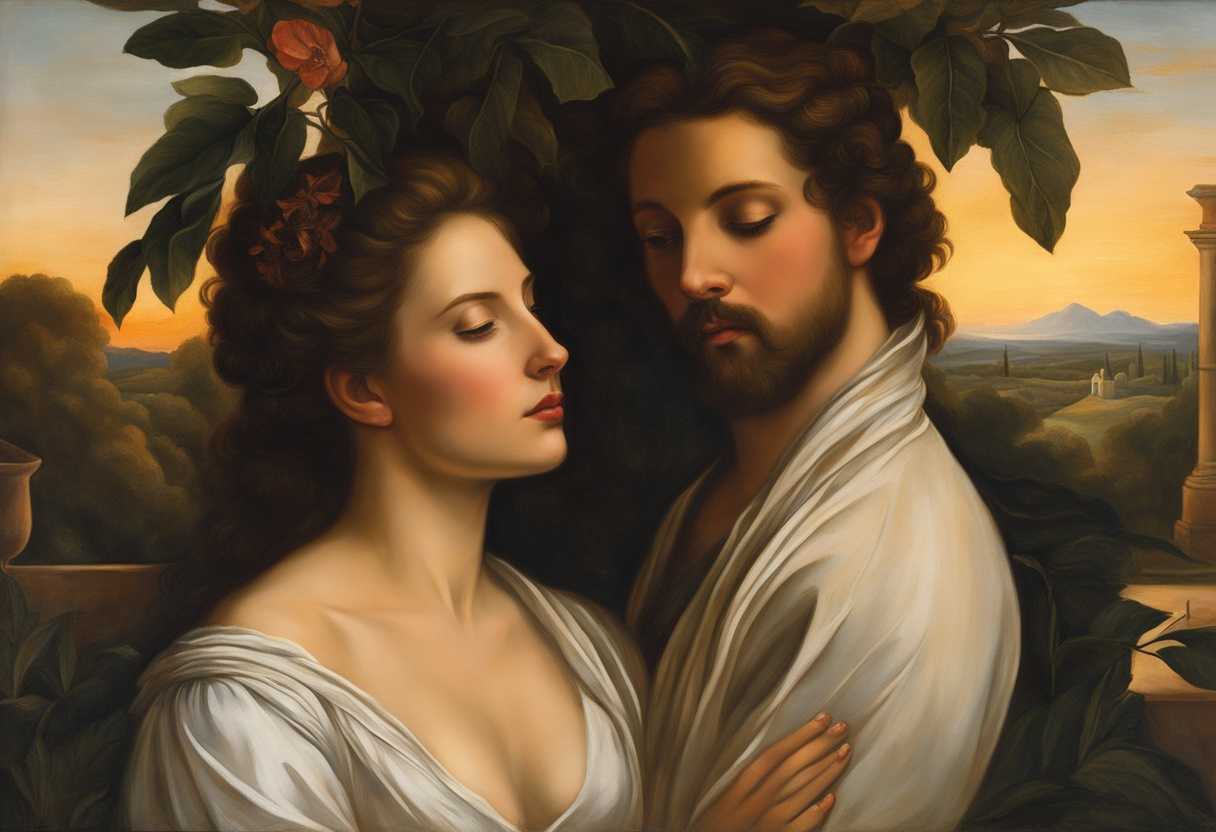
In Genesis chapter 3, we find ourselves in the Garden of Eden, a paradise created by God for Adam and Eve. The scene is set shortly after Adam and Eve have eaten the forbidden fruit from the Tree of Knowledge of Good and Evil, disobeying God’s command. Adam and Eve are now experiencing the consequences of their actions, feeling shame and guilt for the first time.
In this particular verse, Genesis 3:20, we see Adam naming his wife Eve, which means “mother of all the living.” This moment is significant as it shows Adam’s acknowledgment of Eve’s role in the future of humanity, despite the fall from grace. The surroundings are lush and vibrant, with the beauty of the Garden of Eden serving as a stark contrast to the newfound awareness of sin and mortality that Adam and Eve are grappling with.
As Adam and Eve stand together, facing the unknown future outside of Eden, there is a sense of both sorrow and hope. The consequences of their actions are severe, but there is also a promise of redemption and a future lineage that will ultimately lead to the birth of Jesus Christ. The scene captures a pivotal moment in the biblical narrative, marking the beginning of humanity’s journey through sin and redemption.
What is Genesis 3:20 about?
Adam acknowledges Eve’s role as the mother of all humanity in this verse. Adam not only recognizes Eve as the first woman created by God but also acknowledges her as the ancestor of all future generations by naming her “mother of all the living.” This title highlights the importance of Eve in the creation story, positioning her as the matriarch of all living beings. We reflect on this verse, inviting us to consider the significance of Eve’s role not just in the biblical narrative but in the broader context of our understanding of motherhood and lineage. What does it mean for Eve to be called the “mother of all the living”? How does this title shape our understanding of motherhood as a foundational aspect of humanity’s existence? Through Adam’s words, we are reminded of the interconnectedness of all life and the central role that mothers play in the continuation of the human race. The title given to Eve by Adam serves as a powerful testament to the importance of women in the story of creation and the ongoing legacy of life they carry forward.
Understanding what Genesis 3:20 really means
We uncover layers of significance in the exploration of Genesis 3:20 that illuminate not only the historical context but also offer implications for our modern lives. This verse, situated at the climax of the Eden narrative, provides insight into human identity and relational dynamics. We are drawn into a moment where Adam names his wife Eve, acknowledging her as the “mother of all living.” This action is profound as it marks a pivotal shift in their existence and sets the foundation for the role of humanity in the grand tapestry of life.
Naming, in the biblical context, is an act of discernment and authority. It uncovers the essence and purpose of that which is named. Here, Adam’s declaration is emblematically and theologically rich; it recognizes Eve not only as his companion but also as an integral and life-giving part of creation. This moment is a testament to the interconnectedness of human relationships and the responsibility we bear towards each other.
This narrative intersection points beyond its ancient context into our present reality, compelling us to reflect on how we recognize and honor the intrinsic value in one another. How often do we acknowledge the vital contributions of those around us? The act of mindful acknowledgment can strengthen bonds and foster a nurturing environment where all can flourish in our churches, homes, and communities. Adam’s act of naming Eve amidst their newfound vulnerability (post-Fall) also speaks profoundly to the theme of grace and redemption. It echoes other scriptural moments, like in Isaiah 43:1, where God calls Israel by name, signifying ownership and protection despite their imperfections. It’s a reminder that our names and identities hold divine significance, and even when faced with hardships, we are cared for and called to participate in God’s ongoing creation.
To bring this to a personal level, consider a church member, Dorothy, who recognized the importance of everyone’s role in a community project. She deliberately acknowledged each volunteer’s unique contributions, boosting morale and demonstrating the practical application of seeing and affirming the ‘Eve’ in each person. This act of recognition can be transformative. Genesis 3:20 challenges us to view our relationships through a lens of acknowledgement and grace, even though it is a brief part of a larger narrative. Let us ask ourselves as we navigate our daily interactions: Are we mindful of the life and identity in those around us? How do we honor and uphold that sacredness in practical ways? Such reflections not only deepen our spiritual walk but also enhance our communal life, making it more reflective of the heavenly ideals outlined in Scripture.
What is the significance of naming in relationships?
Naming in Genesis 3:20 is significant in relationships as it symbolizes a deep connection and authority over the one being named. The ability of Adam to name Eve shows his role as a leader and head of the relationship, as naming in ancient cultures often signified dominion and responsibility. Adam demonstrates his understanding of their relationship and his commitment to caring for and protecting Eve by naming her.
Furthermore, naming in relationships also signifies a sense of intimacy and personal connection. When Adam names Eve, it creates a bond between them, as he is giving her a specific identity and acknowledging her individuality. This act of naming can be seen as an expression of love and respect, as it shows a desire to truly know and understand the other person on a deep level. Naming in relationships goes beyond mere identification and serves as a symbolic gesture of authority, intimacy, and care. It highlights the significance of language and communication in fostering meaningful relationships, as it shapes how we perceive and relate to one another.
Application
Imagine yourself as a master sculptor, your words as your tools, shaping the world around you with every stroke. Just as Adam handpicked the name for Eve, recognizing her essence, you wield the power to define and uplift the people in your corner of the universe. Whether it’s the co-worker you see struggling or a family member needing encouragement, your words have the strength to construct bridges and heal wounds. Offer words that build rather than break, nurture rather than negate. What masterpieces will you create with your dialogue today?

Reverend Michael Johnson is an experienced Church Minister with a profound expertise in spirituality and guidance. With a serene presence and a compassionate heart, he has faithfully served his congregation for over 20 years, leading them on a spiritual journey towards inner peace and enlightenment. Reverend Johnson’s extensive knowledge of religious philosophies and profound understanding of human nature have made him a trusted confidant and mentor to many, as he seamlessly weaves his profound wisdom into life teachings. Reverend Johnson’s calming demeanor and empathetic nature continue to uplift and heal souls, nurturing a sense of unity and tranquility within his community.