
1 Some time after this, the cupbearer of the king of Egypt and his baker committed an offense against their lord the king of Egypt.
2 And Pharaoh was angry with his two officers, the chief cupbearer and the chief baker.
3 And he put them in custody in the house of the captain of the guard, in the prison where Joseph was confined.
4 And the captain of the guard appointed Joseph to be with them, and he attended them.
5 And one night they both dreamed—the cupbearer and the baker of the king of Egypt, who were confined in the prison—each his own dream, and each dream with its own interpretation.
6 When Joseph came to them in the morning, he saw that they were troubled.
7 So he asked Pharaoh’s officers who were with him in custody in his master’s house, “Why are your faces downcast today?”
8 They said to him, “We have had dreams, and there is no one to interpret them.” And Joseph said to them, “Do not interpretations belong to God? Please tell them to me.”
9 So the chief cupbearer told his dream to Joseph and said to him, “In my dream there was a vine before me,
10 and in the vine were three branches. It was as though it budded, its blossoms shot forth, and its clusters ripened into grapes.
11 Pharaoh’s cup was in my hand, and I took the grapes and pressed them into Pharaoh’s cup and placed the cup in Pharaoh’s hand.”
12 Then Joseph said to him, “This is its interpretation: the three branches are three days.
13 In three days Pharaoh will lift up your head and restore you to your office, and you shall place Pharaoh’s cup in his hand as formerly, when you were his cupbearer.
14 Only remember me, when it is well with you, and please do me the kindness to mention me to Pharaoh, and so get me out of this house.
15 For I was indeed stolen out of the land of the Hebrews, and here also I have done nothing that they should put me into the pit.”
16 When the chief baker saw that the interpretation was favorable, he said to Joseph, “I also had a dream: there were three cake baskets on my head,
17 In three days Pharaoh will lift up your head and restore you to your office, and you shall place Pharaoh’s cup in his hand as formerly, when you were his cupbearer.
18 And Joseph answered and said, “This is its interpretation: the three baskets are three days.
19 Yet within three days Pharaoh will lift up your head—from you!—and hang you on a tree. And the birds will eat the flesh from you.”
20 On the third day, which was Pharaoh’s birthday, he made a feast for all his servants and lifted up the head of the chief cupbearer and the head of the chief baker among his servants.
21 He restored the chief cupbearer to his position, and he placed the cup in Pharaoh’s hand.
22 But he hanged the chief baker, as Joseph had interpreted to them.
23 Yet the chief cupbearer did not remember Joseph, but forgot him.
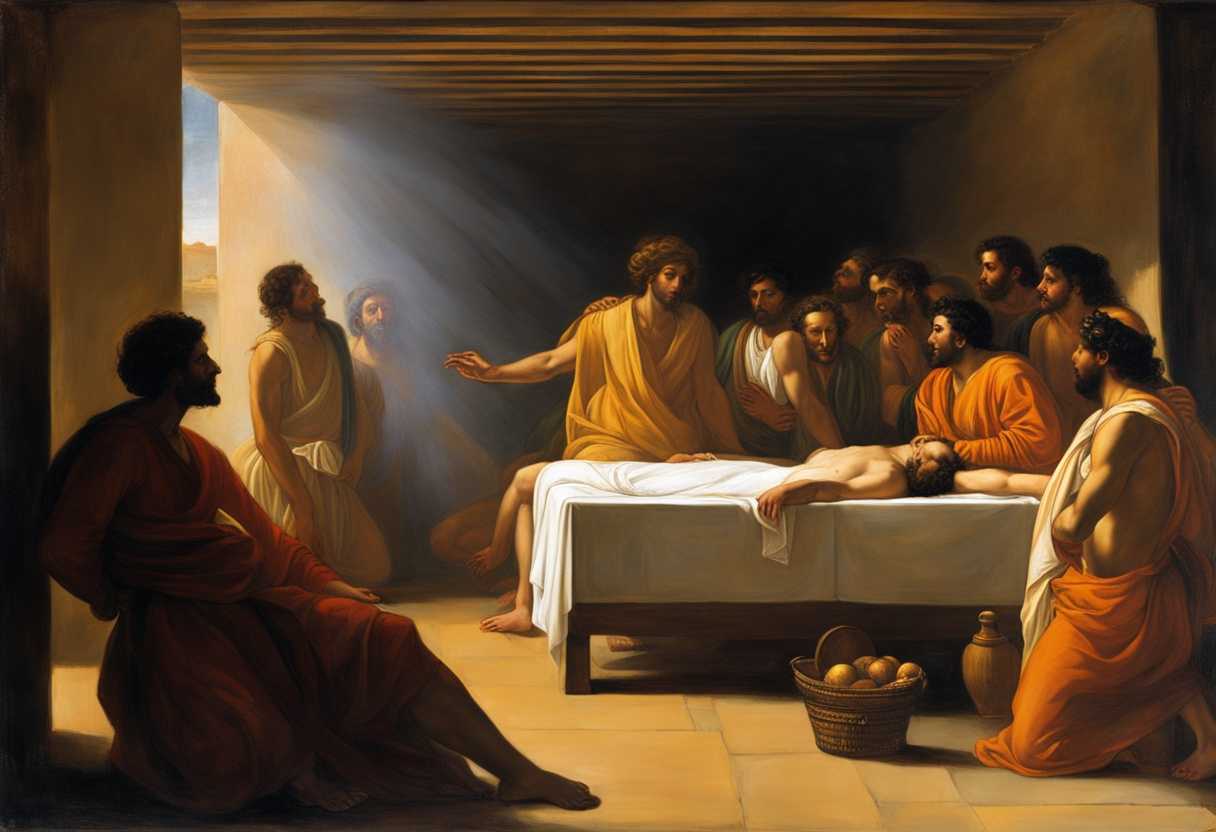
The True Meaning of Genesis 40
This chapter of Genesis was written by Moses, the great prophet and leader of the Israelites. He was a man chosen by God to guide the Israelites out of slavery in Egypt and into the Promised Land. Joseph, the favored son of Jacob, continues his journey in Egypt in this chapter. After being falsely accused and imprisoned, Joseph finds himself interpreting the dreams of two of Pharaoh’s servants. This sets the stage for the remarkable events that will soon unfold, as Joseph’s gift of interpretation will ultimately lead him to a position of great power and influence in Egypt.
We see echoes of Joseph’s own dreams from earlier in Genesis, where he saw his family bowing down to him. These dreams are now beginning to be fulfilled, as Joseph’s interpretations prove accurate. This foreshadows the pivotal role Joseph will play in the lives of his family, as well as the nation of Israel. The chapter also highlights the sovereignty of God, who is guiding Joseph’s steps, even in the midst of adversity.
Genesis 40:1-4
Genesis 40:1-4 introduces us to the story of Joseph while he is imprisoned in Egypt. The passage begins with the mention of Pharaoh’s chief cupbearer and chief baker being placed in prison where Joseph was confined. Both the cupbearer and the baker had angered Pharaoh, which led to their incarceration. It is important to note the significance of these positions in ancient Egypt; the chief cupbearer was responsible for tasting the king’s wine to ensure it was not poisoned, while the chief baker oversaw the preparation of the king’s food. These were positions of great trust and proximity to the ruler.
Joseph, who was also wrongly imprisoned, is depicted in this passage as being put in charge of these two high-ranking officials. Despite his own dire circumstances, Joseph is shown to be caring and considerate towards his fellow prisoners, taking notice of their troubled countenances one morning. This demonstrates Joseph’s empathy and his willingness to help others even while facing his own hardships. His actions here foreshadow his future role in the biblical narrative as a compassionate and merciful leader.
This part of Joseph’s story highlights the theme of patience and trust in God’s timing. Despite being sold into slavery by his own brothers and then unjustly imprisoned, Joseph remained faithful to God. His ability to serve others even in the midst of his own suffering is a powerful example of how we can find purpose and meaning in our trials by extending kindness and compassion to those around us. The narrative of Joseph’s time in prison sets the stage for his eventual rise to power and showcases the profound impact one person’s actions of kindness and integrity can have on the lives of others.
The parallels between Joseph’s experiences and the life of Jesus Christ are also worth noting. Both Joseph and Jesus faced false accusations, betrayal by those closest to them, and suffering before ultimately being exalted to positions of power and authority. Joseph’s story serves as a prefiguration of Christ, emphasizing the themes of redemption, forgiveness, and the ultimate triumph of good over evil. Just as Joseph was able to interpret dreams and bring about deliverance for others, Jesus offers salvation and eternal life to all who believe in him. Genesis 40:1-4 sets the stage for the unfolding of Joseph’s remarkable journey from slavery and imprisonment to becoming a prominent figure in Egypt. It underscores the importance of maintaining faith and integrity in the face of adversity, the power of kindness and empathy in the midst of trials, and the overarching theme of God’s sovereignty and faithfulness in fulfilling His divine purposes.
Genesis 40:5-8
An intriguing narrative within the story of Joseph’s time in prison is found in Genesis 40:5-8. Here, Joseph encounters two individuals – the chief cupbearer and the chief baker of the king of Egypt – who were both imprisoned for offenses against Pharaoh. The importance of these two individuals comes to the forefront as they each have dreams, and Joseph, being gifted with the interpretation of dreams by God, is approached by them to decipher the meaning of their dreams.
Firstly, we have the chief cupbearer who shares his dream with Joseph. He sees a vine with three branches in his dream, which budded, blossomed, and produced grapes that he then squeezed into Pharaoh’s cup and served to him. Joseph interprets this dream as a favorable one, predicting that within three days, the cupbearer would be restored to his position serving Pharaoh. This is significant as it highlights Joseph’s ability to accurately interpret dreams and more importantly, his willingness to use this gift to help others, even in the confines of prison. This act of kindness and selflessness, despite his own circumstances, speaks to the integrity and faithfulness of Joseph.
On the other hand, the chief baker also shares his dream with Joseph, where he has three baskets of bread on his head, but instead of being eaten by birds, the birds are pecking at the bread. Unfortunately for the chief baker, Joseph’s interpretation of this dream is not as uplifting as the cupbearer’s. Joseph predicts that within three days, Pharaoh would lift the chief baker’s head off and impale it on a pole, leading to his demise. This harsh revelation reminds us of the consequences of our actions and choices, highlighting a common theme in the Bible where individuals are accountable for their deeds, and justice is eventually served by God.
This passage serves as a reminder of the importance of humility, the dangers of pride and the ultimate sovereignty of God. Both the cupbearer and the baker’s dreams were fulfilled exactly as Joseph had interpreted, showing that God’s plans are unwavering and cannot be altered by human will. This narrative also sets the stage for Joseph’s eventual release from prison and his rise to power in Egypt, showcasing how God’s divine plan unfolds in unexpected ways, using individuals like Joseph to fulfill His purposes. Dreams and their interpretations play a significant role in communicating God’s messages and prophecies in the broader context of the Bible. Throughout the Old Testament, we see various instances where dreams are used as a means of divine communication, such as in the stories of Jacob, Solomon, and Daniel. Dreams serve as a powerful tool through which God reveals His will and provides guidance to His people, demonstrating His intimate involvement in the lives of individuals. Furthermore, the theme of suffering and eventual redemption, as seen in Joseph’s story, resonates throughout the Bible, illustrating the transformative power of faith and obedience in the face of adversity.
Genesis 40:9-15
Joseph interprets the dreams of his fellow inmates, the chief cupbearer and the chief baker, who had been imprisoned with him in Genesis 40:9-15. The chief cupbearer describes his dream of three branches with clusters of grapes being pressed into Pharaoh’s cup, while the chief baker recounts his dream of three baskets of bread on his head being eaten by birds. Joseph, being gifted with the ability to interpret dreams from God, immediately offers his interpretation. He tells the chief cupbearer that within three days, Pharaoh will lift up his head and restore him to his position, and he asks the cupbearer to remember him and mention him to Pharaoh so that he may be set free from prison. Unfortunately for the chief baker, Joseph’s interpretation is not as favorable; he predicts that in three days, Pharaoh will lift off his head and hang him on a tree, and the birds will eat his flesh.
This passage showcases Joseph’s remarkable gift of dream interpretation and highlights the theme of divine intervention in the lives of individuals. Through Joseph, God is able to send messages and bring about events that ultimately lead to His plan being fulfilled. Joseph’s ability to accurately interpret dreams not only serves as a testimony to God’s hand upon him but also demonstrates the importance of using one’s gifts and talents to serve others.
Additionally, these dreams and their subsequent interpretations serve as a foreshadowing of events to come. The chief cupbearer’s dream will soon come to pass, setting in motion a series of events that will eventually lead to Joseph’s release from prison and his rise to power in Egypt. On the other hand, the chief baker’s unfortunate fate serves as a reminder of the consequences of disobedience and neglecting to seek God’s guidance.
This passage also prompts us to reflect on the concept of divine timing. Although Joseph correctly interprets the dreams and provides accurate information about what is to come, the chief cupbearer’s promise to remember Joseph is forgotten for two more years (Genesis 40:23). This delay may have tested Joseph’s faith and patience, but ultimately, it was all part of God’s plan for Joseph’s life, leading to his eventual promotion to a position of great authority in Egypt. Dreams and their interpretations play a significant role in conveying God’s messages and revealing His will in the broader context of the Bible. Throughout the Old and New Testaments, we see numerous instances of dreams being used to guide, warn, and instruct individuals in carrying out God’s purpose. The story of Joseph in Genesis, including his interpretation of dreams, serves as a precursor to the many instances of divine communication through dreams that we encounter in the Bible.
Genesis 40:16-19
Joseph interprets the dreams of the chief baker and the chief cupbearer, who were both imprisoned with him in Pharaoh’s jail, in Genesis 40:16-19. The chief cupbearer had a dream where he saw a vine with three branches bud, blossom, and then ripen grapes, which he squeezed into Pharaoh’s cup. Joseph interpreted this dream as a favorable sign that within three days, Pharaoh would lift up his head and restore him to his position as Pharaoh’s cupbearer. The chief baker, emboldened by the positive interpretation of the cupbearer’s dream, shared his dream with Joseph. The baker had three baskets of white bread on his head in the dream, and birds were eating the bread out of the top basket. However, Joseph’s interpretation of this dream was grim, as he prophesied that in three days, Pharaoh would lift off the baker’s head and impale his body on a pole, where birds would eat his flesh.
This passage highlights Joseph’s gift of dream interpretation, a skill that would later lead him to even greater prominence in Egypt. Joseph’s ability to accurately interpret dreams was a divine gift bestowed upon him by God, and it played a crucial role in shaping his destiny. Through these interpretations, we see God’s hand at work, guiding events and directing the lives of those involved. It also serves as a testament to God’s sovereignty and control over the future. The contrasting outcomes of the dreams of the cupbearer and the baker illustrate the importance of obedience and faithfulness to God. The cupbearer was restored to his position due to Joseph’s prophecy coming true, while the baker faced a judgment and punishment for his sins.
This passage also serves as a foreshadowing of Joseph’s eventual rise to power and prominence in Egypt. Just as Joseph accurately interpreted the dreams of others in this instance, he would later interpret Pharaoh’s dreams about the upcoming famine, which would lead to Joseph being appointed as second in command in all of Egypt. Joseph’s journey from the pit to the pinnacle of power showcases God’s faithfulness and the fulfillment of His plans for Joseph’s life. It is a reminder that even in the darkest of circumstances, God is working behind the scenes to bring about His purposes. Dream interpretation is a recurring theme in the broader context of the Bible. Throughout the Old and New Testaments, dreams are often used by God as a means of communication with His people. From Joseph in Genesis to Daniel in Babylon, and even to Joseph, the earthly father of Jesus, dreams play a significant role in guiding and revealing God’s will. This highlights the importance of being attuned to God’s voice and His revealed messages, whether through dreams or other means. It also emphasizes the need for discernment and wisdom in understanding the significance of these divine communications.
Genesis 40:20-23
Identify the specific sections to break down in Genesis 40:20-23. “Now the third day was Pharaoh’s birthday, and he gave a feast for all his officials.” – This section sets the stage for the events that are about to unfold. Pharaoh is celebrating his birthday by hosting a feast for his officials. Birthdays were important occasions in ancient times, especially for rulers, and were often marked by feasting and merriment. This feast provides the backdrop for the interactions that later lead to Joseph’s eventual release from prison.
-
“He lifted up the heads of the chief cupbearer and the chief baker in the presence of his officials.” – Pharaoh, in his celebration, notices the chief cupbearer and the chief baker, who are in prison with Joseph. He essentially recognizes them and their roles in his kingdom by lifting up their heads. This action by Pharaoh ultimately leads to these two men sharing their dreams, which sets in motion the events that lead to Joseph interpreting the dreams and eventually being remembered by the chief cupbearer.
-
“He restored the chief cupbearer to his position, so that he once again put the cup into Pharaoh’s hand—but he impaled the chief baker, just as Joseph had said to them in his interpretation.” – After interpreting the dreams of the chief cupbearer and the chief baker, Joseph’s interpretations come to pass. The chief cupbearer is restored to his position, just as Joseph had foretold, while the chief baker meets a grim fate, as also predicted by Joseph. This showcases the accuracy and importance of dream interpretation in the Biblical narrative.
The intricate details of this passage in Genesis 40 demonstrate God’s sovereignty and his ability to work through even seemingly mundane events, such as Pharaoh’s birthday celebration, to accomplish his purposes. Joseph’s role in interpreting dreams becomes pivotal in these events, as it eventually leads to his release from prison and his elevation to a position of power in Pharaoh’s court. This passage highlights themes of divine timing, faithfulness, and the fulfillment of prophecy. It also serves as a reminder of God’s ability to use individuals, like Joseph, to bring about his plans, even in the midst of challenging circumstances. Joseph’s story reflects a common theme found throughout the Bible – the idea of being faithful in all circumstances and trusting in God’s plan, even when faced with adversity, when considering the broader Biblical context. Joseph’s journey from being sold into slavery by his brothers to eventually becoming a ruler in Egypt serves as a powerful example of how God can turn what was meant for evil into good (Genesis 50:20). This story also foreshadows the redemption and salvation that will later be brought about through Jesus Christ, who, like Joseph, was despised and rejected but ultimately exalted by God (Isaiah 53:3; Philippians 2:9-11).
After Genesis 40
The prisoners’ dreams had been interpreted, and Joseph’s predictions had come true. One man was restored to his position, while the other was executed. Joseph remained in prison as the chapter drew to a close, his own fate still uncertain. Yet, even in the depths of his confinement, the young Hebrew held fast to his faith, trusting that the Lord would guide his steps and fulfill the divine purpose for his life. Little did he know that the events unfolding would soon set in motion a chain of circumstances that would ultimately lead him to a position of great power and influence, where he would be called upon to save not only his own family, but an entire nation.

Reverend Michael Johnson is an experienced Church Minister with a profound expertise in spirituality and guidance. With a serene presence and a compassionate heart, he has faithfully served his congregation for over 20 years, leading them on a spiritual journey towards inner peace and enlightenment. Reverend Johnson’s extensive knowledge of religious philosophies and profound understanding of human nature have made him a trusted confidant and mentor to many, as he seamlessly weaves his profound wisdom into life teachings. Reverend Johnson’s calming demeanor and empathetic nature continue to uplift and heal souls, nurturing a sense of unity and tranquility within his community.