
Genesis 42:25 is about Joseph’s brothers not realizing that their reunion with him was orchestrated by God to bring about forgiveness and restoration within their family.
25 Then Joseph gave orders to fill their bags with grain, and to replace every man’s money in his sack, and to give them provisions for the journey. This was done for them.
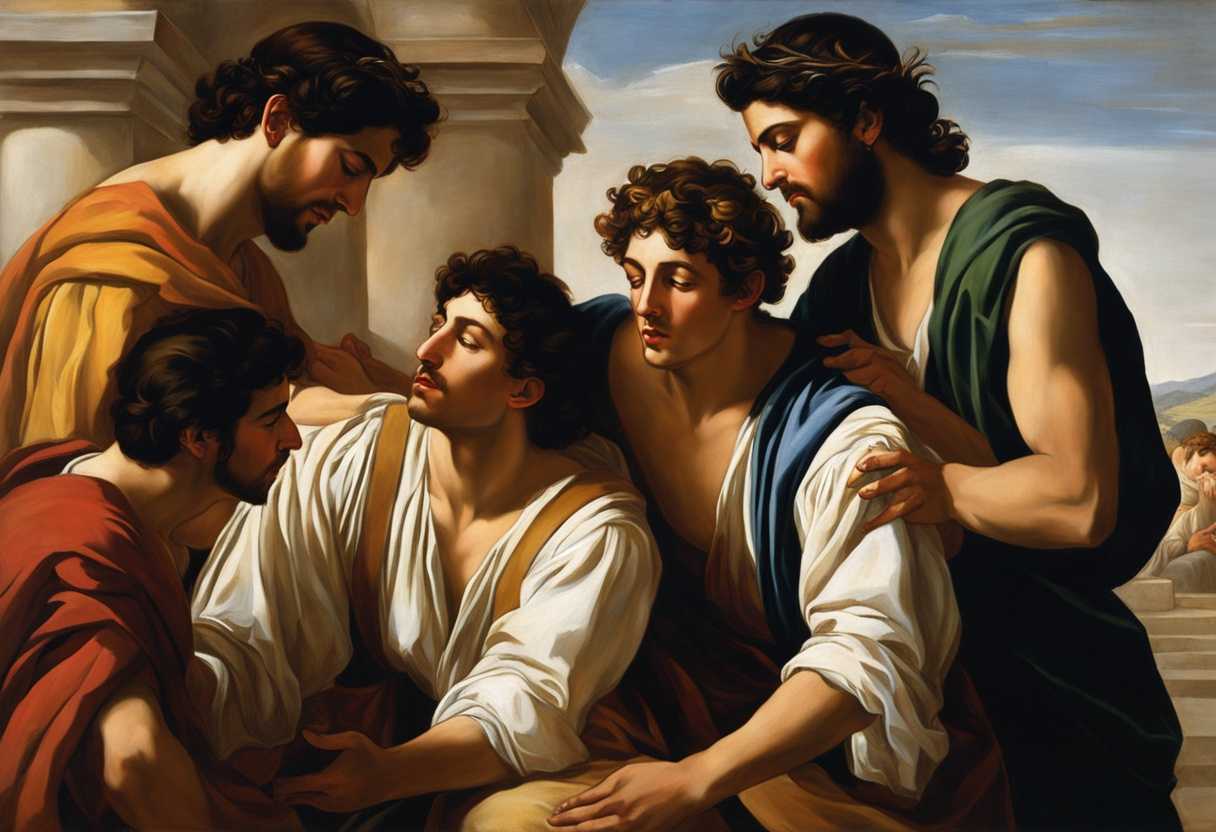
Setting the Scene for Genesis 42:25
In the scene described in Genesis 42:25, we find Joseph, the powerful governor of Egypt, overseeing the grain distribution during a severe famine. Joseph’s brothers, who had betrayed him years earlier by selling him into slavery, have come to Egypt seeking food for their family in Canaan. Unbeknownst to them, they are standing before their long-lost brother, Joseph, whom they do not recognize due to his Egyptian attire and the passage of time.
The surroundings are bustling with activity as people from various lands come to Egypt to purchase grain. The air is filled with the sounds of negotiations, bartering, and the clatter of carts being loaded with provisions. The scene is set against the backdrop of a grand Egyptian palace, with majestic columns and intricate hieroglyphics adorning the walls.
As Joseph’s brothers approach him to request grain, they bow before him, fulfilling the dreams Joseph had shared with them years ago. Joseph, deeply moved by the sight of his brothers and the memories it stirs, struggles to maintain his composure as he grapples with conflicting emotions of forgiveness and justice. The tension in the air is palpable as Joseph navigates the complex dynamics of family, betrayal, and reconciliation in this poignant moment.
What is Genesis 42:25 about?
The biblical narrative shows a powerful moment of reconciliation and transformation in Genesis 42:25. Joseph’s brothers, who had once betrayed him and sold him into slavery out of jealousy, are now unknowingly receiving relief and sustenance from Joseph during a time of famine in Egypt. This verse showcases the complex themes of forgiveness, redemption, and the unpredictable ways in which God works in our lives.
Imagine the mix of emotions that Joseph must have experienced as he watched his brothers bow down before him, fulfilling the dreams he had shared with them years ago. Despite the pain and suffering he endured at their hands, Joseph chooses to extend grace and compassion instead of seeking revenge. This act of kindness not only saves his family from starvation but also sets the stage for a powerful journey towards reconciliation and healing. Let us reflect on this verse and consider the profound power of forgiveness and the transformative impact it can have on our relationships. We too can choose to let go of past hurts and embrace a spirit of reconciliation and love towards others, just as Joseph chose to extend grace to his brothers. We open the door for God’s redemptive work to bring healing and restoration in our lives and relationships.
Understanding what Genesis 42:25 really means
In Genesis 42:25, we find a pivotal moment in the story of Joseph and his brothers. Joseph, now a prominent figure in Egypt, encounters his brothers who have come to buy grain during a severe famine. Despite his brothers not recognizing him, Joseph decides to test them to see if they have changed since they sold him into slavery.
Joseph’s actions in ordering to fill their bags with grain reveal his mercy and provision, showcasing his willingness to help even those who had betrayed him in the past. Furthermore, the gesture of putting each man’s silver back in his sack symbolizes forgiveness and grace. By returning their money, Joseph not only meets their physical needs but also extends a deeper level of kindness towards them.
The phrase “and to give them provisions for their journey” underscores Joseph’s care for his brothers’ well-being. He ensures they have enough supplies for their return trip, demonstrating his concern for their safety and comfort. This act of generosity goes beyond mere provision; it reflects Joseph’s desire for their welfare and reconciliation.
In Matthew 5:44, Jesus teaches to love your enemies and pray for those who persecute you. Joseph’s actions align with this teaching, as he shows love and kindness to his brothers who had wronged him. Similarly, Romans 12:20 encourages showing kindness to enemies by feeding them when hungry and giving them something to drink when thirsty, mirroring Joseph’s provision of grain and silver.
The relevance of Joseph’s story resonates with people today in the themes of forgiveness, reconciliation, generosity, and provision. In a world filled with conflicts and grudges, Joseph’s example challenges us to embrace forgiveness and seek reconciliation, mirroring the grace and mercy he extended to his brothers.
Consider a modern scenario where someone chooses to help a colleague who wronged them, instead of seeking revenge. By offering assistance in times of need, healing and restored relationships can occur, akin to the eventual reconciliation between Joseph and his brothers. This anecdote illustrates the transformative power of kindness and forgiveness in fostering healing and reconciliation.
In conclusion, Genesis 42:25 showcases Joseph’s remarkable display of mercy, forgiveness, and generosity towards his brothers. His actions serve as a compelling example for us to transcend past hurts, extend grace, and reflect God’s love through our interactions with others. Joseph’s story challenges us to emulate his virtues of forgiveness and kindness, fostering reconciliation and healing in our relationships.
Am I responding to my past mistakes with humility?
Yes, responding to past mistakes with humility means acknowledging wrongdoing and showing a willingness to learn and grow from them. It involves accepting responsibility for the consequences of our actions and making amends where possible. Humility allows us to recognize our own imperfections and seek forgiveness from those we have wronged. We demonstrate a genuine desire for self-improvement and reconciliation by humbly admitting our mistakes and taking steps to rectify them. This can lead to personal growth, stronger relationships, and a deeper understanding of ourselves and our impact on others. Responding with humility in the face of our faults shows maturity and a willingness to be accountable for our actions.
Application
Embrace forgiveness as a beacon of light in the darkness of past grievances. Just like Joseph’s forgiving heart towards his brothers, let us also sow seeds of mercy and understanding. Extend the olive branch of reconciliation and watch relationships bloom anew. Today, honor the legacy of kindness and forgiveness by choosing understanding over resentment. How will you illuminate your world with the power of forgiveness?

Reverend Michael Johnson is an experienced Church Minister with a profound expertise in spirituality and guidance. With a serene presence and a compassionate heart, he has faithfully served his congregation for over 20 years, leading them on a spiritual journey towards inner peace and enlightenment. Reverend Johnson’s extensive knowledge of religious philosophies and profound understanding of human nature have made him a trusted confidant and mentor to many, as he seamlessly weaves his profound wisdom into life teachings. Reverend Johnson’s calming demeanor and empathetic nature continue to uplift and heal souls, nurturing a sense of unity and tranquility within his community.