
Genesis 45:4-15 is about Joseph revealing his true identity to his brothers, forgiving them for their past betrayal, and emphasizing that God’s plan was behind all the events that had unfolded, showcasing the themes of reconciliation, forgiveness, and divine providence in human relationships.
4 So Joseph said to his brothers, “Come near to me, please.” And they came near. And he said, “I am your brother, Joseph, whom you sold into Egypt.
5 And now do not be distressed or angry with yourselves because you sold me here, for God sent me before you to preserve life.
6 For the famine has been in the land these two years, and there are yet five years in which there will be neither plowing nor harvest.
7 And God sent me before you to preserve for you a remnant on earth, and to keep alive for you many survivors.
8 So it was not you who sent me here, but God. He has made me a father to Pharaoh, and lord of all his house and ruler over all the land of Egypt.
9 Hurry and go up to my father and say to him, ‘Thus says your son Joseph, God has made me lord of all Egypt. Come down to me; do not tarry.
10 You shall dwell in the land of Goshen, and you shall be near me, you and your children and your children’s children, and your flocks, your herds, and all that you have.
11 There I will provide for you, for there are yet five years of famine to come, so that you and your household, and all that you have, do not come to poverty.’”
12 And his brothers went to feed their father’s flock in Shechem.
13 And you must tell my father of all my honor in Egypt, and of all that you have seen. Go quickly and bring my father down here.”
14 Then he fell upon his brother Benjamin’s neck and wept, and Benjamin wept upon his neck.
15 And he kissed all his brothers and wept upon them. After that his brothers talked with him.
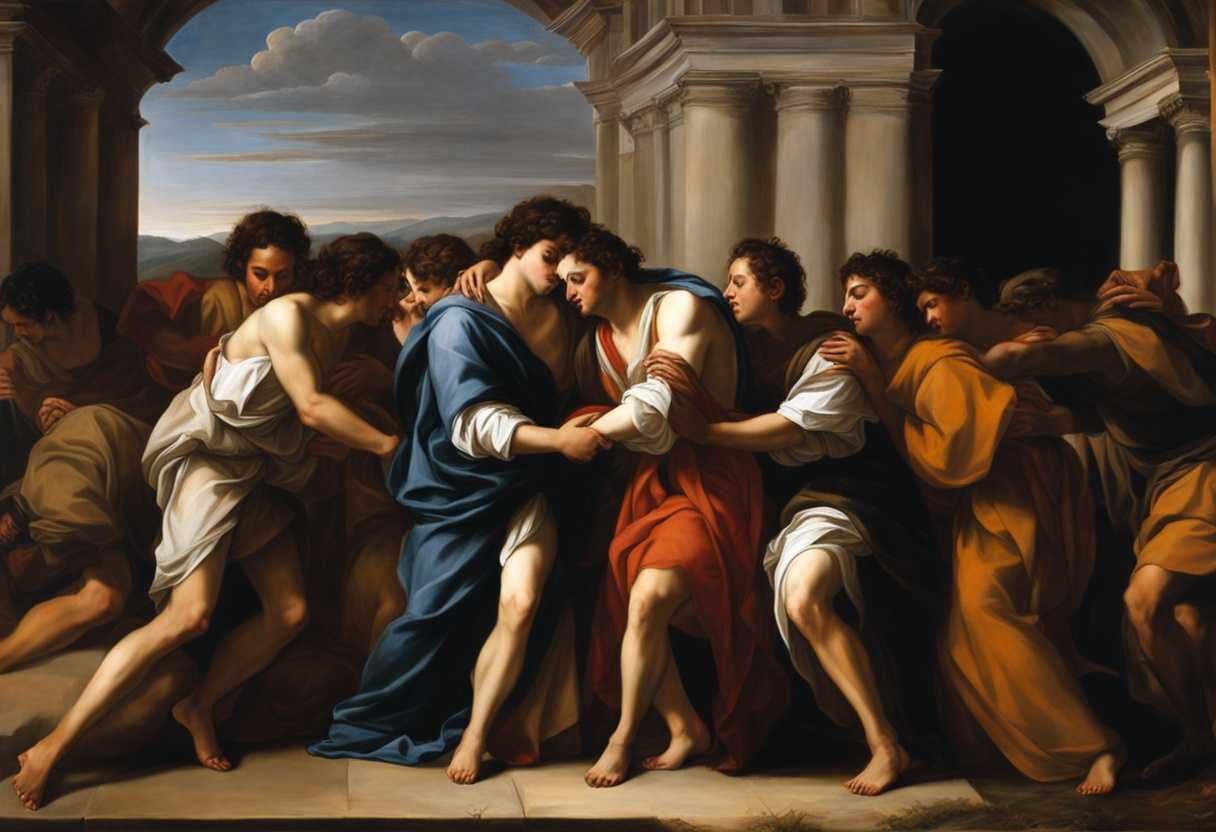
Setting the Scene for Genesis 45:4-15
In Genesis 45:4-15, we find Joseph revealing his true identity to his brothers in a deeply emotional and poignant scene. The setting is in Egypt, specifically in the grand palace where Joseph, now a powerful ruler, resides. The room is adorned with luxurious furnishings, and the air is filled with a mix of tension and anticipation as Joseph’s brothers stand before him, unaware of his true identity.
Joseph, having been sold into slavery by his brothers years ago, now stands before them as a ruler of Egypt. Overcome with emotion, Joseph can no longer contain his feelings and orders all his attendants to leave the room. Alone with his brothers, he reveals himself to them, saying, “I am Joseph, your brother, whom you sold into Egypt.” His brothers are stunned and speechless, unable to comprehend the gravity of the situation.
Tears flow freely as Joseph reassures his brothers, telling them not to be distressed or angry with themselves for what they had done to him. He explains that it was all part of God’s plan to save their family from the famine that had struck the land. Joseph’s forgiveness and compassion towards his brothers serve as a powerful example of reconciliation and the redemptive power of forgiveness.
What is Genesis 45:4-15 about?
Imagine the weight of secrets carried on Joseph’s shoulders as he finally reveals his true identity to his brothers. Holding onto resentment and anger for years, he chooses forgiveness instead. Through this powerful act of forgiveness, Joseph not only sets himself free from the burden of the past but also paves the way for reconciliation and a brighter future for his family. Forgiveness brings healing to broken relationships, showcasing its transformative power in this verse. Joseph’s actions remind us of the importance of letting go of grudges and embracing compassion, even in the face of past betrayals. Joseph shows us that true strength lies in choosing love and reconciliation over hatred and revenge by extending forgiveness and providing for his brothers. We are reminded of our own capacity to heal and rebuild relationships through forgiveness and generosity, just as Joseph’s forgiveness changed the course of his family’s story.
Through the story of Joseph forgiving his brothers, we are challenged to reflect on our own relationships and consider the barriers that prevent us from extending forgiveness. How might our lives be transformed if we chose forgiveness over resentment? What possibilities for reconciliation and growth could open up if we followed Joseph’s example of grace and compassion? We meditate on this verse to cultivate a spirit of forgiveness in our own lives, creating space for healing, reconciliation, and a brighter future for ourselves and those around us.
Understanding what Genesis 45:4-15 really means
In the poignant narrative of Joseph’s reconciliation with his brothers in Genesis 45:4-15, we witness a powerful display of forgiveness and divine providence. Joseph, who had endured betrayal and hardship at the hands of his own kin, chooses to reveal his true identity with the words, “I am your brother, Joseph, the one you sold into Egypt.” This declaration encapsulates the essence of forgiveness, as Joseph extends grace and reconciliation to those who wronged him. It prompts us to ponder the depth of forgiveness in our own lives and challenges us to emulate Joseph’s capacity to forgive even the gravest of offenses.
Joseph’s compassionate plea, “Do not be distressed or angry with yourselves for selling me here,” showcases his profound understanding of God’s overarching plan. Despite the pain he endured, Joseph recognizes that his suffering was a stepping stone in God’s greater design. This sentiment resonates with the timeless truth that God can bring about good from even the most dire circumstances. It compels us to consider how our own trials and tribulations might be integral to a larger, unseen purpose orchestrated by a loving and sovereign God.
The revelation that “God sent me ahead of you to preserve for you a remnant on earth and to save your lives by a great deliverance” underscores the theme of divine providence woven throughout Joseph’s story. It serves as a poignant reminder that God’s plans often surpass our understanding, working towards the ultimate good of His people. This assurance invites us to trust in God’s sovereignty, even when faced with adversity or uncertainty, knowing that He is orchestrating events for our welfare and His glory.
Drawing parallels to other biblical passages such as Romans 8:28 and Matthew 6:14-15 further illuminates the enduring relevance of Joseph’s narrative. These verses reinforce the concepts of God’s redemptive purposes and the transformative power of forgiveness. They urge us to embrace forgiveness as a pathway to healing and restoration, both in our relationships with others and in our walk with God. By internalizing these truths and applying them to our lives, we can cultivate a spirit of forgiveness, reconciliation, and unwavering trust in God’s providential care.
In a world marked by discord and division, Joseph’s story stands as a beacon of hope and reconciliation. It challenges us to confront our own conflicts and grievances with a spirit of forgiveness and understanding, mirroring Joseph’s example of grace and compassion. As we contemplate the profound themes of forgiveness, reconciliation, and trust in God’s plan embedded in this narrative, may we find inspiration to navigate our own journeys with courage, faith, and a steadfast belief in the redemptive power of God’s love.
How can we show forgiveness and reconciliation to others?
One way we can show forgiveness and reconciliation to others is by letting go of grudges and resentment towards them. We can choose to forgive those who have wronged us in the past, just as Joseph forgave his brothers for selling him into slavery. Releasing the anger and bitterness we hold in our hearts opens the door to reconciliation and healing in our relationships.
Another way to show forgiveness and reconciliation is by taking the initiative to reach out to the person we have conflicts with. Joseph took the first step in reconciling with his brothers by revealing his identity to them and inviting them to come live with him in Egypt. Sometimes, extending a hand of friendship and peace can pave the way for rebuilding trust and repairing broken relationships.
Lastly, demonstrating forgiveness and reconciliation also requires empathy and understanding towards the other person’s actions and feelings. Joseph showed compassion and understanding towards his brothers, acknowledging that what they did was part of God’s plan for good. We can foster empathy and compassion, leading to genuine reconciliation and restoration of relationships by seeking to understand the perspectives and motivations of those who have wronged us.
Application
Embrace forgiveness like Joseph did. Let go of grudges and offer grace to those who have hurt you. Reflect on the power of reconciliation in your own relationships. Choose to follow Joseph’s path of love and mercy. Will you take that step towards healing and forgiveness today?

Reverend Michael Johnson is an experienced Church Minister with a profound expertise in spirituality and guidance. With a serene presence and a compassionate heart, he has faithfully served his congregation for over 20 years, leading them on a spiritual journey towards inner peace and enlightenment. Reverend Johnson’s extensive knowledge of religious philosophies and profound understanding of human nature have made him a trusted confidant and mentor to many, as he seamlessly weaves his profound wisdom into life teachings. Reverend Johnson’s calming demeanor and empathetic nature continue to uplift and heal souls, nurturing a sense of unity and tranquility within his community.