
Genesis 47:13-19 is about the severe famine in Egypt during Joseph’s time, where the people faced hardship and had to sell their livestock, land, and eventually themselves to Pharaoh in exchange for food, highlighting the themes of providence, survival, and power dynamics.
13 Now there was no food in all the land, for the famine was very severe. The land of Egypt and the land of Canaan languished because of the famine.
14 And Joseph gathered up all the money that was found in the land of Egypt and in the land of Canaan, in exchange for the grain that they bought. And Joseph brought the money into Pharaoh’s house.
15 And when the money was all spent in the land of Egypt and in the land of Canaan, all the Egyptians came to Joseph and said, “Give us food. Why should we die before your eyes? For our money is gone.”
16 And Joseph collected all the money that was found in the land of Egypt and in the land of Canaan for the grain that they bought. And Joseph brought the money into Pharaoh’s house.
17 So they brought their livestock to Joseph, and Joseph gave them food in exchange for the horses, the flocks, the herds, and the donkeys. Thus he supplied them with food in exchange for all their livestock that year.
18 And when that year was ended, they came to him the following year and said to him, “We will not hide from my lord that our money is all spent. The herds of livestock are my lord’s. There is nothing left in the sight of my lord but our bodies and our land.
19 Why should we die before your eyes, both we and our land? Buy us and our land for food, and we with our land will be servants to Pharaoh. And give us seed that we may live and not die, and that the land may not be desolate.”
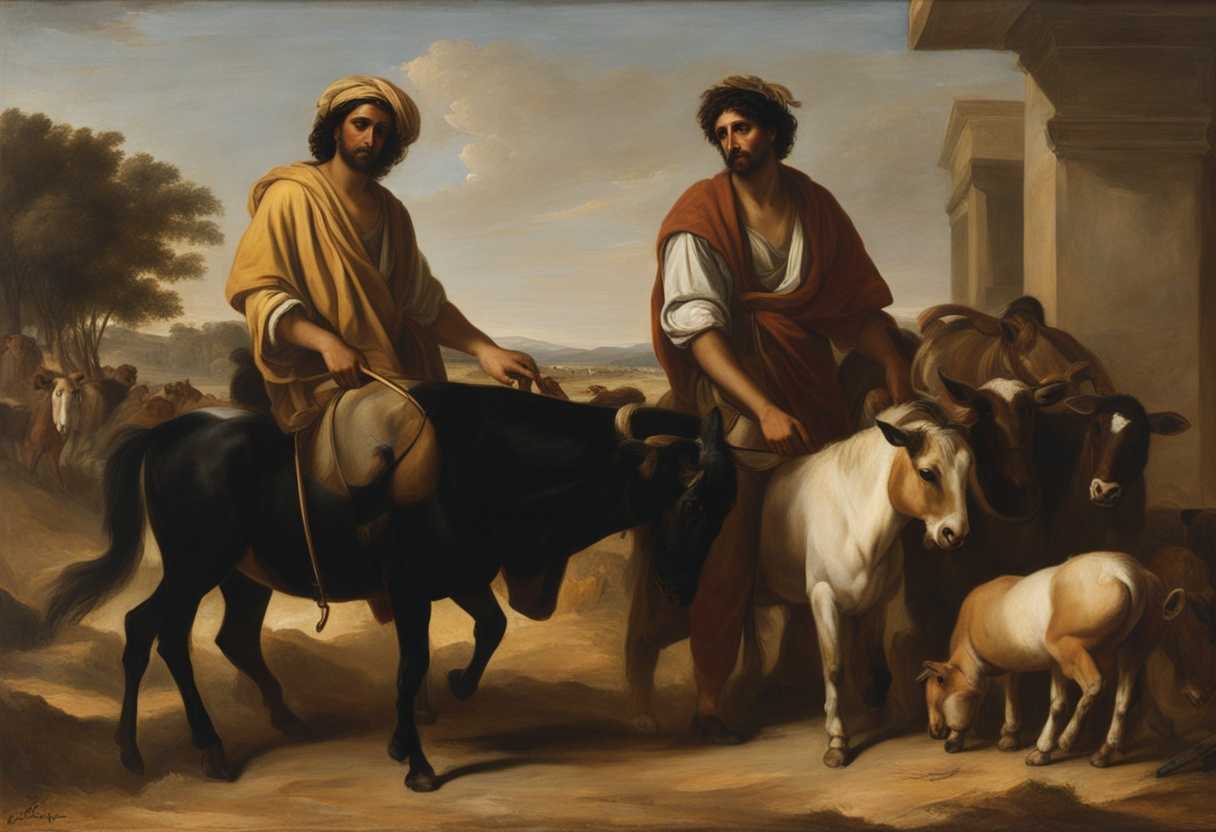
Setting the Scene for Genesis 47:13-19
In the scene described in Genesis 47:13-19, we find Joseph, the son of Jacob, who had risen to a position of power in Egypt, overseeing the distribution of food during a severe famine. Jacob, also known as Israel, along with his sons, had come to Egypt seeking provisions due to the famine that had struck the land. As they stood before Joseph, they requested food to sustain themselves and their families.
The setting is a bustling marketplace in Egypt, with people from various lands gathered to receive their share of grain from the storehouses. The air is filled with the sounds of negotiations and bartering as Joseph’s brothers, including the well-known figures of Reuben, Simeon, Levi, Judah, and the others, stand before him, unaware that the powerful Egyptian official they are dealing with is their long-lost brother. Joseph, dressed in the attire of Egyptian royalty, observes his brothers, testing their character and intentions as he remembers the dreams he had as a young man that foretold this moment.
As the brothers receive their provisions and prepare to return to their father in Canaan, Joseph’s heart is filled with conflicting emotions – longing to reveal his true identity and be reunited with his family, yet also grappling with the pain and betrayal he had experienced at their hands. The scene is charged with tension and drama, as the intricate web of family relationships, forgiveness, and redemption begins to unfold in this pivotal moment of biblical history.
What is Genesis 47:13-19 about?
This verse captures a pivotal moment in the story of Joseph from the Bible, where he is able to navigate Egypt through a severe famine by wisely managing the available resources. Joseph implements a system of exchange in a time of scarcity, where people trade their livestock, land, and eventually even their own labor in exchange for food and sustenance. This showcases Joseph’s strategic thinking and leadership skills, as he not only ensures the survival of the people during the crisis but also strengthens the power and resources of the Egyptian government. We can ponder the themes of resilience, foresight, and sacrifice as we reflect on this verse. Joseph’s actions prompt us to consider the importance of being prepared for adversity, making difficult decisions in times of crisis, and the sacrifices that may be necessary for the greater good. This story encourages us to contemplate the role of leadership in times of hardship, the ethical implications of resource management, and the enduring lessons that can be gleaned from ancient tales. How do we handle challenges in our own lives? What sacrifices are we willing to make for the well-being of others? These are some of the introspective questions that arise when we connect with the profound narrative of Joseph’s management of Egypt’s famine.
Understanding what Genesis 47:13-19 really means
In Genesis 47:13-19, we witness a poignant account of a severe famine gripping Egypt and Canaan, leading people to exchange all they have for food from Joseph, who oversees Egypt’s resources. The desperation is palpable as individuals part with their money, livestock, land, and eventually offer themselves in exchange for sustenance. This narrative sheds light on the dire consequences of a widespread famine and the extreme measures people are willing to take to survive, painting a vivid picture of the harsh realities faced during times of scarcity.
The phrase “There was no food, however, in the whole region because the famine was severe” starkly portrays the gravity of the situation, emphasizing the all-encompassing impact of the famine on the entire region. It serves as a stark reminder of the devastating effects of natural disasters and the vulnerability of communities in the face of such crises. The plea “Why should we perish before your eyes?” encapsulates the desperation felt by the people, prompting reflection on the lengths individuals are willing to go to ensure their survival and the ethical dilemmas that arise in such circumstances.
“Buy us and our land in exchange for food” encapsulates the depths of despair experienced by the population, showcasing their willingness to sacrifice their autonomy and possessions for the basic necessity of food. This poignant plea highlights the moral complexities that emerge when survival is at stake and challenges readers to contemplate the ethical implications of such extreme circumstances. The passage resonates with themes of sacrifice, resilience, and the moral quandaries faced in times of crisis, prompting introspection on our own values and priorities in challenging situations.
Drawing parallels to contemporary times, the narrative holds relevance in periods of economic hardship, where individuals may find themselves grappling with tough decisions to secure their well-being. It serves as a poignant reminder to trust in God’s provision, practice prudence in resource management, and uphold ethical principles even in the face of adversity. The passage encourages readers to reflect on the importance of community support, wise decision-making, and unwavering faith in times of uncertainty, echoing the timeless lessons gleaned from Joseph’s stewardship and the people’s resilience.
Reflecting on historical events like the Great Depression, where families endured similar economic hardships and had to make profound sacrifices to survive, we are reminded of the enduring relevance of the biblical narrative. The parallels between past struggles and the challenges faced in Genesis 47 underscore the enduring nature of human experiences and the timeless wisdom embedded in biblical teachings. Through these reflections, we glean insights into the complexities of human nature, the resilience of the human spirit, and the enduring lessons of faith, stewardship, and community solidarity encapsulated in this poignant passage from Genesis.
How can we demonstrate compassion and generosity towards others?
We can demonstrate compassion and generosity towards others by recognizing their needs and taking action to support them. We can offer our resources, time, and support to those who are struggling, just as Joseph provided food for the people of Egypt during a time of famine. We alleviate the immediate suffering of others and spread hope and compassion in the world by showing kindness and generosity.
We can also practice compassion by approaching others with empathy and understanding. We show that we care for their well-being and value their dignity by listening to their struggles, offering a helping hand, or simply being present with them in their time of need. This act of compassion and generosity can have a ripple effect, inspiring others to also act with kindness and empathy in their interactions with those around them.
Lastly, we can demonstrate compassion and generosity by sharing our blessings with those less fortunate. Whether it be through charitable donations, volunteering our time, or simply offering a kind word to someone in need, we can make a difference in the lives of others. We embody the values of compassion and generosity by giving back to our communities and sharing our resources with those in need, which are so important in building a caring and supportive society.
Application
Reflect on the story of Joseph and his prudence in saving during times of plenty. Let us be like Joseph, wise and forward-thinking in our own lives. In the busy hustle of our modern world, let us not be extravagant with our resources, but instead be diligent and mindful of our stewardship. Could you be the steward of your resources that God intends you to be?

Reverend Michael Johnson is an experienced Church Minister with a profound expertise in spirituality and guidance. With a serene presence and a compassionate heart, he has faithfully served his congregation for over 20 years, leading them on a spiritual journey towards inner peace and enlightenment. Reverend Johnson’s extensive knowledge of religious philosophies and profound understanding of human nature have made him a trusted confidant and mentor to many, as he seamlessly weaves his profound wisdom into life teachings. Reverend Johnson’s calming demeanor and empathetic nature continue to uplift and heal souls, nurturing a sense of unity and tranquility within his community.