
Genesis 47:20-26 is about Joseph implementing a system of land ownership and taxation in Egypt during the time of famine, ultimately leading to the consolidation of power in the hands of Pharaoh and solidifying the dependence of the people on the ruling government.
20 So Joseph bought all the land of Egypt for Pharaoh, for all the Egyptians sold their fields, because the famine was severe on them. The land became Pharaoh’s.
21 And as for the people, he made servants of them from one end of Egypt to the other.
22 Only the land of the priests he did not buy, for the priests had a fixed allowance from Pharaoh and lived on the allowance that Pharaoh gave them; therefore they did not sell their land.
23 Then Joseph said to the people, “Behold, I have this day bought you and your land for Pharaoh. Now here is seed for you, and you shall sow the land.”
24 And at the harvests you shall give a fifth to Pharaoh, and four fifths shall be your own, as seed for the field and as food for yourselves and your households, and as food for your little ones.”
25 So they said, “You have saved our lives; may it please my lord, we will be servants to Pharaoh.”
26 So Joseph made it a statute concerning the land of Egypt, and it stands to this day, that Pharaoh should have the fifth; the land of the priests alone did not become Pharaoh’s.
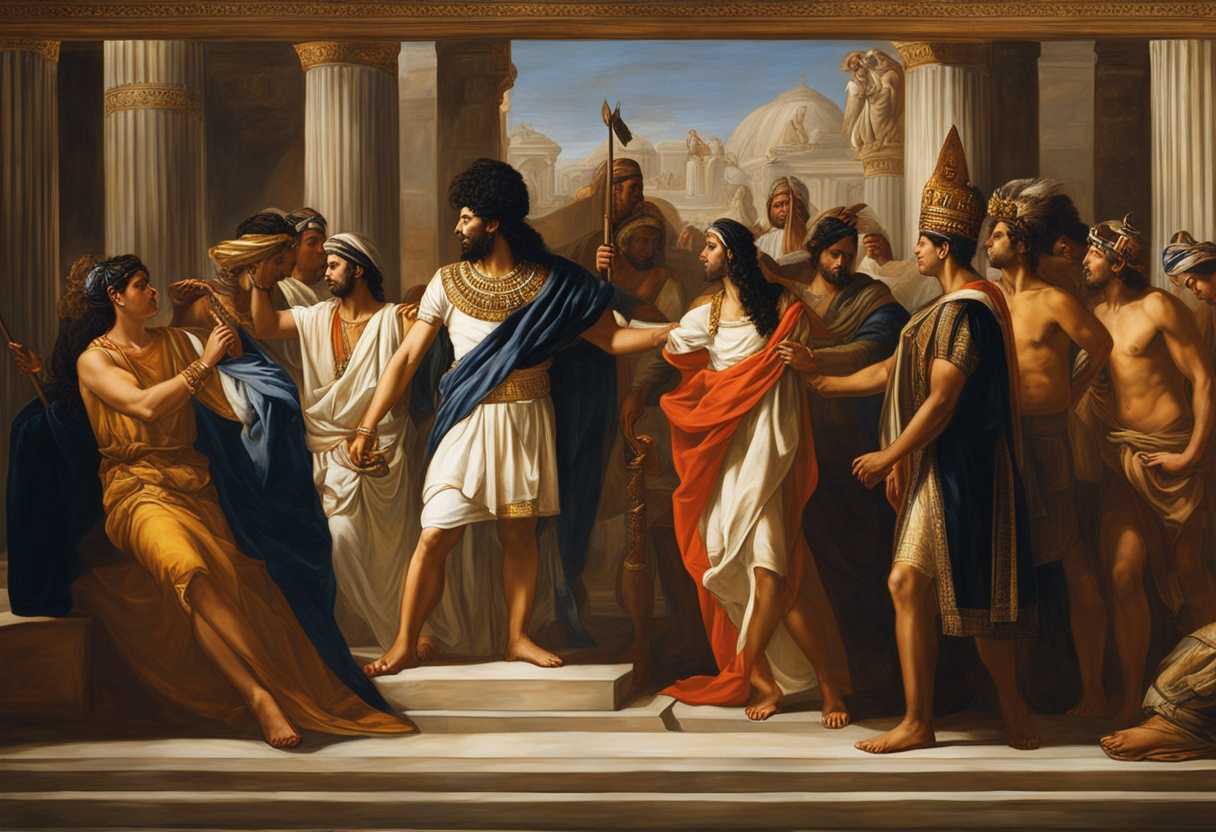
Setting the Scene for Genesis 47:20-26
In Genesis 47:20-26, we find ourselves in the land of Egypt during the time of Joseph’s leadership. Pharaoh had appointed Joseph as the overseer of all the land due to his wisdom and ability to interpret dreams. Famine had struck the region, and Joseph had implemented a plan to ensure the survival of the people by storing up grain during the years of plenty.
The scene unfolds in the royal court of Pharaoh, where Joseph is seated on a grand throne, adorned in rich Egyptian attire. Surrounding him are his brothers, including his father Jacob, who have traveled from Canaan seeking food during the famine. Joseph’s brothers do not recognize him, as he had been sold into slavery by them years ago. As Joseph reveals his identity to his brothers, there is a mix of shock, disbelief, and ultimately reconciliation.
The room is filled with a mixture of emotions – relief, joy, and forgiveness. Jacob, now known as Israel, is overwhelmed with gratitude as he sees his long-lost son alive and well. Joseph’s brothers are humbled by his forgiveness and kindness towards them. The setting is opulent, with intricate tapestries adorning the walls and the scent of exotic spices lingering in the air, creating a backdrop for this powerful moment of reconciliation and family reunion.
What is Genesis 47:20-26 about?
Joseph demonstrates powerful leadership during a time of great crisis – a long and devastating famine. Joseph, known for his wisdom and foresight, had prepared Egypt by storing grain during the years of plenty. Egypt had enough food to sustain itself when the famine struck. However, the people outside of Egypt were suffering, including Joseph’s own family back in Canaan. Desperate people came to Egypt seeking food as the famine worsened. They were willing to go to great lengths to survive, including selling their land and eventually themselves to Pharaoh in exchange for food. This verse showcases the profound impact of a strong leader who was able to navigate a crisis with intelligence and compassion. It also raises questions about the lengths people are willing to go to in order to survive, and the sacrifices they may make in times of desperation.
Imagine the desperation and fear that must have gripped these people, forcing them to give up everything they had just to feed their families. Joseph had to make decisions that affected not only the survival of his own people but also those who came seeking help, a responsibility that was incredible. This verse serves as a reminder of the importance of leadership during times of crisis and the sacrifices that people may be compelled to make when faced with extreme circumstances.
Understanding what Genesis 47:20-26 really means
In Genesis 47:20-26, we witness Joseph’s strategic actions during a severe famine in Egypt. Joseph, with Pharaoh’s backing, acquires all the land in Egypt, consolidating power and resources under Pharaoh’s control. This move not only showcases Joseph’s administrative prowess but also sets the stage for a system where the people sell their land and themselves in exchange for food, leading to a dependency on Pharaoh for sustenance. The phrase “You have saved our lives” encapsulates the Egyptians’ gratitude towards Joseph for ensuring their survival, even though it results in their servitude.
The establishment of a taxation system, where the people give a fifth of their produce to Pharaoh, further solidifies Pharaoh’s wealth and control while allowing the people to retain a portion for themselves. This dynamic of centralized power and resource distribution raises questions about economic systems and dependency. It prompts us to reflect on modern-day scenarios where similar power dynamics exist, urging us to consider the balance between state control and individual ownership in our economic structures.
Drawing parallels to contemporary issues, the passage sheds light on the complexities of gratitude and survival. Despite losing their autonomy, the Egyptians express thankfulness for the sustenance provided by Joseph and Pharaoh. This resonates with situations today where individuals may find themselves in challenging circumstances, accepting limitations on their freedom in exchange for security and basic needs.
Consider a scenario where a town faces a crisis, and a wealthy individual offers aid in exchange for labor and a share of earnings. While the immediate relief is welcomed, the long-term implications of dependency on the benefactor become apparent. This anecdote mirrors the narrative in Genesis 47, emphasizing the delicate balance between gratitude for assistance and the potential consequences of prolonged reliance on external sources for survival.
In conclusion, Genesis 47:20-26 presents a thought-provoking exploration of leadership, economic control, and human resilience. It challenges us to contemplate the ethical dimensions of power dynamics and dependency, both within the biblical context and in our contemporary societal structures. As we delve into these themes, we are encouraged to critically examine our own roles within systems of power and the implications of reliance on external entities for our well-being.
How can we remain faithful to God in prosperity?
To remain faithful to God in prosperity, we can look to the example of Joseph in Genesis 47:20-26. Joseph was put in a position of power and prosperity in Egypt, yet he remained faithful to God by acknowledging where his success truly came from. He credited God for giving him the ability to interpret dreams and for ultimately saving Egypt from the famine. Joseph stayed humble and faithful in his position of wealth and power by recognizing God’s hand in his prosperity.
Additionally, we can remain faithful to God in prosperity by using our blessings to help others and to fulfill God’s purposes. Joseph not only ensured the well-being of his own family during the famine but also acted mercifully towards the people of Egypt by providing food in their time of need. We can continue to honor God and remain faithful to His will even when we are prosperous by being generous and kind with our blessings.
Furthermore, staying connected to God through prayer, gratitude, and obedience is essential to remaining faithful in times of prosperity. We can navigate the challenges that come with wealth and success by maintaining a close relationship with God and seeking His guidance and wisdom. Gratefully acknowledging God’s blessings and staying obedient to His commandments will help us remain faithful as we enjoy prosperity in our lives.
Application
Let us learn from the wisdom of the past and be proactive in managing our resources today. Just as Joseph prepared during times of abundance, we too must plan for the unknown. Are you ready to take charge of your future, securing a foundation for yourself and your loved ones?

Reverend Michael Johnson is an experienced Church Minister with a profound expertise in spirituality and guidance. With a serene presence and a compassionate heart, he has faithfully served his congregation for over 20 years, leading them on a spiritual journey towards inner peace and enlightenment. Reverend Johnson’s extensive knowledge of religious philosophies and profound understanding of human nature have made him a trusted confidant and mentor to many, as he seamlessly weaves his profound wisdom into life teachings. Reverend Johnson’s calming demeanor and empathetic nature continue to uplift and heal souls, nurturing a sense of unity and tranquility within his community.