
48 And Joseph swore to the people of Israel, saying, “God will surely visit you, and you shall carry up my bones from here.”
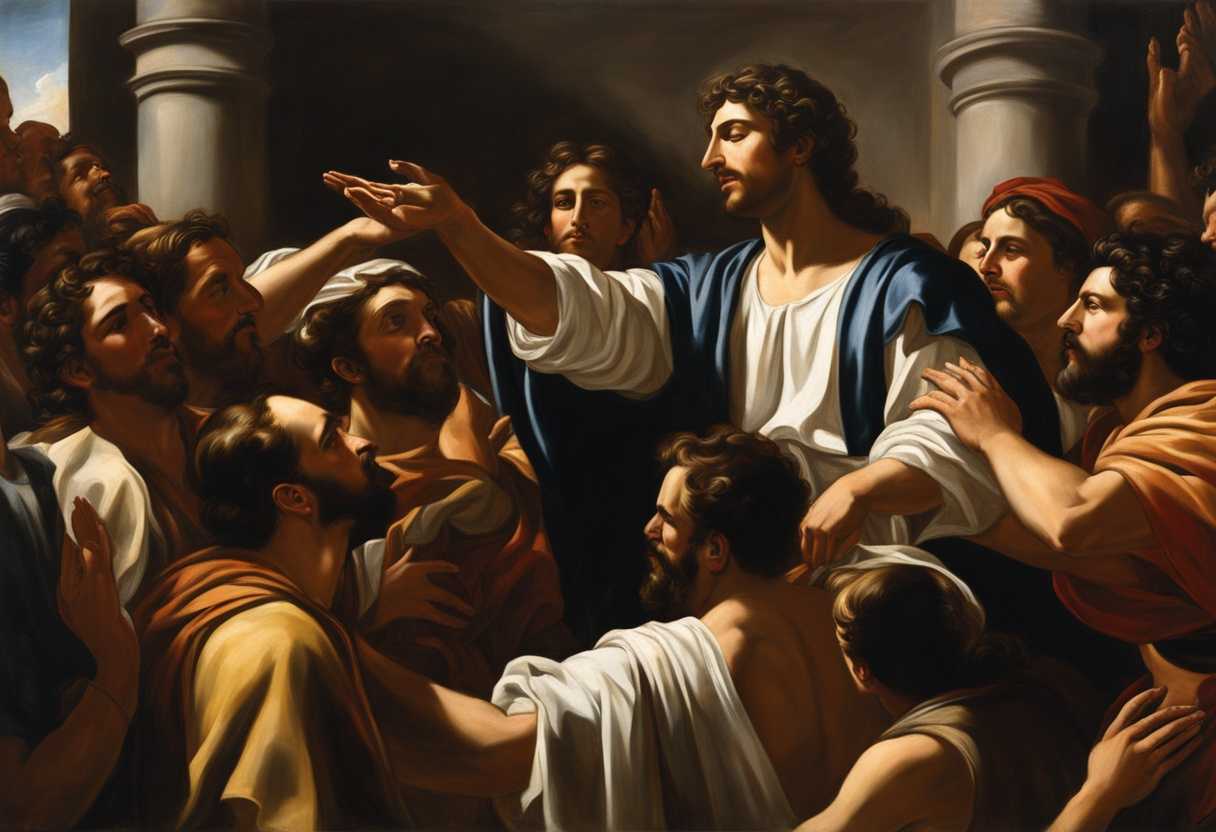
Setting the Scene for Genesis 47:48
In Genesis chapter 47, we find Joseph, the son of Jacob, who had risen to a position of power in Egypt after being sold into slavery by his brothers. The scene takes place during the severe famine that had spread across the land, prompting Joseph to implement a plan to ensure the survival of the people. Jacob, also known as Israel, along with his sons and their families, had come to Egypt seeking food and refuge.
The setting is a grand hall in the palace of Pharaoh, where Joseph is meeting with his father Jacob and his brothers. The room is adorned with intricate Egyptian decorations, and the air is filled with the aroma of incense burning in the background. As Jacob and his sons bow before Joseph, the weight of their past betrayal hangs heavy in the air, but Joseph’s forgiveness and love for his family shine through as he embraces them.
In this poignant moment, Joseph introduces his family to Pharaoh, securing them a place in the fertile land of Goshen. The reunion of Jacob and Joseph is a powerful testament to forgiveness and reconciliation, as they embrace each other after years of separation. The scene is a beautiful display of God’s faithfulness and the restoration of broken relationships within a family.
What is Genesis 47:48 about?
Joseph’s profound commitment to his faith and his people is witnessed in Genesis 47:48. Joseph is embracing his heritage and reinforcing the importance of the land promised to his ancestors by God by ensuring that the Israelites bury him in the promised land. This act symbolizes Joseph’s unwavering belief in the covenant between God and the Israelites, even in death. We are encouraged to consider our own connection to our faith and heritage as we reflect on Joseph’s actions. How are we honoring our beliefs and traditions in our daily lives? Are we passing down our values and beliefs to future generations, as Joseph did by ensuring his burial in the promised land? Just as Joseph prioritized his faith and identity, we are reminded to stay true to our own beliefs and to cherish the spiritual promises and commitments that shape our lives.
Joseph’s decision to be buried in the promised land serves as a powerful reminder of the enduring connection between the Israelites and their faith. It is a testament to the importance of honoring our ancestors, preserving our heritage, and upholding our sacred promises. We may draw inspiration from Joseph’s unwavering dedication and his profound connection to the land promised to his people as we navigate our own journeys of faith and identity.
Understanding what Genesis 47:48 really means
Structure for the Commentary:
- Introduction: Context and significance of the verse
- Analysis of Key Phrases
- Connection to Other Biblical Passages
- Relevance in Modern Life
- Reflective Anecdote
- Conclusion: Call to Reflection and Action
Commentary
Introduction: Context and Significance
The story unfolding in Genesis 47 takes place amid a severe famine that has struck Egypt and the surrounding nations. Joseph, the son of Jacob, holds a significant position in Pharaoh’s government, thanks to his God-given ability to interpret dreams and his strategic wisdom. The verse in question is situated in a chapter where Joseph is implementing a plan to manage the resources during this famine. Understanding the historical and situational context here, helps us fully grasp the underlying lessons and moral insights.
Analysis of Key Phrases
Let’s focus on a few key segments from the verse. One significant phrase might be “Joseph collected all the food,” which showcases both foresight and industrious effort. This isn’t just a historical note; it reveals Joseph’s commitment to stewardship and responsibility. Another important detail is “seven years of plenty”—a time frame that demonstrates how periods of abundance are meant to be managed wisely for future scarcity. How do we handle our resources in times of plenty?
Connection to Other Biblical Passages
This theme of preparation and stewardship resonates throughout the Bible. For instance, Proverbs 6:6-8 extols the virtues of the ant, which prepares its food in the summer and gathers in the harvest. Similarly, Jesus’ parable of the ten virgins in Matthew 25 underscores the importance of preparedness and foresight. Joseph’s actions are a living example of these principles.
Relevance in Modern Life
Today’s world is not unfamiliar with economic uncertainty or natural disruptions. The verse reminds us of the importance of preparation, not just materially but spiritually and relationally as well. We often do not think about saving, planning, and preparing for unseen challenges in an age of consumerism. This verse provides a timeless lesson on the importance of responsible stewardship.
Reflective Anecdote
Imagine a family that diligently saves a portion of their income during prosperous times. When a sudden job loss or medical emergency occurs, they can weather the storm without falling into despair or debt. Their foresight and prudent management mirror Joseph’s actions. Similarly, we are often called to think about our future, be it financially, spiritually, or relationally. Let us ask ourselves in closing how well we are stewarding our resources, not just our material wealth but also our time, talents, and relationships. The story of Joseph challenges us to prepare wisely in times of plenty and to be guided by wisdom and foresight in all aspects of our lives. How will you take action today to ensure that you are preparing for the future wisely and responsibly?
Genesis 47:48 isn’t merely a verse about historical events; it’s a call to live thoughtfully and purposefully, learning to manage the blessings we have with an eye towards the challenges that lie ahead. How will you respond to this call in your own life?
How can we honor God with our wealth?
One way we can honor God with our wealth is by recognizing that all we have ultimately belongs to Him. We are merely stewards of the resources that God has entrusted to us. This perspective can lead us to use our wealth in ways that align with God’s values and bring glory to Him.
Another way to honor God with our wealth is by being generous and willing to help those in need. This can involve giving to the poor, supporting missions and ministries, and using our resources to make a positive impact in the world. We demonstrate our love for Him and our commitment to His purposes by using our wealth to bless others and furthering God’s kingdom.
Additionally, honoring God with our wealth involves being faithful in our financial stewardship. This includes being diligent in managing our resources wisely, avoiding greed and materialism, and seeking God’s guidance in how we earn, save, and spend our money. When we approach our finances with a heart that seeks to honor and glorify God, we can experience the joy of knowing that our wealth is being used in a way that is pleasing to Him.
Application
Look at your life like managing a household budget or meeting project deadlines at work. In Genesis 47:48, Joseph didn’t just sit back; he planned ahead to safeguard against future hardship. Today, you have the same opportunity to stock up your resources, whether it’s saving money, learning new skills, or investing time wisely. Your family depends on you, and your work demands foresight. What steps will you take today to secure tomorrow’s stability for you and your loved ones?

Reverend Michael Johnson is an experienced Church Minister with a profound expertise in spirituality and guidance. With a serene presence and a compassionate heart, he has faithfully served his congregation for over 20 years, leading them on a spiritual journey towards inner peace and enlightenment. Reverend Johnson’s extensive knowledge of religious philosophies and profound understanding of human nature have made him a trusted confidant and mentor to many, as he seamlessly weaves his profound wisdom into life teachings. Reverend Johnson’s calming demeanor and empathetic nature continue to uplift and heal souls, nurturing a sense of unity and tranquility within his community.