
50 Then he commanded them and said to them, “I am to be gathered to my people; bury me with my fathers in the cave that is in the field of Ephron the Hittite,
Setting the Scene for Genesis 49:50
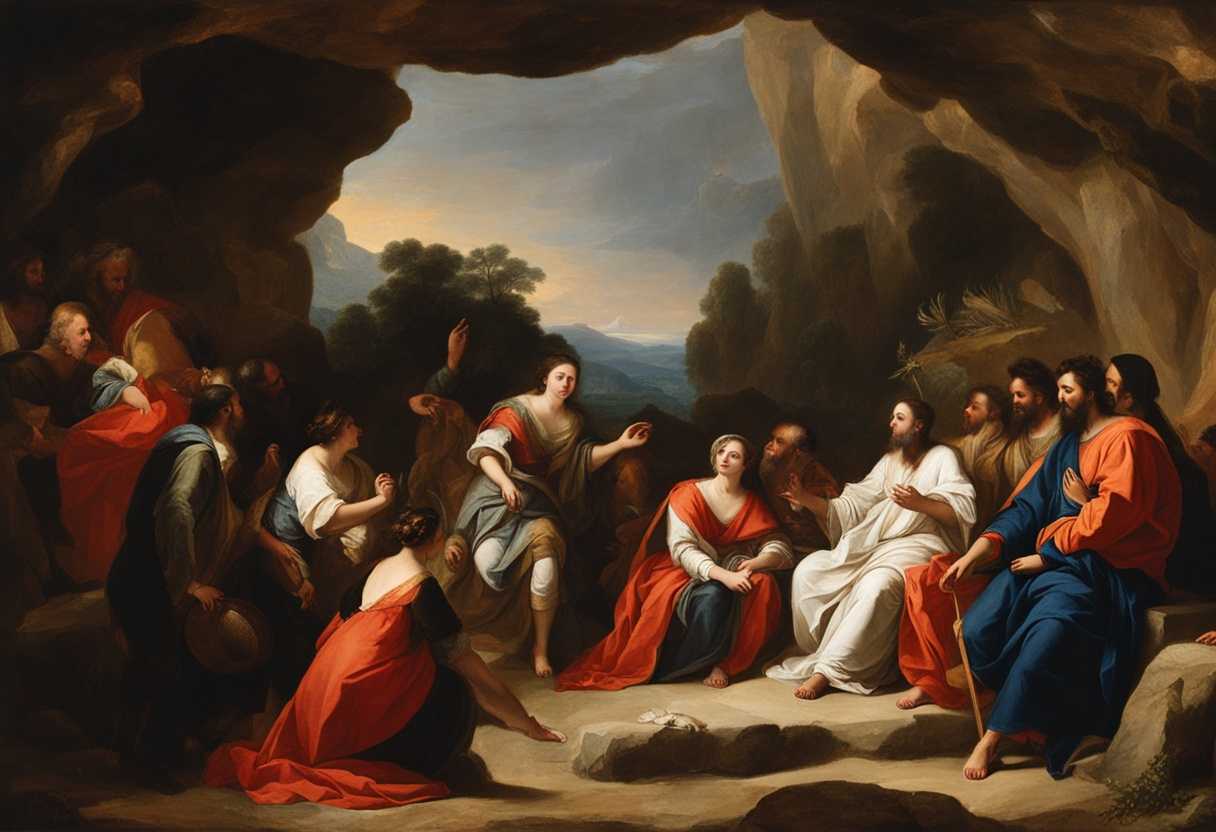
In Genesis 49, we find Jacob, also known as Israel, on his deathbed. He calls his twelve sons to his side to bless them and prophesy over their future. The scene is set in a dimly lit tent, with the flickering light of oil lamps casting shadows on the faces of the gathered family members. The air is heavy with the scent of desert herbs and the sound of soft weeping can be heard in the background.
Jacob’s sons, including Reuben, Simeon, Levi, Judah, and the others, are gathered around their father, their faces a mix of reverence and anticipation as they await his final words. Each son has a unique personality and history, shaped by their experiences and relationships within the family. Some stand tall and proud, while others bow their heads in shame or sorrow.
As Jacob speaks, his voice is weak but filled with authority. He blesses each son according to their character and deeds, foretelling their roles in the future of the nation of Israel. The weight of his words hangs heavy in the air, as each son listens intently, knowing that these blessings will shape their destinies and the destiny of their descendants for generations to come.
What is Genesis 49:50 about?
Jacob, the patriarch of the Israelite family, imparts blessings and instructions to his sons before his death in a poignant moment witnessed in Genesis 49:50. Imagine the weight of his words as he bestows these blessings and guidance upon each of his children. Jacob’s actions in this verse showcase the importance of family, legacy, and passing down wisdom to future generations.
Through this act, Jacob not only reinforces the bonds between himself and his sons but also leaves behind a lasting legacy of faith, love, and guidance. It prompts us to reflect on the ways we pass down our own values and teachings to those we care about. How do we ensure that our words and actions leave a positive impact on our loved ones, even after we are no longer physically present with them? As we delve into the significance of Jacob’s blessings and instructions, let us also consider the power of familial ties and the responsibility we have to impart wisdom and love to those who come after us. How can we follow Jacob’s example in nurturing our relationships and leaving a positive legacy for future generations? We should reflect on the weight of our own words and actions, knowing that they have the potential to shape the lives of those we hold dear long after we are gone.
Understanding what Genesis 49:50 really means
Genesis 49:50 does not exist since Genesis 49 contains only 33 verses. However, this provides us with a valuable reflection point on the importance of precision and accuracy, not only in scriptural citation but in all facets of life. This is poignantly mirrored in Proverbs 25:2, which states, “It is the glory of God to conceal a matter; to search out a matter is the glory of kings.” Here, Scripture encourages the quest for deeper understanding and the pursuit of accuracy. Jacob’s blessings to his sons at the end of Genesis 49 delve into a broader theme, symbolizing guidance and the spiritual heritage through his prophetic declarations over their future. These blessings, encapsulated in verses 28-33, showcase the significance of leadership, legacy, and the consequences of our actions as seen through our patriarchal narratives. For instance, Jacob’s words to Judah in verse 10, “The scepter shall not depart from Judah,” prefigure leadership and kingship that manifest in the lineage leading to King David and ultimately to Jesus Christ. This connection invites us to reflect on our own legacy and the impact of our spiritual and familial inheritances. We witness the blend of forewarning and promise in the example of Jacob’s blessings. This duality reminds contemporary readers of the importance of foresight and the ethical responsibilities incumbent upon them. What kind of legacy are we creating through our daily actions? How do our lives reflect the spiritual blessings or warnings we’ve inherited?
Relating this to a modern-day context, consider a church member, John, who initially struggled with leadership responsibilities within his community service role. Reflecting on Jacob’s blessings, John recognized the importance of his actions in shaping not just his destiny but also influencing his community. Embracing his role, he inspired his team by setting a profound example of integrity and commitment, thereby creating a lasting, positive impact on his community.
The admonition and blessings of Genesis 49, shed light on the gravity of our spoken words and the ripple effects they create. This scripture serves as a timeless reminder that the seeds we plant today through our words and deeds become the heritage we pass down to future generations. Therefore, let this reflection serve as both a caution and an encouragement to approach our roles and responsibilities with wisdom and foresight, ensuring our legacy is one of blessing and positive influence. How, then, will you choose to shape your legacy based on the spiritual insights you’ve inherited?
How can we balance our desire for revenge with forgiveness?
Balancing our desire for revenge with forgiveness is a common struggle for many individuals. We can understand in the context of Genesis 49:50 that the verse emphasizes the importance of acknowledging and working through our feelings of anger and desire for vengeance, without losing sight of the healing power of forgiveness. It highlights the need to find a middle ground where we can address our hurt and anger in a constructive manner, while also recognizing the value of letting go and extending forgiveness.
To strike a balance between the desire for revenge and forgiveness, it is crucial to first acknowledge and validate our emotions. It is natural to feel anger and a desire for justice when we have been wronged. However, it is equally important to process these emotions in a healthy way and avoid letting them consume us. We can begin to work towards a place of forgiveness and inner peace by recognizing our feelings and understanding the root causes of our desire for revenge. A conscious effort to move towards healing, growth, and reconciliation ultimately requires finding a balance between revenge and forgiveness. It involves setting boundaries to protect oneself from further harm, while also being open to the possibility of extending forgiveness and letting go of the desire for revenge. We can navigate this delicate balance with empathy, compassion, and a commitment to our own well-being and spiritual growth by recognizing the complex interplay between our emotions and our capacity for forgiveness.
Application
Imagine your life as a bustling office where every commitment, big or small, from work tasks to family dinners, forms part of your daily agenda. In this complex schedule, the simple act of honoring your parents is akin to securing the cornerstone that holds everything together. It’s about investing in the foundations of your personal skyscraper—the family—that supports and elevates you every day. Take a moment today to express your appreciation, not just with fleeting words, but through meaningful actions that resonate with love and respect. Think of it as an essential balance in your equity of life’s investments. Will you take a step today to strengthen that foundation and enrich your family legacy?

Reverend Michael Johnson is an experienced Church Minister with a profound expertise in spirituality and guidance. With a serene presence and a compassionate heart, he has faithfully served his congregation for over 20 years, leading them on a spiritual journey towards inner peace and enlightenment. Reverend Johnson’s extensive knowledge of religious philosophies and profound understanding of human nature have made him a trusted confidant and mentor to many, as he seamlessly weaves his profound wisdom into life teachings. Reverend Johnson’s calming demeanor and empathetic nature continue to uplift and heal souls, nurturing a sense of unity and tranquility within his community.