
13 And God said to Noah, “I have determined to make an end of all flesh, for the earth is filled with violence through them. Behold, I will destroy them with the earth.
14 Make yourself an ark of gopher wood.
15 This is how you are to make it: the length of the ark 300 cubits, its breadth 50 cubits, and its height 30 cubits.
16 Make a roof for the ark, and finish it to a cubit above, and set the door of the ark in its side. Make it with lower, second, and third decks.
17 For behold, I will bring a flood of waters upon the earth to destroy all flesh in which is the breath of life under heaven. Everything that is on the earth shall die.
18 But I will establish my covenant with you, and you shall come into the ark, you, your sons, your wife, and your sons’ wives with you.
19 And of every living thing of all flesh, you shall bring two of every sort into the ark to keep them alive with you. They shall be male and female.
20 Of the birds according to their kinds, and of the animals according to their kinds, of every creeping thing of the ground, according to its kind, two of every sort shall come in to you to keep them alive.
21 And you shall take for yourself of all food that is eaten, and you shall gather it to yourself, and it shall be food for you and for them.
22 Noah did this; he did all that God commanded him.
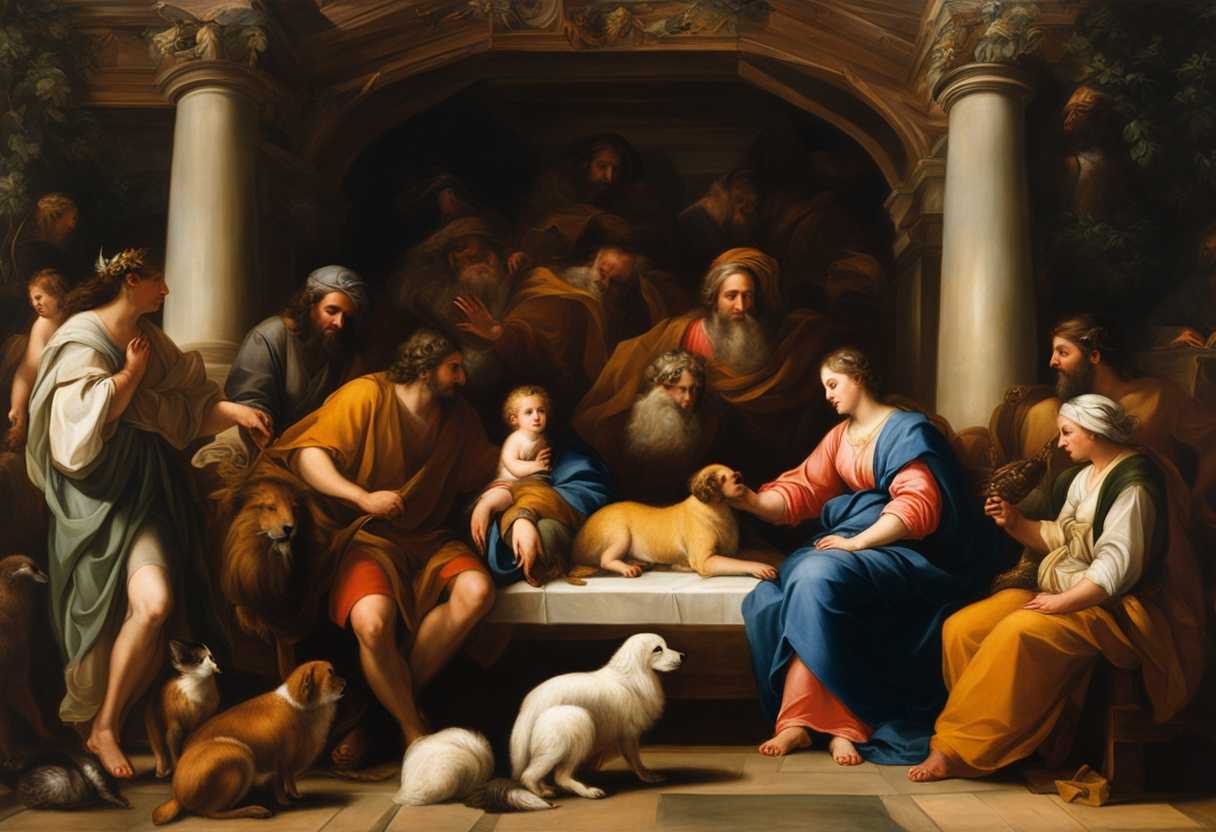
Setting the Scene for Genesis 6:13-22
In Genesis chapter 6, we find Noah, a righteous man in the eyes of God, living in a time when the earth was filled with corruption and violence. God decides to bring a great flood to cleanse the earth of its wickedness. He instructs Noah to build an ark to save himself, his family, and a pair of every kind of animal from the impending deluge.
The scene is set in a vast plain where Noah, a humble and obedient servant of God, begins constructing the massive ark according to the precise measurements and instructions given to him. As he diligently works on the ark, his wife and three sons, Shem, Ham, and Japheth, assist him in gathering the necessary materials and preparing for the flood that will soon come upon the earth. The surroundings are bustling with activity as animals of all kinds start to gather near the ark, guided by God’s unseen hand to seek refuge from the impending catastrophe.
Noah’s unwavering faith and obedience to God’s command stand out in stark contrast to the wickedness surrounding him. As he toils day and night to complete the ark, he serves as a beacon of hope and salvation for all who are willing to heed God’s warning. The scene is a powerful testament to the importance of faith, obedience, and God’s unwavering promise to protect those who walk in righteousness.
What is Genesis 6:13-22 about?
This verse speaks to the concept of divine instruction and protection. It symbolizes the idea that even in times of great difficulty or chaos, faith and obedience to God’s guidance can lead to salvation and protection. Imagine the incredible trust and courage Noah must have had to embark on such a monumental task of building the ark, knowing that it would ensure the safety of his family amidst the impending flood. It demonstrates the power of belief and following God’s guidance even when it may seem unconventional or difficult. We can consider the lessons we can draw from this verse in our own lives. Are we willing to heed God’s instructions and step out in faith, even when the path ahead may seem uncertain or daunting? Just like Noah, we may face challenges that require us to trust in something beyond our own understanding. This verse reminds us of the importance of staying faithful and obedient to God’s word, as it may ultimately lead us to a place of safety and salvation amidst life’s storms.
Understanding what Genesis 6:13-22 really means
Genesis 6:13-22 is a profound passage that outlines God’s interaction with Noah amidst the pervasive corruption of the world. It provides a precursor to the story of the Flood and offers deep insights into themes of judgment, obedience, and grace. Let’s explore the structure and underlying message of this passage to understand its relevance for us today.
The narrative begins with God observing the extent of human wickedness and deciding to cleanse the earth through a flood. This introduction of divine judgment is significant; it underscores a recurring biblical theme that unbridled sin cannot coexist indefinitely with God’s holiness. Think about it: how does this reflect in the spaces we occupy today? Are there areas in our lives where corruption has become normalized, requiring us to seek renewal?
Moving deeper into the passage, God’s instructions to Noah about building an ark are pivotal. These directives not only highlight Noah’s righteousness but also his obedience. Noah is tasked with a monumental and seemingly irrational project. Yet, his response is one of unwavering compliance. This is emblematic of our own faith journeys—often, God’s requests might seem daunting or illogical, but our obedience unwraps the deliverance he prepares for us. Can you recall a time when obedience felt like a leap in the dark? God introduces the theme of grace through His covenant with Noah. Amidst judgment, God carves out a path of salvation for Noah, his family, and diverse species of animals. This aspect of the narrative reflects God’s merciful character and his desire to preserve and restore rather than merely to destroy. God sent his Son not to condemn the world, but to save the world through Him, as a reminder in John 3:17. How does this parallel with the grace shown to Noah?
The specificity with which God details the construction of the ark (the dimensions, materials, and structure) also serves an instructive purpose. It teaches about God’s nature: He is not a God of disorder but of precision and preparation. Each specification has a purpose, much like the specific plans He has for each of our lives (Jeremiah 29:11). Have you noticed the meticulous care with which God operates in your own life’s blueprint?
Today, reflecting on this passage prompts us to consider our response to God’s instructions amidst a corrupt world. It encourages examining personal integrity, obedience to divine commands, and openness to God’s saving grace. A personal anecdote that resonates with many is the experience of being called to a challenging task. Much like Noah, accepting a difficult role or mission often leads to unexpected blessings and growth, reinforcing the timeless truth that God’s ways, while mysterious, are always aimed at our ultimate good. Genesis 6:13-22 challenges us to reflect on our moral standing, embrace obedient action, and recognize the grace that God extends even in judgment. It is a call to realign with divine purposes, mirroring Noah’s righteousness amidst prevailing moral decay. How are we building our “arks” today, and in what ways are we responding to God’s call for righteousness and obedience in our generation?
How can we remain faithful to God in corruption?
Remaining faithful to God can be challenging in the midst of corruption and wickedness. However, the verse reminds us of the importance of obedience and faith in God even when surrounded by corruption. We can stand firm in our faith despite the corruption around us by following God’s commands and staying true to His will.
To remain faithful to God in corruption, we need to cultivate a strong relationship with Him through prayer, studying His Word, and seeking His guidance. Just as Noah found favor in the eyes of the Lord by walking with Him, we too can maintain our faithfulness by continually seeking God’s presence and following His direction in a corrupt world. Staying faithful to God in the face of corruption ultimately requires unwavering trust in Him and His promises. We can overcome the temptations and pitfalls of a corrupt world and remain steadfast in our faith by relying on God’s strength and wisdom, just as Noah did in the midst of a sinful generation.
Application
Imagine you are at the helm of your life’s ship, navigating through the stormy seas of modern-day challenges at work and within your family. Just as Noah built the ark, trusting in God’s plan amidst uncertainty, you too are equipped to build something enduring. Channel his dedication and let it drive your actions, anchoring your choices in faith and obedience. Are you ready to pick up the tools of trust and commitment, constructing your path with confidence and purpose? Will you set sail on your journey with the same unwavering faith that guided Noah?

Reverend Michael Johnson is an experienced Church Minister with a profound expertise in spirituality and guidance. With a serene presence and a compassionate heart, he has faithfully served his congregation for over 20 years, leading them on a spiritual journey towards inner peace and enlightenment. Reverend Johnson’s extensive knowledge of religious philosophies and profound understanding of human nature have made him a trusted confidant and mentor to many, as he seamlessly weaves his profound wisdom into life teachings. Reverend Johnson’s calming demeanor and empathetic nature continue to uplift and heal souls, nurturing a sense of unity and tranquility within his community.