
13 And God said to Noah, “I have determined to make an end of all flesh, for the earth is filled with violence through them. Behold, I will destroy them with the earth.
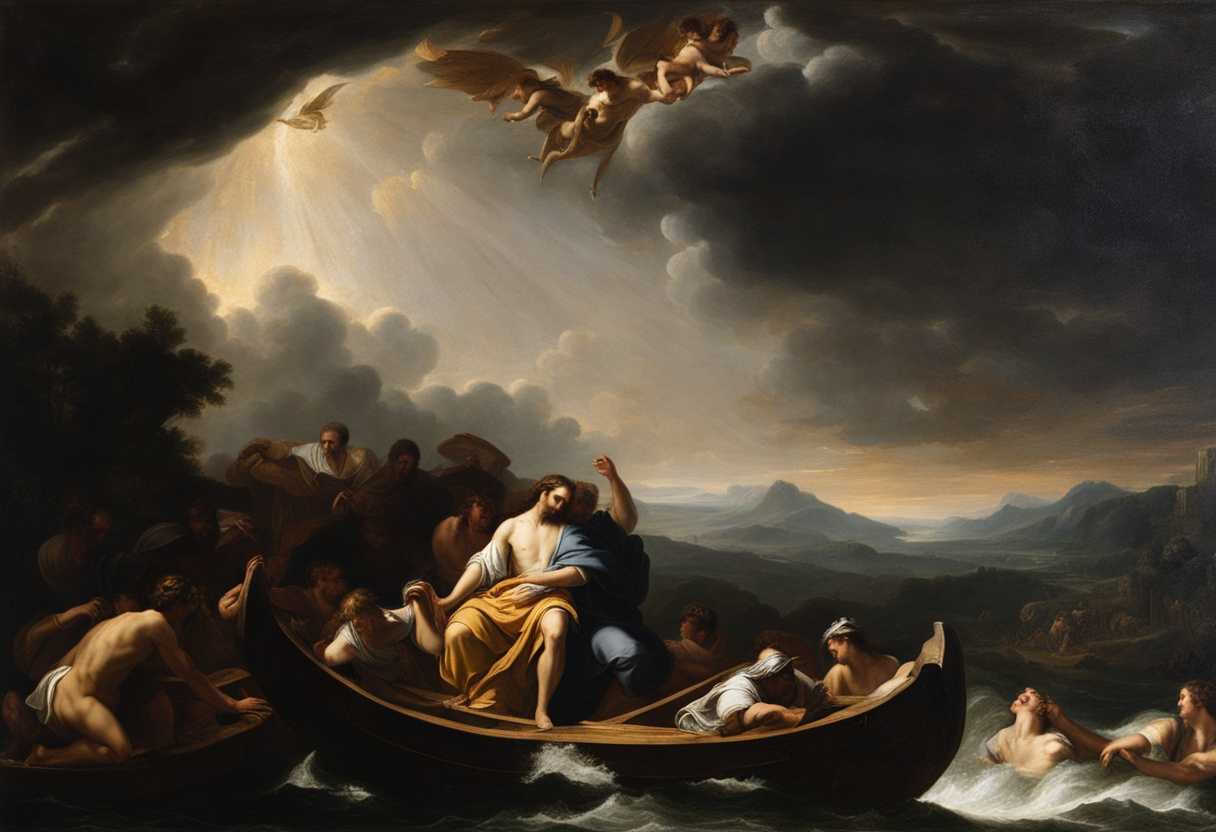
Setting the Scene for Genesis 6:13
In Genesis chapter 6, we find Noah, a righteous man in the eyes of God, living in a time when the earth was filled with corruption and violence. God decides to bring a flood to cleanse the earth of its wickedness, but He chooses to spare Noah and his family. The scene unfolds with Noah receiving a divine message from God, instructing him to build an ark to save himself, his family, and pairs of every kind of animal from the impending flood.
Noah, a man of faith, diligently follows God’s instructions and begins constructing the massive ark. The scene is set amidst a backdrop of skepticism and ridicule from the people around him, who cannot comprehend the purpose of such a colossal undertaking. As Noah works tirelessly on the ark, his family joins him in this monumental task, trusting in God’s plan despite the doubts and mockery of their peers. The surroundings are filled with the sounds of hammering, sawing, and the animals being gathered, as Noah and his family prepare for the great flood that will soon come upon the earth.
What is Genesis 6:13 about?
This verse from the Bible, Genesis 6:13, carries profound implications. Imagine being Noah, hearing directly from God about His intention to destroy the world to eradicate wickedness. The sheer weight of this revelation must have been overwhelming. How would you feel if you were in Noah’s shoes, knowing that all around you, people were engaging in evil acts that warranted such drastic action from the Creator?
This verse highlights the consequences of human actions and the importance of living a righteous life. It prompts us to reflect on our own behaviors and choices. How are we contributing to the state of the world today? Are we upholding values of kindness, compassion, and justice, or are we perpetuating wickedness in our actions and words? Just like Noah, we are called to be agents of goodness and righteousness in a world that may sometimes seem engulfed in darkness. This verse ultimately serves as a reminder of God’s justice and mercy. Despite the impending destruction, God chose to spare Noah and his family, offering them a chance to start afresh. It speaks to the power of faith and obedience in the face of adversity. We may find solace in the belief that God’s plans are just, even when we navigate our own challenges and struggles, even when they may seem incomprehensible to us at times.
Understanding what Genesis 6:13 really means
God communicates a consequential decision to Noah amid escalating human wickedness in Genesis 6:13. This passage marks a pivotal point, not just in biblical narrative, but in the divine-human relationship. Here, God expressed His intention to “destroy both them and the earth.” This declaration is profound and warrants a meticulous examination of its implications and relevance.
Firstly, the phrase “destroy both them and the earth” serves as a divine response to pervasive moral decay—humanity’s widespread departure from the ways of righteousness. We are reminded of Romans 6:23, where it is written, “For the wages of sin is death.” This connection illustrates the gravity of sin and its eventual repercussions not just on individuals, but on creation itself. It communicates a sobering truth about the destructiveness of sin and the inherent justice of God.
However, this verse also underscores the concept of divine mercy and redemption. Despite the forthcoming judgment, God’s conversation with Noah introduces a glimmer of hope. This duality of justice and mercy is a theme that we see echoed throughout the Scriptures, such as in Ezekiel 18:23 where God states, “Do I have any pleasure in the death of the wicked? declares the Sovereign LORD. Rather, am I not pleased when they turn from their ways and live?” Even as judgment looms, God is actively seeking restoration and life.
For us today, this passage serves as a poignant reminder of the consequences of our collective actions and attitudes. It challenges us to reflect on how our behaviors impact not just our immediate surroundings but the broader creation. Are we, like the pre-flood population, contributing to a culture and environment that necessitates divine intervention? Communities often face the harsh reality of having ignored prior warnings when environmental neglect leads to a disaster. Genesis 6:13 calls us to heed God’s warnings about moral and spiritual decay before the need for drastic intervention becomes inevitable.
Lastly, the promise of hope through Noah is a testament to the power of righteousness in a fallen world. It invites each of us to consider our role as stewards of both our planet and our moral landscapes. Let’s ask ourselves as we ponder on Genesis 6:13: Are we part of the problem, or are we partnering with God in nurturing and preserving life? This inquiry not only deepens our understanding of the text but challenges us to live responsibly and righteously in a complex and often wayward world.
How can we maintain our righteousness in a corrupt world?
To maintain our righteousness in a corrupt world, we must strive to stay true to our beliefs and values, even when faced with temptation or societal pressures. Just as Noah remained righteous amidst a corrupt world, we can draw inspiration from his actions by following the path of righteousness despite the negative influences around us. We can navigate through the corruption and maintain our integrity by staying steadfast in our moral compass and standing up for what is right.
Additionally, we can seek guidance and strength through prayer and meditation to help us stay connected to our faith and remain anchored in our righteousness. Building a strong relationship with a higher power can provide us with the spiritual support needed to resist the allure of corruption and stay true to our convictions. Surrounding ourselves with like-minded individuals who share our values can also help reinforce our commitment to righteousness in a corrupt world, creating a support system that uplifts and encourages us to stay on the right path.
Application
Imagine your life as a bustling office where every action is a transaction contributing to your spiritual portfolio. As you sift through the clutter on your desk — your daily routines, habits, and choices — consider if these truly align with the divine mission statement handed down in Genesis 6:13. It’s time to audit our lives, prioritize God’s directives, and discard any practices that don’t meet His standards. Just as a dedicated CEO leads a company towards success, lead your family and yourself towards spiritual prosperity. Are your daily dealings really honoring the blueprint laid out by our Creator?

Reverend Michael Johnson is an experienced Church Minister with a profound expertise in spirituality and guidance. With a serene presence and a compassionate heart, he has faithfully served his congregation for over 20 years, leading them on a spiritual journey towards inner peace and enlightenment. Reverend Johnson’s extensive knowledge of religious philosophies and profound understanding of human nature have made him a trusted confidant and mentor to many, as he seamlessly weaves his profound wisdom into life teachings. Reverend Johnson’s calming demeanor and empathetic nature continue to uplift and heal souls, nurturing a sense of unity and tranquility within his community.