
17 For behold, I will bring a flood of waters upon the earth to destroy all flesh in which is the breath of life under heaven. Everything that is on the earth shall die.
18 But I will establish my covenant with you, and you shall come into the ark, you, your sons, your wife, and your sons’ wives with you.
19 And of every living thing of all flesh, you shall bring two of every sort into the ark to keep them alive with you. They shall be male and female.
20 Of the birds according to their kinds, and of the animals according to their kinds, of every creeping thing of the ground, according to its kind, two of every sort shall come in to you to keep them alive.
21 And you shall take for yourself of all food that is eaten, and you shall gather it to yourself, and it shall be food for you and for them.
22 Noah did this; he did all that God commanded him.
Setting the Scene for Genesis 6:17-22
In Genesis chapter 6, we find Noah, a righteous man in the eyes of God, living in a time when the earth was filled with corruption and violence. God decides to bring a great flood to cleanse the earth of its wickedness. He instructs Noah to build an ark to save himself, his family, and a pair of every kind of animal.
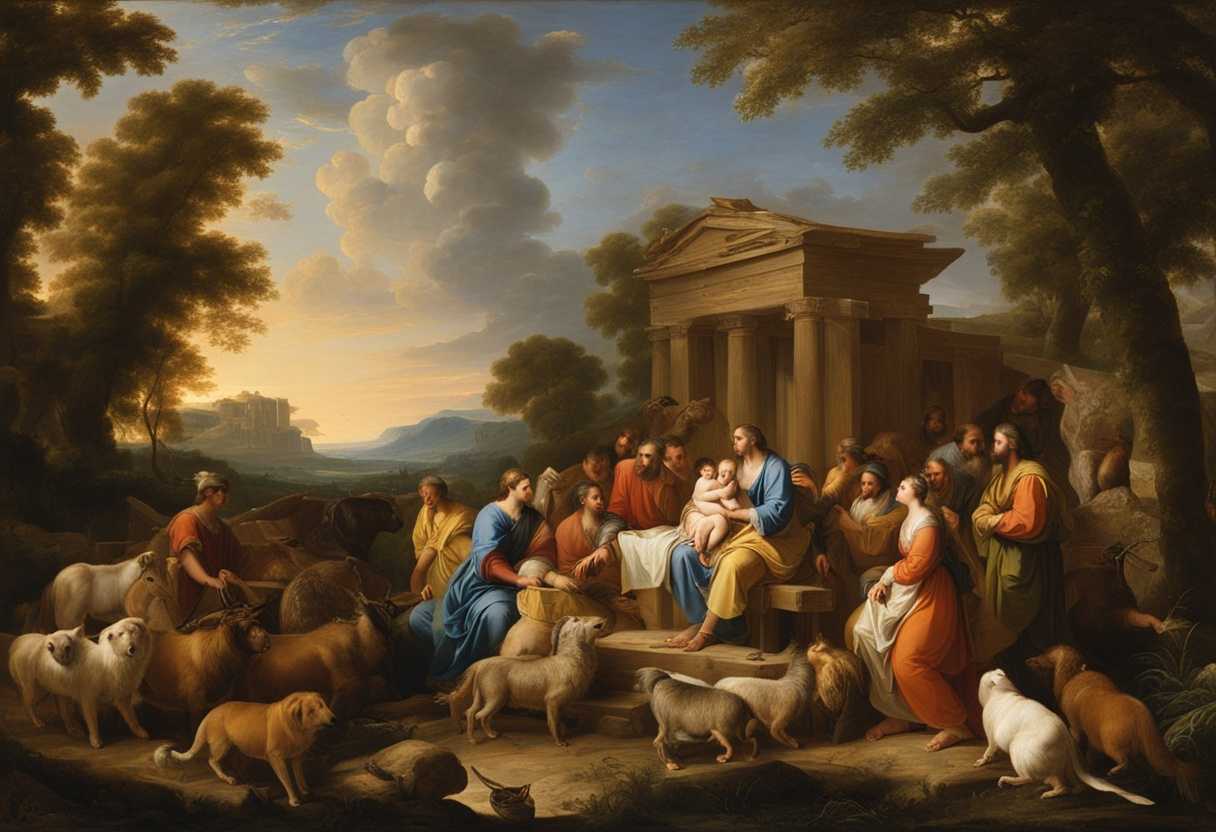
The scene is set in a vast plain where Noah, a humble and obedient servant of God, is diligently working on constructing the massive ark. His wife, sons (Shem, Ham, and Japheth), and their wives are by his side, assisting in the monumental task. The surroundings are bustling with activity as animals of all shapes and sizes begin to gather around the ark, guided by God’s hand to seek refuge from the impending flood.
As the sun sets on the horizon, Noah and his family stand in awe of the ark they have built, a symbol of hope and salvation in the midst of a world consumed by sin. They have followed God’s instructions faithfully, preparing for the great flood that will soon come upon the earth. The scene is filled with a sense of anticipation and reverence, as they await the fulfillment of God’s promise to protect them and preserve life through the ark.
What is Genesis 6:17-22 about?
Imagine being Noah and receiving this divine order from God. How would you feel knowing that you were chosen to save your family and the animal kingdom from impending destruction? God’s command to Noah to build an ark in this verse represents a test of faith, obedience, and commitment to God’s will.
The building of the ark symbolizes more than just physical preparation for a flood; it signifies Noah’s unwavering trust in God’s plan and his willingness to follow God’s instructions despite the challenges and uncertainties he may face. Noah demonstrates his faith and dedication to God by obeying God’s command, setting an example for future generations to trust in God’s providence and follow his guidance. We may face situations in our own lives where we are called to step out in faith and trust in God’s plan even when it seems difficult or impossible. Like Noah, we are reminded that obedience to God’s will can lead to salvation and protection, even in the midst of seemingly insurmountable challenges. As we navigate our own journey of following God’s guidance in our lives, let us reflect on Noah’s obedience and faith.
Understanding what Genesis 6:17-22 really means
One must first dissect the elements of Genesis 6:17-22 to understand the profound implications of God’s plan to Noah about the impending flood. This part of the narrative sets a stage not only for the destruction but also for a new beginning, through Noah’s obedience and God’s covenant.
This passage vividly details God’s directive to Noah to build an ark, a massive vessel that would house his family and representatives from all living creatures. The phrase “I am going to bring floodwaters on the earth” signals an irreversible divine judgment on humanity’s wickedness, underscoring the relentless nature of divine justice. However, juxtaposed with this warning is the promise of survival and continuation through Noah’s compliance and righteousness. From here, the notion of obedience as a pathway to salvation emerges—a theme consistently echoed throughout the Scriptures.
Relevant to our times, this passage invites reflection on our own responsiveness to divine instructions. Are we, like Noah, listening and adhering to what God has communicated to us through various means—be it scripture, the inner prompting of the Holy Spirit, or wise counsel from others? Drawing a parallel from today’s environmental crises, might we see Noah’s ark as a metaphorical call to be stewards of the Earth, preserving life against the rising tide of ecological neglect?
Another crucial takeaway is the role of faith and trust in God’s plan. Even without witnessing the impending calamity, Noah believes and acts upon God’s warning. This is similar to the faith shown by Abraham in Genesis 12, when he left his country on God’s command, not knowing where he was going. Both stories underline the faith required to follow God’s sometimes daunting directives. Consider this: By critically pondering on the text, how often are we called to be “Noahs” in our communities, championing causes of righteousness and justice without tangible proof of the outcomes? Indeed, this raises the challenging expectation of proactive faith—acting on God’s word even when the evidence is not yet seen.
To conclude, the segment from Genesis revisited here is not just an ancient narrative; it’s a perennial call to action and a mirror reflecting our own life’s choices. Reflect on how often you commit, like Noah, to seemingly irrational divine instructions, trusting in the promise of unseen rewards. It’s this kind of faith and obedience that shapes not only individual destinies but the future of the whole world. Engaging with these verses, let us renew our commitment to heed God’s commandments, preserving and fostering life in all its forms.
How can we faithfully obey God’s specific instructions?
To faithfully obey God’s specific instructions, we must first understand the significance of His commands. God provides Noah with clear instructions on how to build the ark, what materials to use, and who to bring on board in this passage. Noah demonstrated his faith by trusting in God’s wisdom and authority as he carefully followed each detail that God outlined.
Furthermore, obedience to God’s specific instructions requires an attitude of humility and submission. Noah did not question or deviate from God’s plan; he accepted the directive with reverence and obedience. We can emulate Noah’s example by listening attentively to God’s voice through prayer, scripture, and wise counsel, and responding with a willing heart ready to carry out His will in obedience in our own lives. Faithfully obeying God’s specific instructions ultimately involves a combination of trust, humility, and action. We demonstrate our devotion and commitment to living a life that pleases Him by actively seeking God’s guidance, surrendering our own desires, and diligently following His commands. Just as Noah’s obedience led to salvation for himself and his family, our obedience to God’s specific instructions can lead to blessings, protection, and the fulfillment of His purposes in our lives.
Application
Imagine standing at the helm of your life, just as Noah stood at the edge of a monumental task. In today’s fast-paced world, your daily grind at work and the nurturing of your family demand faith akin to that of building an ark amidst impending storms. God is the ultimate project manager, and He’s handed you the blueprints. Will you step up, carpenter’s tool in hand, ready to construct your life in alignment with His divine plans? Are you prepared to gather your resources, rally your strength, and forge ahead into the uncharted waters of faithfulness, just as Noah did? Will you trust and obey, no questions asked, believing in the promise of refuge and new beginnings on the horizon? What’s holding you back from saying, “Yes, Lord, here I am”?

Reverend Michael Johnson is an experienced Church Minister with a profound expertise in spirituality and guidance. With a serene presence and a compassionate heart, he has faithfully served his congregation for over 20 years, leading them on a spiritual journey towards inner peace and enlightenment. Reverend Johnson’s extensive knowledge of religious philosophies and profound understanding of human nature have made him a trusted confidant and mentor to many, as he seamlessly weaves his profound wisdom into life teachings. Reverend Johnson’s calming demeanor and empathetic nature continue to uplift and heal souls, nurturing a sense of unity and tranquility within his community.