
17 For behold, I will bring a flood of waters upon the earth to destroy all flesh in which is the breath of life under heaven. Everything that is on the earth shall die.
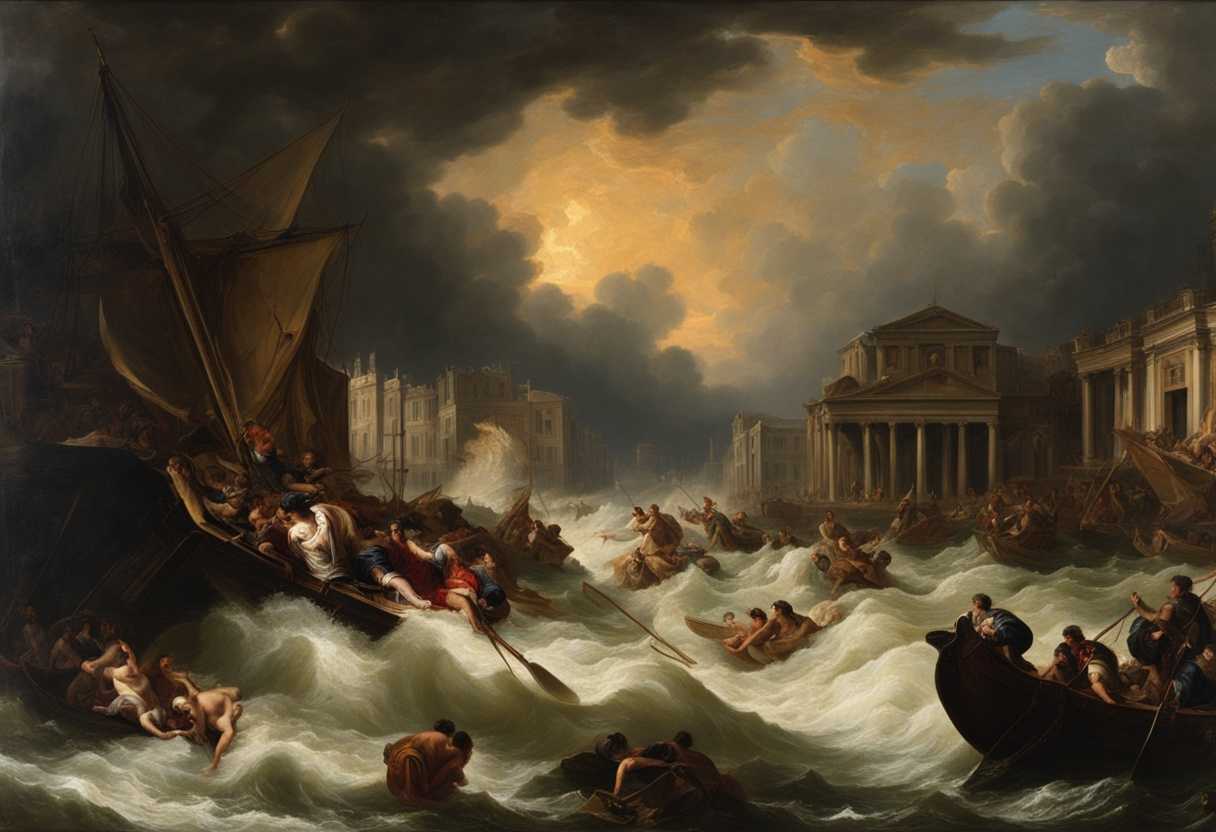
Setting the Scene for Genesis 6:17
In Genesis chapter 6, we find the scene where God instructs Noah to build an ark in preparation for the great flood that will come to cleanse the earth of its wickedness. The setting is a vast plain where Noah, a righteous man in the eyes of God, resides with his family. The surroundings are lush and green, with animals roaming freely in harmony with nature.
Noah, a humble and obedient servant of God, is chosen to carry out this monumental task of building the ark. Alongside him are his wife, their three sons (Shem, Ham, and Japheth), and their wives. They have been living a life of righteousness amidst a world filled with corruption and violence, and now they are called to be the remnant that will be saved from the impending destruction.
As Noah receives the detailed instructions from God on the dimensions and specifications of the ark, his family stands by his side, ready to assist in the massive undertaking. The scene is one of faith, obedience, and dedication as they work tirelessly to fulfill God’s command and prepare for the new beginning that will come after the flood.
What is Genesis 6:17 about?
This verse explores the concept of divine intervention and judgment in the form of a catastrophic flood. The idea of a global flood wiping out all life showcases God’s power and authority as a supreme being in the biblical narrative. It serves as a reminder of the consequences of human actions and the importance of obedience to God’s will. The flood can be seen as a symbolic representation of purification and renewal, as it clears the earth of corruption and allows for a fresh start. We can ponder the implications of God’s plan and the significance of the flood in the larger biblical context as we reflect on this verse. How does this story speak to the themes of repentance, redemption, and second chances? What lessons can we draw from the idea of a cleansing flood in our own lives? This verse ultimately prompts us to consider the complexities of faith, judgment, and the mysterious ways in which God works in the world. It challenges us to grapple with the difficult questions of suffering, justice, and the ultimate purpose of divine intervention in human affairs.
Understanding what Genesis 6:17 really means
Structure for the Commentary:
- Introduction and Context
- Phrase Breakdown and Detailed Analysis
- Biblical Cross-references
- Relevance to Modern Readers
- Anecdote for Illustration
- We encounter a pivotal moment in the narrative of Noah’s Ark in Genesis 6:17. This verse provides direct words from God regarding His intentions to flood the earth due to humanity’s pervasive wickedness. Understanding this verse involves recognizing the gravity of the corruption at the time and the profound measure God takes in response.
Phrase Breakdown and Detailed Analysis
Let’s consider the phrase “I am going to bring floodwaters on the earth.” Here, God communicates a deliberate act. This isn’t a natural disaster but a divine intervention. It is a sobering reminder of God’s sovereignty over creation and His intolerant stance towards sin.
The phrase “to destroy all life under the heavens” emphasizes the extensive impact of this judgment. The phrase “all life” signifies that no creature, human or animal, will be exempt. It underscores the seriousness of the moral decay on earth.
Lastly, “everything that has the breath of life in it” points out the totality of His judgment but also nods back to His role as the giver of life. Breath frequently symbolizes life and spirit in the Bible (Genesis 2:7), and here, it reinforces life’s precious yet fragile nature under divine scrutiny.
Biblical Cross-references
Other biblical passages echo this narrative. God reiterates the coming of the flood and its totality in Genesis 7:4. Also, in Isaiah 54:9, the Lord refers back to Noah’s flood to affirm His promise of a new covenant of peace. The New Testament references bring additional depth. Jesus uses Noah’s story in Matthew 24:37-39 to illustrate sudden and unexpected judgment, urging vigilance in faith.
Relevance to Modern Readers
The relevance of this verse today lies in its message of judgment and mercy. It compels us to consider the consequences of moral decline but, simultaneously, it sets the stage for redemption. God’s actions, although drastic, serve as a call to repentance and renewal. Our modern world faces its own forms of “corruption” and wickedness, making this ancient narrative poignant and urgent for us. A small town once flourished with harmony and unity but slowly succumbed to greed, envy, and division. A wise elder warned the townspeople, but they ignored him, and the town deteriorated. One day, a flood devastated the town, but the elder had prepared an ark and saved those who heeded his warning. Redemption follows judgment in this tale, much like Noah’s story, offering hope and renewal to those who listen.
Conclusion and Reflection
Reflecting on Genesis 6:17, we must ponder our world’s state and our own lives. Are we contributing to societal decay, or are we striving for righteousness? This verse is a call to vigilance and moral integrity. It reminds us of God’s power to judge but also His desire to save. Let this contemplation inspire us to seek purity in our hearts and actions, ever mindful of the potential for divine intervention in our world. As we journey through life, let us remember the lesson here: God’s grace is vast, but His justice is unwavering. How can we align our lives with His will, ensuring we heed His warnings and embrace His gift of salvation?
How do we respond when God calls us to obedience?
When God calls us to obedience, we should respond with faith and humility. We should trust in His wisdom and sovereignty, knowing that His commands are for our good and the good of others. Obedience to God is a reflection of our reverence for Him and our desire to honor His will.
It is important for us to follow God’s commands promptly and wholeheartedly, without hesitation or reservation. We should seek to align our will with His, striving to live a life that is pleasing to Him. We can rely on His strength and grace to help us walk in His ways in times when obedience may be difficult or challenging. It is through obedience that we demonstrate our love for God and grow in our relationship with Him.
Application
Imagine you’re in a crucial work meeting and a game-changing opportunity arises; would you hesitate or act decisively? Noah didn’t wait when God told him to build the ark; he moved swiftly to protect his family. Let that same sense of urgency and purpose drive you in your own life. When God calls you to take a bold step, will you respond with the same faith and determination? Your future, like the safety of Noah’s family, depends on your immediate action. Will you seize the moment?

Reverend Michael Johnson is an experienced Church Minister with a profound expertise in spirituality and guidance. With a serene presence and a compassionate heart, he has faithfully served his congregation for over 20 years, leading them on a spiritual journey towards inner peace and enlightenment. Reverend Johnson’s extensive knowledge of religious philosophies and profound understanding of human nature have made him a trusted confidant and mentor to many, as he seamlessly weaves his profound wisdom into life teachings. Reverend Johnson’s calming demeanor and empathetic nature continue to uplift and heal souls, nurturing a sense of unity and tranquility within his community.