
Genesis 7:17-24 is about the floodwaters rising above the earth, covering the highest mountains and destroying all living creatures on the earth as a punishment for the wickedness of humanity, while Noah and those with him in the ark were saved by God’s grace and protection.
17 The flood continued forty days on the earth. The waters increased and bore up the ark, and it rose high above the earth.
18 The waters prevailed and increased greatly on the earth, and the ark floated on the face of the waters.
19 And the waters prevailed so mightily on the earth that all the high mountains under the whole heaven were covered.
20 The waters prevailed above the mountains, covering them fifteen cubits deep.
21 And all flesh died that moved on the earth, birds, livestock, beasts, all swarming creatures that swarm on the earth, and all mankind.
22 Everything on the dry land in whose nostrils was the breath of life died.
23 He blotted out every living thing that was on the face of the ground, man and animals and creeping things and birds of the heavens. They were blotted out from the earth. Only Noah was left, and those who were with him in the ark.
24 And the waters prevailed on the earth 150 days.
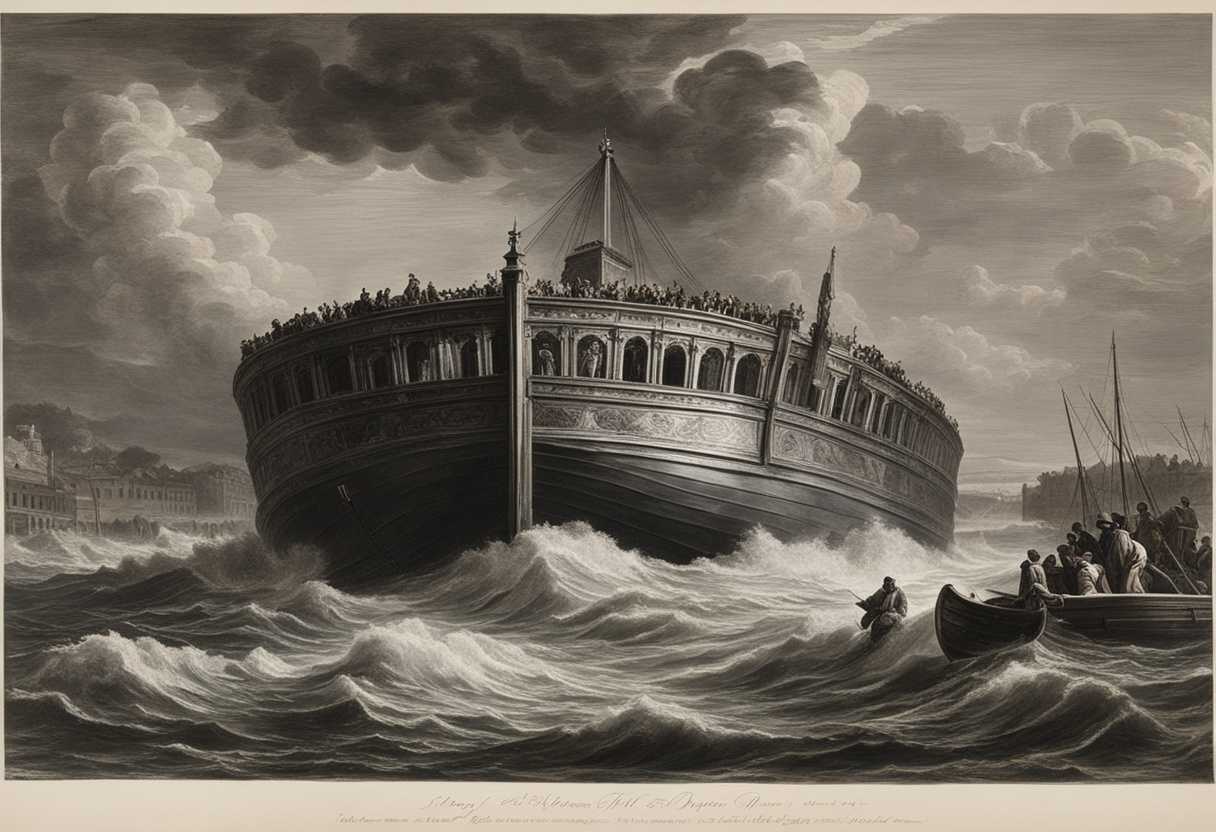
Setting the Scene for Genesis 7:17-24
As the rain poured down relentlessly, Noah and his family found themselves inside the massive ark they had spent years constructing. The once skeptical onlookers who had mocked Noah’s warnings were now nowhere to be seen, as the floodwaters began to rise, covering the earth. Inside the ark, the sound of the rain hitting the wooden structure echoed through the chambers, creating an eerie yet comforting ambiance.
Noah, a righteous man in the eyes of God, stood with his wife, their three sons – Shem, Ham, and Japheth – and their wives. The animals, two by two, had been gathered and safely housed in the various compartments of the ark. The scene was one of anticipation and awe as the family witnessed the unfolding of God’s judgment upon the earth. The once bustling cities and lush landscapes were now submerged beneath the waters, a stark reminder of the consequences of humanity’s disobedience.
As the floodwaters continued to rise, the ark floated above the chaos below, a symbol of hope and salvation in the midst of destruction. The family huddled together, their faith unwavering as they trusted in God’s plan for their survival. The scene was a testament to the power of obedience and the promise of redemption, as Noah and his family braved the storm, knowing that they were chosen to carry on the legacy of humanity in a new world.
What is Genesis 7:17-24 about?
When we think about this verse, we see a powerful and impactful message about the consequences of actions. It shows us the importance of living a righteous life and following God’s commandments. The flood symbolizes God’s power and his ability to bring justice to the world. Through this act, God cleanses the earth and gives a second chance to humanity to start anew.
Reflecting on this verse, we can ask ourselves: Are we living our lives in a way that aligns with God’s teachings? Are we being mindful of our actions and their impact on others and the world around us? This story reminds us of the importance of staying true to our faith and values, even when faced with challenges or temptations. It encourages us to seek forgiveness and redemption, knowing that God’s mercy is always present for those who show repentance and commitment to living a righteous life.
Understanding what Genesis 7:17-24 really means
In Genesis 7:17-24, we witness the unfolding of the Great Flood, a cataclysmic event where rain poured incessantly for forty days and nights, submerging the earth and extinguishing all life except for those sheltered in Noah’s Ark. This narrative is a pivotal moment in the larger story of Noah’s Ark, spanning from Genesis 6 to Genesis 9, showcasing God’s judgment and mercy in equal measure.
The phrase “forty days and forty nights” holds symbolic significance, representing a period of trial and testing. Throughout the Bible, the number 40 denotes a substantial timeframe, such as the Israelites’ 40 years in the wilderness or Jesus’ 40 days of fasting. “The waters prevailed” underscores the overwhelming nature of God’s judgment, as the floodwaters surged over even the highest mountains, illustrating the completeness of His power and judgment. “All flesh died that moved on the earth” serves as a stark reminder of the flood’s severity and the extent of God’s judgment on a corrupt world, emphasizing the dire consequences of sin.
Related passages like Genesis 6:5-8, Matthew 24:37-39, and 2 Peter 3:6-7 further illuminate the themes of judgment, preparedness, and environmental stewardship found in the flood narrative. These verses highlight the wickedness that led to the flood, Jesus’ warning about His second coming akin to the days of Noah, and Peter’s use of the flood as a cautionary tale of God’s judgment.
The relevance of the flood story extends to contemporary life, urging us to contemplate God’s judgment and mercy, the necessity of spiritual preparedness for Christ’s return, and the call to be responsible stewards of the environment. Just as Noah heeded God’s warning and made preparations, we are encouraged to take heed of various warnings in our lives—be they spiritual, moral, or environmental—and respond appropriately.
Consider a community that disregarded repeated warnings of an impending disaster, only to face devastation when it struck. This scenario mirrors Noah’s story, where his obedience and preparedness saved him amidst widespread destruction. Today, we are similarly cautioned about imminent dangers, echoing the need to heed these warnings earnestly and take decisive action.
In conclusion, the flood account transcends time as a poignant lesson on sin’s repercussions, the value of obedience, and the promise of redemption. It challenges us to introspect, heed divine admonitions, and lead lives that honor God, embodying the enduring truths encapsulated in this ancient yet ever-relevant narrative.
How can we trust God in times of destruction?
We can trust God in times of destruction by remembering that He is always in control and has a purpose for everything that happens. We can trust that God has a plan for us in the midst of our own challenges and struggles, just as He had a plan for Noah and his family during the great flood. We can find comfort and strength to navigate through times of destruction by focusing on the faithfulness and power of God. We can trust God’s promises to never leave us or forsake us, even in the midst of chaos and devastation. This can give us hope and peace in the midst of the storm.
When we put our trust in God and seek His guidance and protection, we can be assured that He will lead us through the destruction and bring about restoration in His perfect timing. We can trust that God will preserve us and bring about a new beginning after every destruction, just as God preserved Noah and his family through the flood.
Application
Just like in the story of the great flood, the power of our choices can have far-reaching consequences in our modern lives. Take a moment to evaluate your actions and see if they align with what you know to be right. Are you willing to make changes to walk in the path of righteousness? The choice is yours.

Reverend Michael Johnson is an experienced Church Minister with a profound expertise in spirituality and guidance. With a serene presence and a compassionate heart, he has faithfully served his congregation for over 20 years, leading them on a spiritual journey towards inner peace and enlightenment. Reverend Johnson’s extensive knowledge of religious philosophies and profound understanding of human nature have made him a trusted confidant and mentor to many, as he seamlessly weaves his profound wisdom into life teachings. Reverend Johnson’s calming demeanor and empathetic nature continue to uplift and heal souls, nurturing a sense of unity and tranquility within his community.