
24 And the waters prevailed on the earth 150 days.
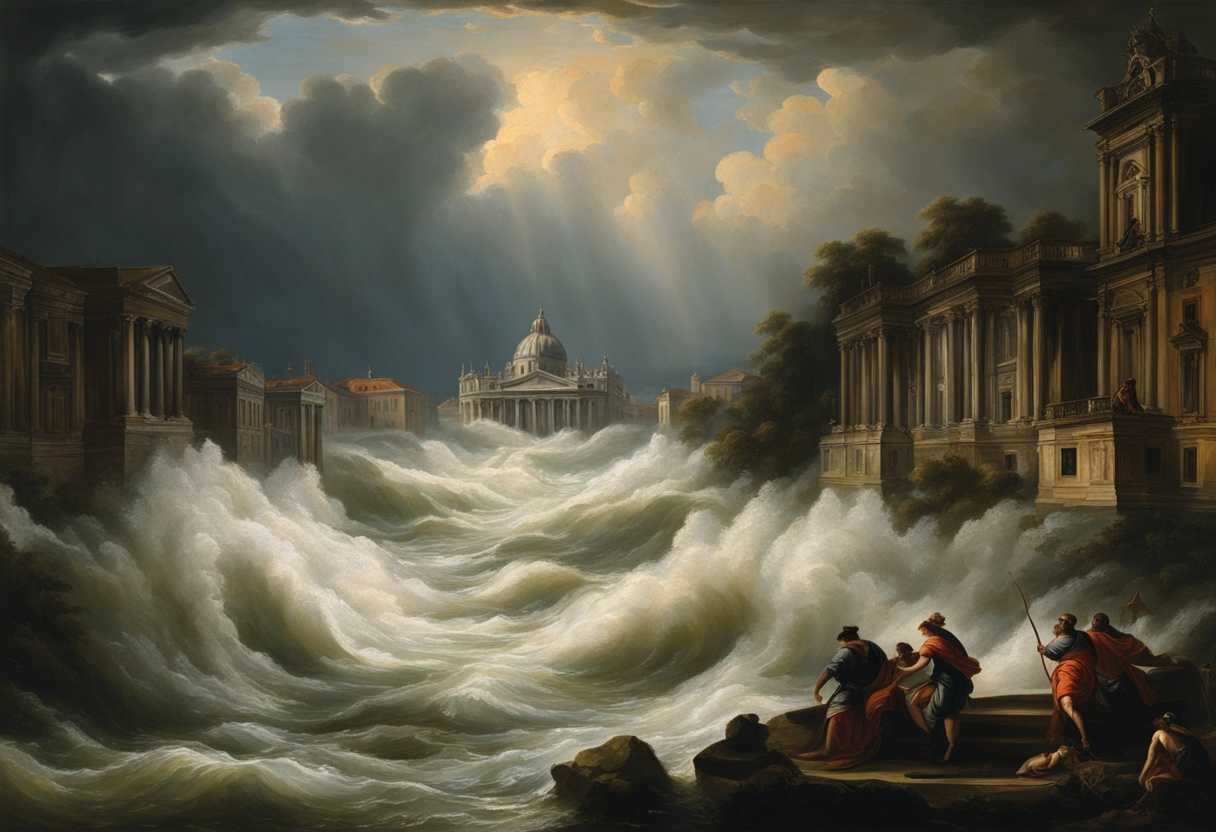
Setting the Scene for Genesis 7:24
In Genesis chapter 7, we find ourselves in the midst of a monumental event – the great flood. The scene is set on a massive wooden ark, constructed by Noah as instructed by God. The ark is filled with pairs of every kind of animal, from the smallest insects to the largest mammals, all gathered together by the hand of God to be saved from the impending flood that will cleanse the earth of its wickedness.
Noah, a righteous man in the eyes of God, along with his wife, their three sons (Shem, Ham, and Japheth), and their wives, are also on board the ark. The family has spent years building the ark according to God’s precise instructions, and now they find themselves in the midst of the storm that will reshape the world. The rain pours down relentlessly, the waters rise, and the ark floats on the surface, a beacon of hope in the midst of destruction.
As the floodwaters cover the earth, the ark becomes a sanctuary for all those on board, a symbol of God’s mercy and protection for those who have remained faithful. The scene is one of both awe and solemnity, as the world outside is consumed by water, while inside the ark, life continues under the watchful eye of God.
What is Genesis 7:24 about?
This verse from the Bible, found in the book of Genesis, depicts a scene of divine judgment and cleansing. The flood was a punishment brought upon the Earth by God due to the corruption and wickedness of humanity. It symbolizes the consequences of sin and disobedience, showing how God’s ultimate power and authority can bring about both destruction and renewal. The fact that the flood lasted for forty days and nights emphasizes the completeness and thoroughness of God’s judgment, highlighting the severity of the consequences for straying from His ways.
Imagine the sheer power and magnitude of this event – rain pouring down incessantly for forty days and nights, waters rising and engulfing everything in its path. Reflect on the significance of this flood as a form of divine retribution, a display of God’s justice and righteousness in the face of human sinfulness. Consider the message about the importance of living in accordance with God’s will and the consequences of turning away from Him. Let this verse serve as a reminder of the importance of repentance, redemption, and faith in the face of divine judgment.
Understanding what Genesis 7:24 really means
We examine Genesis 7:24, delving into a passage ripe with both literal and metaphorical significance, reflective of God’s intentions and the human experience. This verse states, “And the waters prevailed upon the earth a hundred and fifty days.” Here, the focus is on the duration and dominance of the floodwaters, which invites us to consider themes of judgment, cleansing, perseverance, and renewal.
To begin, the phrase “the waters prevailed” underscores a period of overwhelming force. Water often symbolizes chaos and judgment, but also purification in biblical context. These waters prevail, reminding us of the profound reach of God’s actions in response to human corruption as illustrated earlier in Genesis. For a modern reader, this could symbolize any overwhelming trial or period of cleansing in one’s life—a time when it feels as though challenges are insurmountable, yet they serve a purpose for eventual renewal.
The specific mention of “a hundred and fifty days” emphasizes endurance and the passage of time. This isn’t a brief moment of hardship, but a sustained period that required faith and persistence. It parallels the Christian journey which often involves enduring trials over time to realize spiritual growth and renewal. The number itself, being substantial, suggests a complete and transformative process ordained by God, possibly encouraging believers to trust in God’s timing, however difficult it may seem.
Linking this with other biblical teachings, we see echoes of perseverance and deliverance in Isaiah 43:2, which promises, “When you pass through the waters, I will be with you; and through the rivers, they shall not overwhelm you.” This connection amplifies the message that through trials and tribulations, God’s presence remains a buoyant force for those who maintain their faith. Why does this verse resonate so deeply today? The notion of prevailing waters puts into perspective the transient yet shaping nature of trials in a world often marked by prolonged difficulties. We are reminded that though trials may dominate for a season, they are not permanent fixtures but rather pathways leading to renewal.
To illustrate, consider the story of a long-time church member, John. Struggling with a prolonged illness, John felt as though his personal floodwaters were never receding. Reflecting on this passage, he found comfort in the idea of prevailing—not as a permanent defeat but as a phase leading towards eventual renewal. He embraced his faith more fully in his journey, ultimately finding deeper peace and spiritual rejuvenation.
This passage, therefore, speaks volumes about the necessity of enduring faith and the constant hope for renewal. It encourages personal reflection: What are the ‘floodwaters’ in your life? How might a faithful endurance of these trials lead to a greater spiritual rebirth? The conversation it sparks is not only about weathering storms but emerging renewed, purified, and more aligned with divine purposes.
How can we remain faithful in difficult times?
To remain faithful in difficult times, we can look to the example of Noah in Genesis 7:24. Despite facing the overwhelming flood that destroyed the earth, Noah remained faithful to God’s command. He trusted in God’s plan and followed His instructions without wavering, even when it seemed impossible or hopeless. We can draw strength from Noah’s obedience and unwavering faith in times of hardship.
When we encounter challenges or obstacles, it is important to rely on our faith in God and His promises. Just as Noah trusted in God’s protection and provision, we can lean on God’s faithfulness to see us through difficult times. We can maintain our faith even when circumstances are tough by staying grounded in prayer, studying His word, and seeking His guidance. God is always with us, and He will never leave us nor forsake us, no matter what trials we may face.
Application
Imagine your life as a modern-day ark. Just as Noah built his ark to survive the flood through faith and obedience to God, you too can construct your life on the foundations of righteousness and obedience. Each day offers a new board or nail in strengthening your ark against life’s storms. Commit yourself to follow God’s blueprints, trusting in His guidance like the compass of a ship navigating through uncharted waters. Will you step up as the captain of your ship and chart a course that aligns with God’s divine plans for you?

Reverend Michael Johnson is an experienced Church Minister with a profound expertise in spirituality and guidance. With a serene presence and a compassionate heart, he has faithfully served his congregation for over 20 years, leading them on a spiritual journey towards inner peace and enlightenment. Reverend Johnson’s extensive knowledge of religious philosophies and profound understanding of human nature have made him a trusted confidant and mentor to many, as he seamlessly weaves his profound wisdom into life teachings. Reverend Johnson’s calming demeanor and empathetic nature continue to uplift and heal souls, nurturing a sense of unity and tranquility within his community.