
1 But God remembered Noah and all the beasts and all the livestock that were with him in the ark. And God made a wind blow over the earth, and the waters subsided.
2 The fountains of the deep and the windows of the heavens were closed, the rain from the heavens was restrained,
3 The waters receded from the earth continually. At the end of 150 days the waters had abated.
4 In the seventh month, on the seventeenth day of the month, the ark came to rest on the mountains of Ararat.
5 The waters continued to recede until the tenth month; in the tenth month, on the first day of the month, the tops of the mountains were seen.
6 At the end of forty days Noah opened the window of the ark that he had made.
7 and sent out a raven. It went to and fro until the waters were dried up from the earth.
8 Then he sent forth a dove from him, to see if the waters had subsided from the face of the ground.
9 But the dove found no place to set her foot, and she returned to him to the ark, for the waters were still on the face of the whole earth. So he put out his hand and took her and brought her into the ark with him.
10 He waited another seven days, and again he sent forth the dove out of the ark.
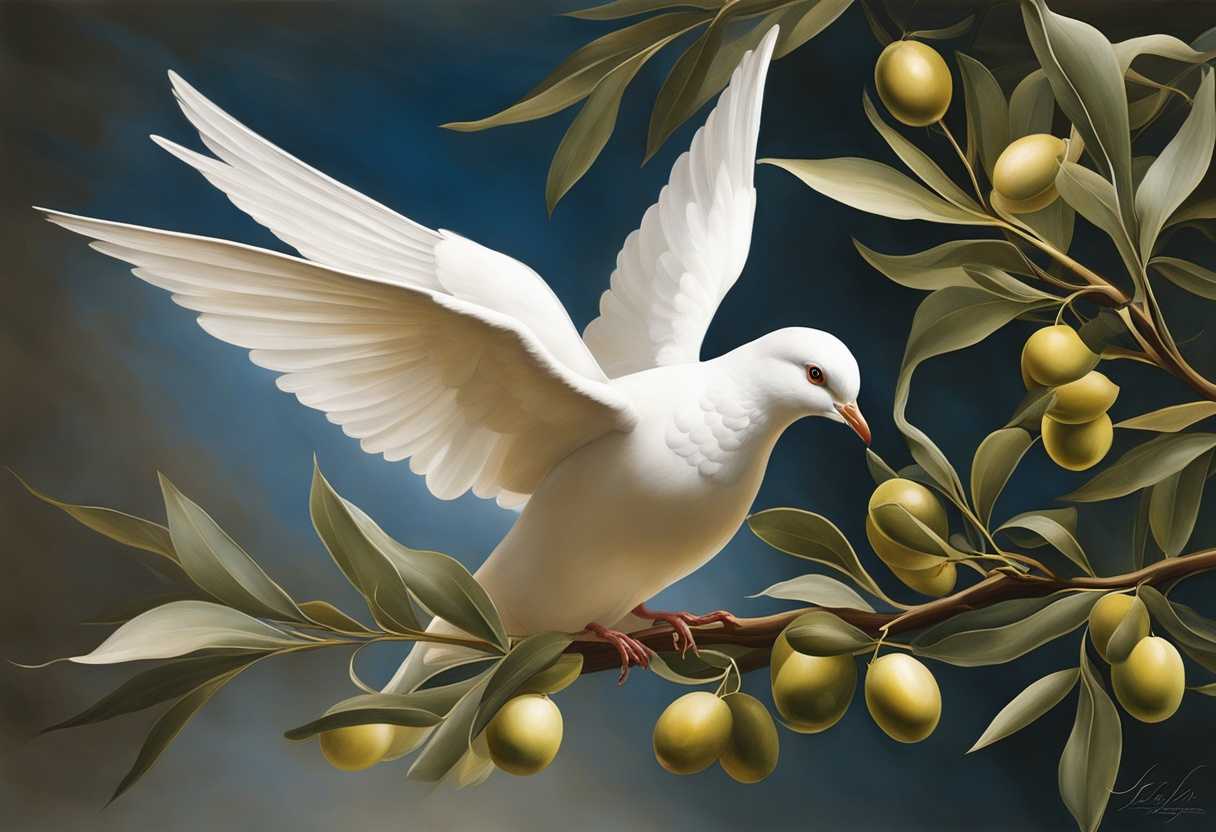
11 And the dove came back to him in the evening, and behold, in her mouth was a freshly plucked olive leaf. So Noah knew that the waters had subsided from the earth.
12 And he waited yet another seven days and again he sent forth the dove out of the ark.
13 In the six hundred and first year, in the first month, the first day of the month, the waters were dried from off the earth. And Noah removed the covering of the ark and looked, and behold, the face of the ground was dry.
14 In the second month, on the twenty-seventh day of the month, the earth had dried out.
15 Then God said to Noah,
16 “Go out from the ark, you and your wife, and your sons and your sons’ wives with you.”
17 Bring out with you every living thing that is with you of all flesh—birds and animals and every creeping thing that creeps on the earth—so that they may swarm on the earth, and be fruitful and multiply on the earth.”
18 So Noah went out, and his sons and his wife and his sons’ wives with him.
19 Every beast, every creeping thing, and every bird, everything that moves on the earth, went out by families from the ark.
20 Then Noah built an altar to the Lord and took some of every clean animal and some of every clean bird and offered burnt offerings on the altar.
21 And when the Lord smelled the pleasing aroma, the Lord said in his heart, “I will never again curse the ground because of man, for the intention of man’s heart is evil from his youth. I will never again strike down every living creature as I have done.
22 While the earth remains, seedtime and harvest, cold and heat, summer and winter, day and night, shall not cease.
The True Meaning of Genesis 8
This passage from the book of Genesis recounts the aftermath of the great flood that devastated the earth. The author, Moses, was a prominent figure in the Israelite tradition, chosen by God to lead the Israelites out of slavery in Egypt and guide them towards the Promised Land. Noah and his family emerge from the ark as the waters recede, and we witness the gradual restoration of life on earth in this chapter. The chapter foreshadows the covenant that God will establish with Noah, a promise that will have far-reaching implications for the future of humanity. We also see the first steps towards the re-population of the earth, as Noah makes sacrifices to the Lord and receives divine blessing.
The events described in this passage echo the creation story found in the earlier chapters of Genesis, as God once again takes an active role in shaping the world and its inhabitants. The chapter also sets the stage for the patriarchal narratives that will follow, as the lineage of Noah becomes the foundation for the chosen people of God.
Genesis 8:1-5
God remembered Noah and all the wild animals and the livestock that were with him in the ark, and he sent a wind over the earth, and the waters receded. Now the springs of the deep and the floodgates of the heavens had been closed, and the rain had stopped falling from the sky. The water receded steadily from the earth. At the end of the hundred and fifty days the water had gone down, and on the seventeenth day of the seventh month the ark came to rest on the mountains of Ararat. God’s faithfulness and remembrance of His chosen servant, Noah, amidst the catastrophic event of the flood are the focus in this section of Genesis. It highlights God’s sovereignty and control over creation, as He is the one who commands the wind to blow over the earth, causing the waters to gradually recede. This demonstrates God’s ability to bring order out of chaos and to fulfill His promises to protect and deliver those who are faithful to Him.
The mention of the “springs of the deep and the floodgates of the heavens” being closed and the rain stopping emphasizes the divine intervention and control over the natural elements. This narrative underscores the belief that God is in control of all creation and can bring about both judgment and salvation through His mighty power.
The fact that the ark came to rest on the mountains of Ararat signifies a new beginning, a fresh start after the destruction caused by the flood. The mountain is a symbol of elevation and closeness to God, representing a place where Noah and his family can now step out into a transformed world, purified by water and ready for a new chapter in the story of humanity.
This passage in Genesis 8 echoes themes of redemption and renewal found throughout the Bible. Just as Noah and his family were saved from the floodwaters, God offers salvation to those who place their trust in Him. The ark serves as a type of Christ, providing a way of escape from the judgment that was to come, pointing forward to the ultimate deliverance offered through Jesus Christ.
The story of Noah and the flood is not just a historical event but also carries spiritual and symbolic significance. It reminds us of the importance of obedience, faith, and perseverance in the face of trials. It speaks to the unfailing faithfulness of God to His people and His ability to bring them through the storms of life to a place of safety and rest.
Genesis 8:6-12
Noah sent out a raven and a dove from the ark after the floodwaters had begun to recede in Genesis 8:6-12. This event is significant as it marks the gradual restoration of the earth after the catastrophic flood.
Noah first sends out a raven, a bird known for its scavenging nature and ability to survive in various conditions. The raven flies back and forth, indicating that the earth was still not ready for the bird to find a place to land. The raven’s behavior serves as a foreshadowing of the ongoing destruction and chaos that still remained on the earth at that time.
Next, Noah sends out a dove, a bird often symbolizing peace and hope in the Bible. The dove returns to Noah with an olive leaf in its beak, signaling to Noah that the waters had receded enough for vegetation to start growing again. This olive leaf is a powerful symbol of renewal and the start of a new beginning for humanity.
The dove’s return with the olive leaf brings a message of hope and restoration to Noah and his family. It signifies that God has not abandoned them and that there is a future beyond the devastation of the flood. This moment serves as a reminder of God’s faithfulness and His promise to never again destroy the earth with a flood. The olive leaf prefigures the ultimate symbol of peace and renewal in the Bible, which is Jesus Christ.
This passage reinforces the theme of God’s faithfulness and mercy amidst judgment. It highlights the importance of patience and trust in God’s timing, as Noah had to wait for the right moment to receive a sign of hope. It also emphasizes the role of nature in reflecting God’s will and communicating His messages to His people. This story of the raven and the dove serves as a powerful metaphor for the journey of faith, where we may encounter moments of darkness and uncertainty, but ultimately find hope and restoration in God’s promises.
Genesis 8:13-19
Noah and his family finally receive the command to leave the ark after the devastating flood that covered the earth in Genesis 8:13-19. Let’s break down this passage for deeper reflection. Verse 13 mentions that the earth dried. This signifies the completion of God’s judgment through the flood and the beginning of a new chapter for humanity. The drying of the earth symbolizes the end of the old sinful world and the opportunity for renewal and restoration. This event can be seen as a metaphor for the cleansing of our spirits through faith in God, as we are given the chance for a fresh start.
Noah removes the covering of the ark in verse 14, and this act can be seen as a step of faith. Noah was stepping out in obedience to God’s command by opening the covering of the ark, showing trust in His promises. This act reminds us of the importance of faith in following God’s will and the rewards that come with obedient trust. God instructs Noah to exit the ark with his family and all the living creatures in verses 15-17. This moment is significant as it marks the end of their time in the ark and the beginning of a new era. This event reflects God’s faithfulness to His promises, as He had promised to preserve Noah and his family through the flood and now fulfills that promise by guiding them safely out of the ark. It is a reminder of God’s provision and protection for those who remain faithful to Him.
Noah’s obedience to God’s command to exit the ark in verse 18 shows his unwavering faith and trust in God. Despite the unknowns and challenges that awaited him outside the ark, Noah followed God’s instructions without hesitation. This act of obedience serves as a powerful example for believers today, reminding us of the importance of trusting in God’s guidance even when the path ahead is uncertain.
Verse 19 lists the different kinds of animals that came out of the ark with Noah. This demonstrates God’s care and concern for all His creation, not just humanity. God shows His faithfulness to His entire creation by preserving the animals through the flood and ensuring their exit from the ark. This act reinforces the message of stewardship and responsible care for the earth and its inhabitants, emphasizing the interconnectedness of all living beings in God’s plan. Genesis 8:13-19 conveys themes of faith, obedience, renewal, and God’s faithfulness. It serves as a reminder of God’s promises, His provision for those who trust in Him, and the importance of following His will even in the face of uncertainty. This passage highlights the enduring message of hope and restoration found in God’s plan for humanity and creation.
Genesis 8:20-22
Noah’s reaction after the floodwaters recede and he, along with his family and the animals, leave the ark is seen in Genesis 8:20-22. This event marks a significant shift in the narrative of Genesis, transitioning from the destruction wrought by the flood to the promise of God’s covenant with Noah and all living creatures.
When Noah exits the ark, the first thing he does is build an altar to the Lord. This act of worship and thanksgiving is a demonstration of Noah’s gratitude for being saved from the flood and a recognition of God’s power and faithfulness. The offering of burnt sacrifices on the altar is an ancient practice of worship and dedication, with the smoke rising to God symbolizing a form of communication and connection with the divine.
Noah’s sacrifice pleases God, and in response, God makes a promise to never again curse the ground because of man or destroy all living creatures as he had done with the flood. This promise of God’s enduring covenant with Noah, his descendants, and all living creatures is a testament to God’s mercy and faithfulness, despite humanity’s propensity for sin.
The assurance of seedtime and harvest, cold and heat, summer and winter, day and night are all elements of God’s natural order and provision for sustenance that are guaranteed to continue as long as the earth endures. This reaffirms the reliability of God’s creation and his commitment to the sustenance of life on the earth.
The passage in Genesis 8:20-22 highlights the themes of worship, gratitude, covenant, and providence. It serves as a reminder of the importance of acknowledging and honoring God in the midst of trials and blessings, as Noah did with his altar and sacrifices. It also emphasizes God’s faithfulness in upholding his promises, as seen in his covenant with Noah. This passage echoes similar themes found throughout the Bible, such as the importance of worship (Psalm 96:8), God’s covenant with his people (Genesis 9:8-17), and his provision for all creation (Matthew 6:26). We witness the aftermath of the flood, the act of worship from Noah, and God’s establishment of a covenant with humanity in Genesis 8:20-22, a pivotal moment in the book of Genesis. It reinforces the idea of God’s sovereignty, mercy, and provision, which are foundational aspects of his character that resonate throughout the entirety of the Bible.
After Genesis 8
The flood had finally receded, and the earth was once again dry. Noah and his family stepped out of the ark, surveying the desolate landscape. Yet, even in the midst of this devastation, a glimmer of hope shone through. Noah built an altar and offered sacrifices to the Lord, making a covenant – a promise of new beginnings and a future filled with God’s grace.
This was not the end, but rather the start of a new chapter in the story of humanity. The Lord had spared Noah and his family, and now they were tasked with the responsibility of rebuilding and repopulating the earth. The path ahead was uncertain, but with faith in the Almighty, they knew that they would be guided and protected.

Reverend Michael Johnson is an experienced Church Minister with a profound expertise in spirituality and guidance. With a serene presence and a compassionate heart, he has faithfully served his congregation for over 20 years, leading them on a spiritual journey towards inner peace and enlightenment. Reverend Johnson’s extensive knowledge of religious philosophies and profound understanding of human nature have made him a trusted confidant and mentor to many, as he seamlessly weaves his profound wisdom into life teachings. Reverend Johnson’s calming demeanor and empathetic nature continue to uplift and heal souls, nurturing a sense of unity and tranquility within his community.