
1 And God blessed Noah and his sons and said to them, “Be fruitful and multiply and fill the earth.
2 The fear of you and the dread of you shall be upon every beast of the earth and upon every bird of the heavens, upon everything that creeps on the ground and all the fish of the sea. Into your hand they are delivered.
3 Every moving thing that lives shall be food for you. And as I gave you the green plants, I give you everything.
4 But you shall not eat flesh with its life, that is, its blood.
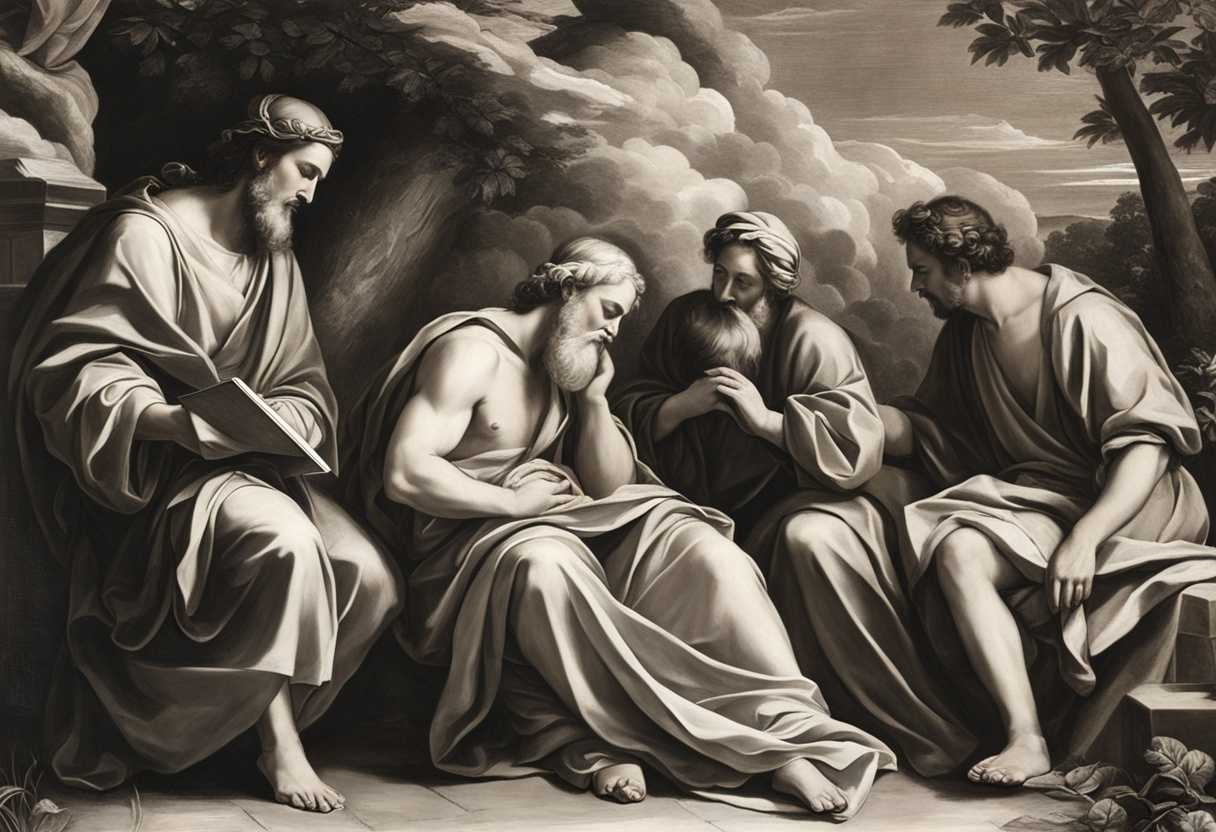
Setting the Scene for Genesis 9:1-4
In Genesis chapter 9, we find Noah and his family after the great flood that covered the earth. The scene is set on the fresh, rain-washed land as they step out of the ark onto the new world that God has cleansed. The sun breaks through the clouds, casting a warm glow over the mountains and valleys that were once submerged.
Noah, his wife, their three sons – Shem, Ham, and Japheth – along with their wives, stand in awe of the vast expanse before them. The animals that were saved on the ark roam freely around them, grateful for their deliverance. The air is filled with the sounds of birds chirping and the rustling of leaves as the vegetation begins to grow again.
As they take in the beauty of the reborn earth, Noah receives a divine blessing from God, granting them the authority to multiply and fill the earth. God also establishes a covenant with them, promising never to destroy the earth by flood again. In this moment of new beginnings, Noah and his family are filled with gratitude and reverence for the God who has saved them and given them a fresh start.
What is Genesis 9:1-4 about?
God is bestowing a blessing upon Noah and his sons by allowing them to eat meat in this verse. This signifies a shift in the diet of humanity after the catastrophic event of the Great Flood. God’s permission to consume meat symbolizes a new beginning and the replenishing of the Earth’s population. However, God also sets a boundary by prohibiting the consumption of blood. This restriction serves as a reminder of the sanctity of life and the respect that must be shown towards all living creatures.
Have you ever considered the significance of God’s blessing in this verse? How does the permission to eat meat reflect a fresh start for humanity after the Flood? And why do you think God specifically prohibits the consumption of blood? Reflecting on these questions can offer deeper insights into the moral and spiritual teachings present in this verse.
Understanding what Genesis 9:1-4 really means
Genesis 9:1-4 serves as a pivotal moment in the biblical narrative, particularly following the account of the Great Flood. This passage not only marks a new beginning for humanity through Noah and his family but also sets forth divine instructions that extend to our understanding of life’s sanctity and our responsibilities toward creation. Here, we explore the deep implications of these verses for contemporary faith and ethical behavior.
Initially, the passage highlights God’s blessing on Noah and his sons, encouraging them to “be fruitful and multiply, and fill the earth.” This directive mirrors the blessing given to Adam and Eve in Genesis 1, reestablishing the divine intention for humans to thrive and steward the earth. This repetition underscores the theme of redemption and renewal. It prompts us to consider how, in moments of new beginnings, we are called to reflect on our purpose and the divine mandate to cultivate life and care for our surroundings.
Furthermore, the text grants humanity permission to consume animal flesh, marking a departure from the pre-flood diet prescribed in Genesis 1:29-30. However, a crucial stipulation is set: “But you must not eat meat that has its lifeblood still in it.” This command introduces a sacred regard for the lifeblood of creatures, symbolizing respect for the life given by God. It invites us to deliberate on how we view and treat other forms of life, urging a respect that recognizes their God-given vitality.
This passage’s relevance today can hardly be overstated. These verses offer foundational insights for engaging with debates about ethical eating, environmental stewardship, and sustainable living from a faith perspective in an era where such issues are rampant. They call us to remember that our dominion over the earth should be exercised with humility and reverence, acknowledging the sanctity of all life endowed by our Creator.
One might recall a community project where church members came together to clean a local river plagued by pollution. This action, inspired by a sense of stewardship derived from scriptures like Genesis 9:1-4, was not just about community service; it was a practical expression of the biblical imperative to “fill the earth” in a manner that respects and preserves life. Such initiatives embody the scriptural call to be caretakers, demonstrating the ongoing relevance of these ancient texts in guiding ethical action and communal responsibility. Genesis 9:1-4 invites us to engage in profound reflection about our role in the world and our interaction with other creatures. Believers who understand and integrate the wisdom of these verses are better equipped to navigate the complexities of modern life in ways that honor God and foster life in all its forms. Let us ask ourselves: How does our daily living align with the divine call to stewardship and respect for creation presented in Genesis 9 as we ponder these texts?
What is the significance of blood in God’s covenant?
Blood is significant in God’s covenant as it represents the life of a living being. God specifically mentions not consuming blood in the covenant He made with Noah and his descendants because it symbolizes the life force that belongs to Him. Humans acknowledge God as the ultimate giver of life and demonstrate their obedience to His commandments by respecting the sanctity of blood. The prohibition against consuming blood in this covenant serves as a reminder of the responsibility humans have to honor the sacredness of life. It reinforces the idea that life is a gift from God and should be treated with reverence and respect. People show their commitment to following God’s laws and upholding the value of life that He has granted to all living creatures by abstaining from consuming blood.
Furthermore, the significance of blood in this covenant underscores the importance of obedience to God’s commands. Individuals demonstrate their faith and trust in God’s wisdom and authority by adhering to the prohibition against consuming blood. Through this act of obedience, they reaffirm their commitment to living in accordance with God’s will and acknowledging His sovereignty over all aspects of life.
Application
Imagine yourself as a gardener in the vast garden of life, where each interaction is a seed planted for the future. Just as God tasked Noah with filling the earth and respecting all forms of life, we too are called to nurture and protect the delicate balance of creation around us. Each day gifts us the opportunity to foster growth, whether within our family circles or our professional spheres. Embrace the role of a caretaker, and let your actions speak to the reverence you hold for life’s sanctity. How will your garden flourish under your care today?

Reverend Michael Johnson is an experienced Church Minister with a profound expertise in spirituality and guidance. With a serene presence and a compassionate heart, he has faithfully served his congregation for over 20 years, leading them on a spiritual journey towards inner peace and enlightenment. Reverend Johnson’s extensive knowledge of religious philosophies and profound understanding of human nature have made him a trusted confidant and mentor to many, as he seamlessly weaves his profound wisdom into life teachings. Reverend Johnson’s calming demeanor and empathetic nature continue to uplift and heal souls, nurturing a sense of unity and tranquility within his community.