
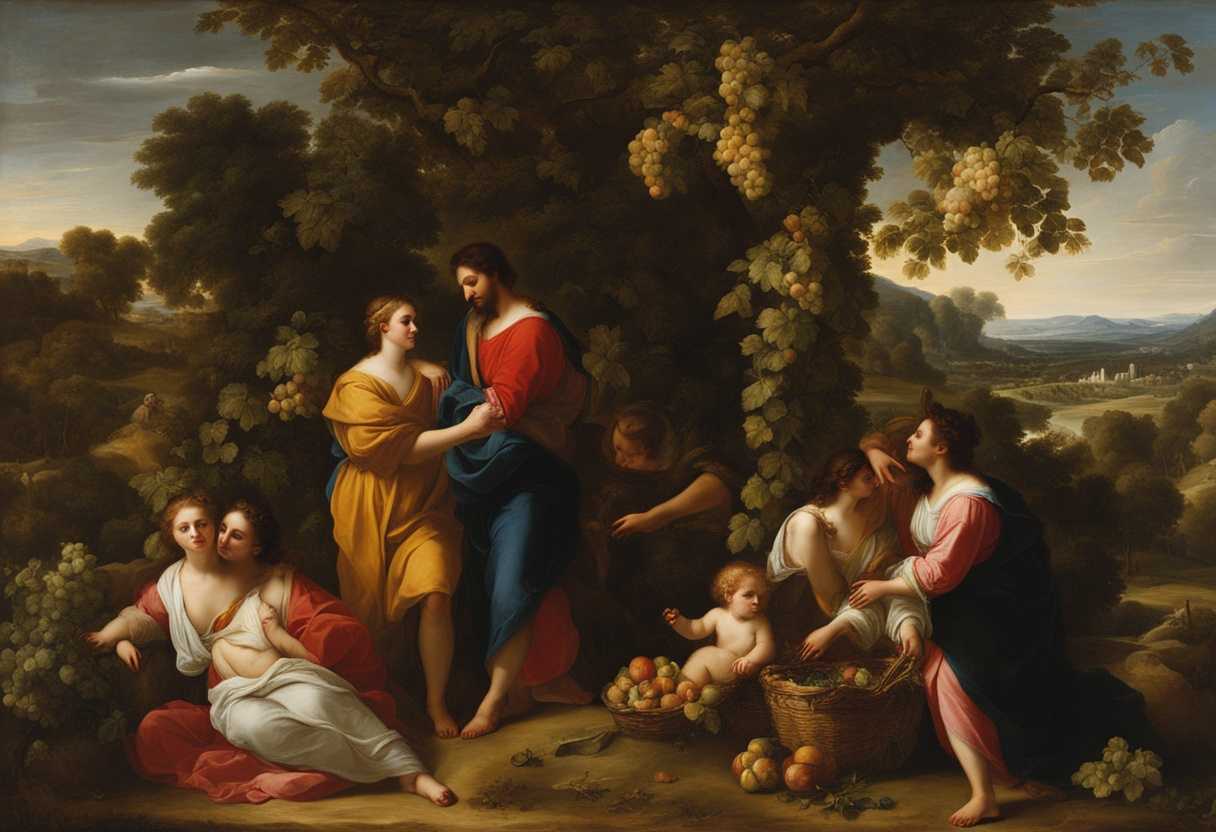
20 Noah began to be a man of the soil, and he planted a vineyard.
Setting the Scene for Genesis 9:20
In Genesis chapter 9, we find Noah and his family as the central characters. After the great flood, Noah, his wife, their three sons (Shem, Ham, and Japheth), and their wives are the only survivors on the earth. The scene unfolds as they have just disembarked from the ark onto dry land, which is still fresh from the cleansing waters of the flood. The air is filled with the scent of damp earth and new life, as the sun breaks through the clouds, casting a warm glow over the landscape.
Noah, a righteous man in the eyes of God, is filled with gratitude for their survival and the promise of a new beginning. In this scene, we see Noah planting a vineyard, a symbol of hope and renewal. As the vines take root in the fertile soil, Noah tends to them with care, a tangible expression of his faith in God’s providence. The family gathers around him, working together to cultivate the land and build a new life after the devastation of the flood. It is a moment of quiet reflection and thanksgiving, as they look forward to the future with hope and trust in God’s promises.
What is Genesis 9:20 about?
Noah transitions from being a righteous man who found favor in God’s eyes to someone who gives in to temptation and falls into the trap of drunkenness in this verse. Noah starts a chain of events that ultimately lead to his downfall by becoming a farmer and planting a vineyard. This serves as a cautionary tale about the dangers of succumbing to worldly pleasures and losing sight of one’s values and integrity.
Think about the choices we make in our own lives. How do our actions impact our character and relationships with others? How can we stay true to our beliefs and values even in the face of temptation? Reflect on how Noah’s story serves as a reminder to be mindful of the decisions we make and the consequences they may have. Let us learn from Noah’s misstep and strive to stay grounded in our principles even when faced with challenges.
Understanding what Genesis 9:20 really means
Exploring Genesis 9:20 reveals a narrative moment that offers insight into the human condition and the complexities of moral life post-Fall. This verse marks the beginning of a new chapter for Noah, a man of the soil, who initiated vineyard cultivation. Let me guide you through its layers of significance and practical application to our lives today.
Noah, previously known for his righteousness and obedience, embarks on an agricultural venture, planting a vineyard. This moment symbolizes new beginnings and human enterprise. It reminds us that God encourages productivity and creativity in human endeavors. However, this passage also preludes to the incident of Noah’s intoxication, which teaches us about the dangers of excess. This dual aspect of the narrative prompts us to reflect on our own lives: How do we handle the gifts and tasks God has given us?
Reflecting on this, Noah’s role as “a man of the soil” can be paralleled to Adam, the first gardener of Eden. This linkage between Adam and Noah adds a layer of theological depth, as both figures highlight humanity’s continuous interaction with the earth and its produce, underlining stewardship and care but also the potential for moral failure.
This passage’s relevance to contemporary readers is profound. The text serves as a cautionary tale of moderation in an age where achievements and advancements are highly valued. It challenges us to consider how we balance our pursuits and the ethical use of the fruits of our labor. Are we, like Noah, managing our resources wisely, or are they managing us?
An anecdote that illustrates this comes from a community member who started a small business. Flourishing at first, he began neglecting his family and community obligations. His story mirrored Noah’s—a man blessed with abundance but challenged by the temptations that came with it. It was a poignant reminder of the need for balance and accountability in our successes.
Thus, Genesis 9:20 is not merely an account of agrarian activity but a reflection on human imperfection and the ethical dilemmas posed by the gifts of creation. We consider how we cultivate and harvest as we navigate our own “vineyards,” always mindful of the responsibilities we hold towards ourselves, others, and God. What vines are you tending in your life, and how are you managing the fruits they bear?
What does it mean to find favor in God’s eyes?
To find favor in God’s eyes means that God looks upon someone with kindness, approval, and goodwill. It implies being in a positive relationship with God, where one’s actions, attitudes, and intentions align with His will. When someone finds favor in God’s eyes, it can result in blessings, protection, and guidance from Him. It signifies that the person has gained God’s approval and acceptance through their faith, obedience, and righteousness. Noah and God view finding favor in God’s eyes as significant because it marks a positive relationship between them in Genesis 9:20. After the flood, Noah’s actions and offerings pleased God, leading to God’s favor upon him and his descendants. This favor resulted in a covenant between God and Noah, promising the protection of mankind from another global flood. Therefore, finding favor in God’s eyes signifies divine approval and blessing, leading to a special relationship with Him.
Application
Picture your life as a busy, bustling cityscape, where each day adds more to the skyline—opportunities, challenges, and choices stacked high like towering skyscrapers. Sometimes, we find ourselves building without a blueprint, losing sight of the master plan that was meant to guide us. The tale of Noah isn’t just an ancient echo; it’s a vibrant, urgent call to pause in our tracks, to look at the blueprints again, to admit where we’ve gone wrong. Let’s embrace this moment to realign our structures with the divine design. What will your next building block be in the city of life, knowing what you know now from Noah’s story?

Reverend Michael Johnson is an experienced Church Minister with a profound expertise in spirituality and guidance. With a serene presence and a compassionate heart, he has faithfully served his congregation for over 20 years, leading them on a spiritual journey towards inner peace and enlightenment. Reverend Johnson’s extensive knowledge of religious philosophies and profound understanding of human nature have made him a trusted confidant and mentor to many, as he seamlessly weaves his profound wisdom into life teachings. Reverend Johnson’s calming demeanor and empathetic nature continue to uplift and heal souls, nurturing a sense of unity and tranquility within his community.