
1 I will take my stand at my watchpost
and station myself on the tower,
and look out to see what he will say to me,
and what I will answer concerning my complaint.
2 And the Lord answered me: “Write the vision; make it plain on tablets, so he may run who reads it.
3 For still the vision awaits its appointed time;
it hastens to the end—it will not lie.
If it seems slow, wait for it;
it will surely come; it will not delay.
4 “Behold, his soul is puffed up; it is not upright within him, but the righteous shall live by his faith.”
5 “Moreover, wine is a traitor, an arrogant man who is never at rest. His greed is as wide as Sheol; like death he has never enough; he gathers for himself all nations and collects as his own all peoples.”
6 Shall not all these take up their taunt against him, with scoffing and riddles for him, and say, “Woe to him who heaps up what is not his own— for how long?— and loads himself with pledges!”
7 Will not your debtors suddenly arise, and those awake who will make you tremble? Then you will be spoil for them.
8 Because you have plundered many nations,
all the remnant of the peoples shall plunder you,
for the blood of man and violence to the earth,
to cities and all who dwell in them.
9 “Woe to him who gets evil gain for his house,
to set his nest on high,
to be safe from the reach of harm!
10 You have devised shame for your house by cutting off many peoples; you have forfeited your life.
11 For the stone will cry out from the wall, and the beam from the woodwork respond.
12 Woe to him who builds a town with blood and founds a city on iniquity!
13 Behold, is it not from the Lord of hosts that peoples labor merely for fire, and nations weary themselves for nothing?
14 For the earth will be filled with the knowledge of the glory of the Lord as the waters cover the sea.
15 “Woe to him who makes his neighbors drink—
you pour out your wrath and make them drunk,
in order to gaze at their nakedness!
16 You will have your fill of shame instead of glory. Drink, yourself, and show your uncircumcision! The cup in the Lord’s right hand will come around to you, and utter shame will come upon your glory!
17 The violence done to Lebanon will overwhelm you, as will the destruction of the beasts that terrified them, for the blood of man and violence to the earth, to cities and all who dwell in them.
18 “What profit is an idol when its maker has shaped it, a metal image, a teacher of lies? For its maker trusts in his own creation when he makes speechless idols!”
19 Woe to him who says to a wooden thing, Awake; to a silent stone, Arise! Can this teach? Behold, it is overlaid with gold and silver, and there is no breath at all in it.
20 But the Lord is in his holy temple;
let all the earth keep silence before him.”
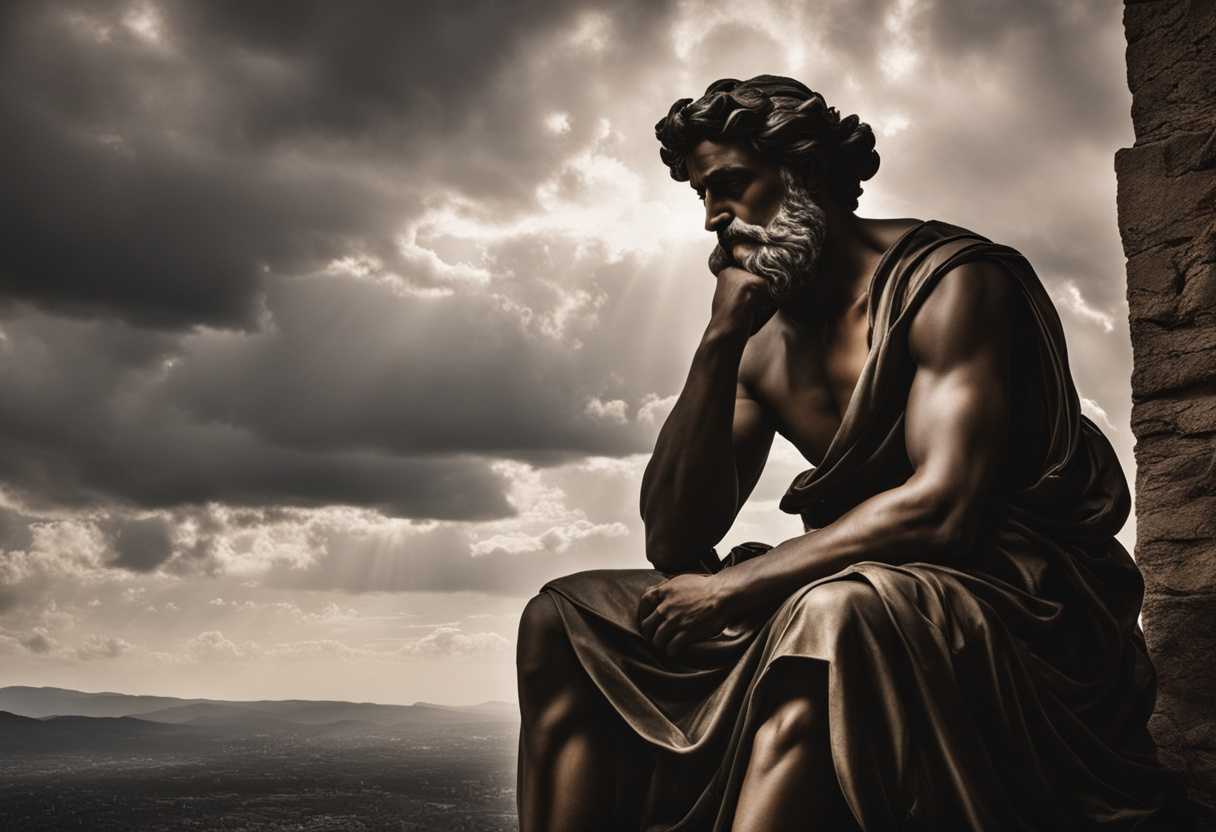
The True Meaning of Habakkuk 2
The book of Habakkuk was written by the prophet Habakkuk, who lived during the reign of King Jehoiakim of Judah, around 600 BC. Habakkuk was a man of faith who grappled with the apparent injustice and violence he witnessed in his society. He receives a divine response to his questions in this chapter, shedding light on God’s plan and the importance of faith during times of trial.
The chapter begins with Habakkuk’s plea for God to intervene and address the violence and wrongdoing he sees around him. God’s answer, though not what the prophet expected, reveals the importance of trusting in the Lord’s timing and ultimate justice. The passage also foreshadows the coming judgment on Babylon, the nation that will soon conquer Judah, and the ultimate triumph of God’s kingdom.
Habakkuk’s struggle to reconcile his faith with the realities of the world around him is a common human experience. The chapter reminds us that even in the midst of darkness and uncertainty, we must cling to the promises of God and walk by faith, not by sight. God’s ways are often mysterious, but His plan is always just and righteous, as the prophet Habakkuk learned.
Habakkuk 2:1-4
Sure, let’s break down these verses from Habakkuk 2:
- “I will stand at my watch
and station myself on the ramparts;
I will look to see what he will say to me,
and what answer I am to give to this complaint. Habakkuk in this first section demonstrates a posture of readiness and expectation. The image of standing at his watch and stationing himself on the ramparts conveys a sense of vigilance and anticipation. Habakkuk is eagerly waiting for God to speak to him, seeking guidance and clarity on a particular issue or complaint that he has. He is committed to listening for God’s response and being prepared to receive it.
Habakkuk’s attitude of seeking God’s voice and waiting for His direction is a timeless lesson for believers. It emphasizes the importance of prayer, patience, and receptivity to God’s messages. Similar to Habakkuk, we should also be diligent in seeking God’s guidance and be open to hearing and heeding His answers to our prayers and concerns.
- “Then the Lord replied:
‘Write down the revelation
and make it plain on tablets
so that a herald may run with it.
For the revelation awaits an appointed time;
it speaks of the end
and will not prove false. God instructs Habakkuk to write down the revelation that will be given to him in response to his posture of waiting and watching. This revelation is described as something that will be vital for future proclamation, emphasized by the need for it to be written plainly and clearly on tablets for easy understanding and dissemination. God highlights that though the fulfillment of the revelation might not happen immediately, it will come to pass at the appointed time and will not fail.
This instruction about recording the revelation reflects the practice of preserving important messages and prophecies throughout the Bible. The act of writing down God’s words served as a means of preserving them for future generations and ensuring that they would be remembered and shared. This act also emphasizes the value of clear communication and the importance of sharing God’s messages with others.
- “Though it linger, wait for it;
it will certainly come and will not delay.
See, the enemy is puffed up;
his desires are not upright—
but the righteous person will live by his faithfulness. An encouragement for patience and faithfulness in waiting for the fulfillment of God’s promises is found in the final section. Despite delays or apparent postponements, the assurance is given that God’s word will undoubtedly come to pass at the appointed time. The contrast is drawn between the arrogant and wicked, symbolized by the enemy who is described as being “puffed up” with unrighteous desires, and the righteous who are called to live by faith.
This section echoes the theme of faith and trust in God’s timing and faithfulness that is prevalent throughout the Bible. The concept of the righteous living by faith is a central tenet in the New Testament as well, particularly in the letters of Paul, who references this verse in Romans 1:17 and Galatians 3:11 to emphasize salvation through faith in Christ. Habakkuk’s call to live by faith serves as a timeless reminder for believers to trust in God’s promises and remain steadfast in faith even in the midst of challenges or uncertainties.
Habakkuk 2:5-8
The passage in Habakkuk 2:5-8 can be broken down into several key sections that provide valuable insights into the nature of God’s judgment and the consequences of living a life of arrogance and greed.
The first section, Habakkuk 2:5, states, “Furthermore, wine betrays; an arrogant man is never at rest. He enlarges his appetite like Sheol, and he is like death, never satisfied. He also gathers to himself all nations and collects to himself all peoples.” This section serves as a warning against arrogance and greed. The imagery of an arrogant person never being at rest and constantly enlarging his appetite like Sheol (the place of the dead in Hebrew thought) conveys the insatiable nature of greed. The reference to gathering all nations and peoples implies that the consequences of such behavior will lead to exploitation and ultimately to judgment. This is a timeless message that warns against the dangers of possessing an insatiable desire for power and wealth at the expense of others.
Moving on to Habakkuk 2:6-7, “Will not all of these take up a taunt-song against him, even mockery and insinuations against him and say, ‘Woe to him who increases what is not his—how long—and makes himself rich with loans?’ Will not your creditors rise up suddenly, and those who collect from you awaken? Indeed, you will become plunder for them.” This section speaks to the consequences of the arrogant person’s actions. The use of taunting and mockery emphasizes the inevitable humiliation and downfall that befall those who accumulate wealth unjustly. The mention of creditors rising up and the arrogant one becoming plunder for them indicates that a day of reckoning will come. This serves as a reminder that the ill-gotten gains of the wicked will not go unpunished in the eyes of God.
Lastly, in Habakkuk 2:8, “Because you have looted many nations, all the remainder of the peoples will loot you—because of human bloodshed and violence done to the land, to the town and all its inhabitants.” This concluding section underscores the principle of divine retribution. Those who have exploited and oppressed others will themselves face the same fate. The cycle of violence and injustice perpetuated by the arrogant will ultimately lead to their downfall. This verse echoes the sentiment found in other parts of the Bible, such as Galatians 6:7-8, which states, “Do not be deceived: God cannot be mocked. A man reaps what he sows. Habakkuk 2:5-8 serves as a powerful reminder of the consequences of arrogance, greed, and exploitation. It highlights the justice and righteousness of God, who will ultimately judge the wicked and vindicate the oppressed. This passage challenges readers to reflect on their own actions and motivations, urging them to seek righteousness and to treat others with fairness and compassion.
Habakkuk 2:9-11
Three key aspects are highlighted in Habakkuk 2:9-11: “Woe to him who builds his house by unjust gain, setting his nest on high to escape the clamor of distress! You have plotted the ruin of many peoples, shaming your own house and forfeiting your life. The stones of the wall will cry out, and the beams of the woodwork will echo it.”
This passage warns against the consequences of ill-gotten gains and the exploitation of others for personal advancement. The imagery of building one’s house on high to avoid the cries of the oppressed depicts a sense of arrogance and detachment from the suffering of those who have been wronged. It signifies a false sense of security that is built on the suffering of others.
The mention of plotting the ruin of many peoples reveals a pattern of behavior where the individual in question has actively engaged in harming others for their own benefit. This echoes the broader biblical theme of the consequences of greed, selfishness, and injustice. Proverbs 15:27 also warns, “Whoever is greedy for unjust gain troubles his own household, but he who hates bribes will live. Even inanimate objects will bear witness to the injustices committed, as suggested by the statement that “the stones of the wall will cry out, and the beams of the woodwork will echo it.” This echoes a similar sentiment found in Luke 19:40, where Jesus tells the Pharisees that if the people were silent, the very stones would cry out in acknowledgment of his divinity. This allusion reinforces the idea that justice will eventually prevail and that wrongdoing cannot be hidden or silenced indefinitely. The passage ultimately serves as a cautionary tale about the consequences of exploiting others for personal gain. It emphasizes the importance of integrity, righteousness, and compassion in all aspects of life, echoing the overarching biblical message of justice, mercy, and humility.It reminds us that our actions have consequences, and that true security and prosperity come not from ill-gotten wealth, but from living in alignment with God’s principles of love and justice.
Habakkuk 2:12-14
The passage in Habakkuk 2:12-14 can be broken down into a few key sections that each hold significant meaning for the reader.
The first section in verse 12 addresses the violence and destruction committed by those who build a city with bloodshed and establish a town with injustice. This imagery of a city being built on blood points to the moral corruption and injustice prevalent within society. It speaks to the idea that any society or structure built on sinful deeds will ultimately face destruction. This warning reflects a recurring theme in the Bible that highlights the consequences of living in violation of God’s commands, where ultimately, such actions will lead to downfall and ruin. Proverbs 14:34 reinforces this concept by stating, “Righteousness exalts a nation, but sin condemns any people.”
Moving on to verse 13, it mentions a striking image of how labor is done for fire and nations weary themselves in vain. This verse alludes to the futility of human efforts that are not aligned with God’s will. It underscores the idea that any work or endeavor that does not have a foundation in God will ultimately be in vain. This sentiment is echoed in Ecclesiastes 2:11, which reflects on the emptiness of worldly pursuits without God at the center. It serves as a reminder to prioritize spiritual growth and ensure that our actions are guided by faith and righteousness.
Finally, in verse 14, there is a proclamation that the earth will be filled with the knowledge of the glory of the Lord as the waters cover the sea. This is a powerful declaration of God’s ultimate sovereignty and the eventual triumph of His divine plan. It speaks to the universal nature of God’s glory and the promise of His kingdom reigning over all the earth. This verse echoes Isaiah 11:9, which also envisions a future where the knowledge of the Lord will fill the earth. It is a message of hope, assuring believers that despite the current state of the world, God’s glory will prevail and His righteousness will be known throughout the earth. Habakkuk 2:12-14 serves as a poignant reminder of the consequences of sin and injustice, the futility of worldly pursuits without God, and the ultimate triumph of God’s glory over all the earth. It encourages believers to align their lives with God’s will, knowing that His righteousness will prevail in the end, filling the earth with the knowledge of His glory.
Habakkuk 2:15-17
The verse in Habakkuk 2:15-17 reads, “Woe to him who gives drink to his neighbors, pouring it from the wineskin till they are drunk, so that he can gaze on their naked bodies! You will be filled with shame instead of glory. Now it is your turn! Drink and let your nakedness be exposed! The cup from the Lord’s right hand is coming around to you, and disgrace will cover your glory. The violence you have done to Lebanon will overwhelm you, and your destruction of animals will terrify you.”
This passage opens with a warning, as indicated by the term “Woe.” It speaks against those who engage in the exploitation and humiliation of others. Giving excessive amounts of alcohol to someone until they are drunk, with the intent of taking advantage of them, is condemned here. This act reveals a heart filled with wicked intentions, seeking to degrade and dishonor others for personal gain or pleasure.
The consequence for such actions is clearly stated – shame will overtake the individual instead of glory. This reversal of fortune serves as a warning that God sees all actions, whether overt or hidden, and justice will prevail. It emphasizes the principle that what one sows, one will reap, echoing Galatians 6:7 which states, “Do not be deceived: God cannot be mocked. A man reaps what he sows.”
The imagery of drinking and nakedness being exposed symbolizes the vulnerability and humiliation that awaits those who engage in such devious practices. The cup from the Lord’s hand represents divine judgment and retribution, highlighting the certainty and severity of God’s response to wickedness. This aligns with the consistent biblical theme that God is just and righteous, and He will hold people accountable for their actions, whether they are evident to others or not.
Furthermore, the mention of “the violence you have done to Lebanon” and “your destruction of animals” broadens the scope of condemnation to include not only interpersonal sins but also acts of aggression against nature and creation. This reflects a holistic understanding of sin, encompassing not only human relationships but also our stewardship of the environment and other living beings. It reminds us of humanity’s responsibility to care for and protect God’s creation, as stated in Genesis 2:15, where humans are instructed to cultivate and keep the garden. This passage serves as a sobering reminder of the consequences of exploiting others, the certainty of divine judgment, and the interconnectedness of sin in various forms. It underscores the importance of living in righteousness and integrity, treating others with respect and dignity, and being good stewards of God’s creation. God ultimately reinforces the timeless message that He is just and will bring about justice for all.
Habakkuk 2:18-20
The verses in Habakkuk 2:18-20 are as follows: “What profit is the idol when its maker has carved it, or an image, a teacher of falsehood? For its maker trusts in his own handiwork when he fashions speechless idols. Woe to him who says to a piece of wood, ‘Awake!’ To a mute stone, ‘Arise!’ And that is your teacher? Behold, it is overlaid with gold and silver, yet in it there is no breath at all. The prophet in these final verses of Habakkuk 2 denounces the futility and emptiness of worshiping idols crafted by human hands. The passage exposes the absurdity of worshiping man-made objects that lack life or power. The questioning tone here challenges the logic behind worshiping something that is created by humans, emphasizing the foolishness of relying on handcrafted idols to guide or instruct one’s life.
Throughout the Bible, there is a prevalent theme of warning against idolatry. This verse echoes the sentiment that true divinity cannot be contained or represented by physical objects. It calls into question the credibility of idols as sources of wisdom and knowledge when they are fundamentally lifeless and incapable of speech or action. The worship of idols is depicted as a deceptive practice that leads people astray from the true God who is living and omnipotent.
The Bible consistently warns against idol worship, as seen in passages such as Exodus 20:3-5, where God commands, “You shall have no other gods before me. You shall not make for yourself an image in the form of anything in heaven above or on the earth beneath or in the waters below. You shall not bow down to them or worship them.” This prohibition on idolatry underscores the importance of recognizing the supremacy and uniqueness of the one true God.
Habakkuk’s words serve as a cautionary reminder to look beyond material representations of divinity and seek a deeper, spiritual connection with the living God. The rebuke of idol worship challenges believers to place their trust in the eternal and incorruptible God rather than in lifeless idols that offer no true guidance or salvation. These verses ultimately emphasize the incomparable nature of God and the folly of placing faith in anything other than His living presence.
After Habakkuk 2
Habakkuk’s patience and faith were witnessed in this chapter as he waited for God’s response to his questions. He stood watch, ready to hear the Lord’s words and receive His guidance. Habakkuk’s trust in God’s timing and wisdom serves as a powerful example for us all. Reflecting on Habakkuk’s journey reminds us of the importance of seeking God’s will in our own lives. Just as Habakkuk waited for the Lord’s answer, may we too be patient and steadfast in our faith. We should trust in God’s perfect timing and remain open to His guidance, knowing that He will always lead us on the right path.

Reverend Michael Johnson is an experienced Church Minister with a profound expertise in spirituality and guidance. With a serene presence and a compassionate heart, he has faithfully served his congregation for over 20 years, leading them on a spiritual journey towards inner peace and enlightenment. Reverend Johnson’s extensive knowledge of religious philosophies and profound understanding of human nature have made him a trusted confidant and mentor to many, as he seamlessly weaves his profound wisdom into life teachings. Reverend Johnson’s calming demeanor and empathetic nature continue to uplift and heal souls, nurturing a sense of unity and tranquility within his community.