
Haggai 1:1-8 is about the prophet Haggai rebuking the people for neglecting the rebuilding of the temple and emphasizing the importance of prioritizing spiritual matters over worldly concerns.
1 In the second year of Darius the king, in the sixth month, on the first day of the month, the word of the Lord came by the hand of Haggai the prophet to Zerubbabel the son of Shealtiel, governor of Judah, and to Joshua the son of Jehozadak, the high priest:
2 “Thus says the Lord of hosts: These people say the time has not yet come to rebuild the house of the Lord.”
3 Then the word of the Lord came by the hand of Haggai the prophet,
4 “Is it a time for you yourselves to dwell in your paneled houses, while this house lies in ruins?”
5 Now, therefore, thus says the Lord of hosts: Consider your ways.
6 You have sown much, and harvested little. You eat, but you never have enough; you drink, but you never have your fill. You clothe yourselves, but no one is warm. And he who earns wages does so to put them into a bag with holes.
7 “Thus says the Lord of hosts: Consider your ways.”
8 Go up to the hills and bring wood and build the house, that I may take pleasure in it and that I may be glorified, says the Lord.
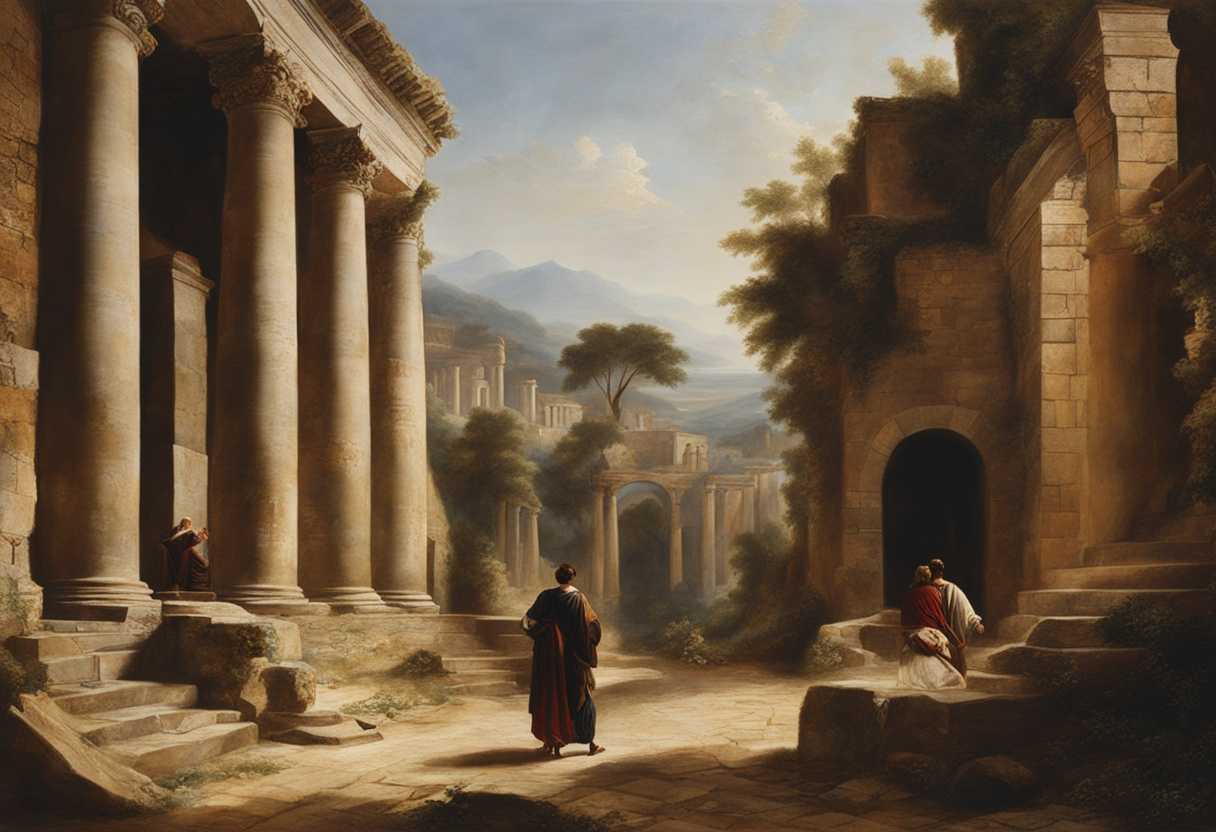
Setting the Scene for Haggai 1:1-8
The scene in Haggai chapter 1 opens with the prophet Haggai addressing the people of Judah who have returned from exile in Babylon. The setting is the city of Jerusalem, specifically in the second year of King Darius’ reign. The people have been back in their homeland for about 16 years, but instead of prioritizing the rebuilding of the temple, they have been focused on their own houses and personal affairs.
Haggai gathers the leaders of the community, including Zerubbabel the governor and Joshua the high priest, to deliver a message from the Lord. The prophet rebukes the people for neglecting the house of God while they live in paneled houses, urging them to consider their ways and prioritize the reconstruction of the temple. The surroundings are likely modest, reflecting the economic struggles and challenges the people faced in trying to rebuild their lives and the temple after years of exile.
The atmosphere is one of conviction and reflection as Haggai’s words challenge the people to reevaluate their priorities and commit to honoring God by rebuilding His temple. The scene is filled with a sense of urgency and a call to action, as the prophet’s message stirs the hearts of the people to respond in obedience and dedication to the Lord’s work.
What is Haggai 1:1-8 about?
Isn’t it fascinating how we often put our own needs and desires ahead of God’s work? The prophet in Haggai 1:1-8 reminds us of the importance of prioritizing God’s work above all else. When we neglect our spiritual responsibilities and focus solely on our personal pursuits, we may find ourselves feeling unfulfilled and unsatisfied.
Haggai urges us to consider our ways and reflect on where we are investing our time and energy. Are we building our own kingdoms at the expense of neglecting God’s kingdom? By prioritizing God’s work, we align ourselves with His will and open ourselves up to true fulfillment and blessings beyond measure. It’s a powerful reminder that true satisfaction comes from serving God and others selflessly, rather than seeking our own selfish desires.
So as we navigate our daily lives, let’s remember the wisdom found in Haggai 1:1-8. Let’s prioritize God’s work, trust in His plan, and watch as He fills our lives with purpose and blessings that far surpass anything we could achieve on our own.
Understanding what Haggai 1:1-8 really means
The Book of Haggai provides a glimpse into the post-exilic period when the Israelites returned from Babylonian captivity, with a central message urging the people to rebuild the Temple in Jerusalem. The opening verse, “The word of the Lord came through the prophet Haggai,” underscores the divine origin and authority of the message, aligning with the biblical principle that true prophecy stems from God. This divine communication serves as a reminder of the importance of heeding God’s word and direction in our lives, as highlighted in 2 Peter 1:21.
The poignant question posed in the verse, “Is it a time for you yourselves to be living in your paneled houses, while this house remains a ruin?” challenges the people’s misplaced priorities. It serves as a stark reminder to prioritize God’s work over personal comfort and material pursuits, echoing the teachings of Jesus in Matthew 6:33 to seek first the kingdom of God. The call to “Give careful thought to your ways” urges introspection and reflection on one’s actions, resonating with the sentiment expressed in Psalm 119:59 of considering one’s ways in light of God’s statutes.
The imagery of planting much but harvesting little conveys the consequences of neglecting God’s house, as seen in the verse “You have planted much, but harvested little.” This serves as a cautionary tale, emphasizing the principle of reaping what one sows, as emphasized in Galatians 6:7. The directive to “Build the house, so that I may take pleasure in it and be honored” underscores the ultimate goal of honoring and glorifying God in all aspects of our lives, aligning with the exhortation in 1 Corinthians 10:31 to do everything for the glory of God.
The timeless relevance of Haggai’s message is evident in the modern-day application of prioritizing God in our lives amidst the distractions and pursuits of personal ambitions. The call for self-examination and realignment with God’s will serves as a poignant reminder to regularly assess whether our actions align with His purposes. The vivid descriptions in the verses, such as “paneled houses” symbolizing luxury and self-indulgence, and “this house remains a ruin” representing neglected spiritual duties, provide powerful visual cues for reflection and action.
In conclusion, Haggai 1:1-8 challenges us to prioritize God’s work, engage in self-examination, and realign our lives to honor and glorify Him. As we navigate our busy lives, may we heed the call to put God first, ensuring that our actions and priorities reflect our faith and commitment to Him. Let us strive to build up His house, both metaphorically and spiritually, so that His name may be honored and glorified in all that we do.
What are we prioritizing over God in our lives?
We often prioritize our own desires, comfort, and material possessions over our devotion and obedience to God in our lives. We become consumed with pursuing our own interests and fulfilling our own needs, neglecting the importance of seeking first the kingdom of God. Similarly, we can easily get caught up in the busyness of life, focusing on our own tasks and responsibilities while neglecting our spiritual duties and relationship with God. This can result in a lack of spiritual growth and a disconnect from the will of God.
When we prioritize worldly pursuits over God, we are essentially placing other things above Him in our lives. This can lead to dissatisfaction, emptiness, and a lack of true fulfillment. God desires our wholehearted devotion and obedience, seeking Him above all else. When we put Him first in our lives, everything else will fall into place, and we will experience His blessings and provision in abundance.
Application
Take a moment to ponder Haggai 1:1-8 and realize the significance of placing God’s work at the forefront of our lives. Let’s not allow everyday distractions to veer us off course from constructing God’s kingdom and striving for His magnificence wholeheartedly. It’s time to reassess where your priorities lie and reaffirm your dedication to serving God with unwavering focus and commitment. Will you rise up to this call and embark on a journey of spiritual fulfillment and purpose?

Reverend Michael Johnson is an experienced Church Minister with a profound expertise in spirituality and guidance. With a serene presence and a compassionate heart, he has faithfully served his congregation for over 20 years, leading them on a spiritual journey towards inner peace and enlightenment. Reverend Johnson’s extensive knowledge of religious philosophies and profound understanding of human nature have made him a trusted confidant and mentor to many, as he seamlessly weaves his profound wisdom into life teachings. Reverend Johnson’s calming demeanor and empathetic nature continue to uplift and heal souls, nurturing a sense of unity and tranquility within his community.