
Haggai 1:1-9 is about the prophet Haggai rebuking the people for focusing on their own selfish interests and neglecting the restoration of the temple, emphasizing the importance of prioritizing spiritual duties over material pursuits.
1 In the second year of Darius the king, in the sixth month, on the first day of the month, the word of the Lord came by the hand of Haggai the prophet to Zerubbabel the son of Shealtiel, governor of Judah, and to Joshua the son of Jehozadak, the high priest:
2 “Thus says the Lord of hosts: These people say the time has not yet come to rebuild the house of the Lord.”
3 Then the word of the Lord came by the hand of Haggai the prophet,
4 “Is it a time for you yourselves to dwell in your paneled houses, while this house lies in ruins?”
5 Now, therefore, thus says the Lord of hosts: Consider your ways.
6 You have sown much, and harvested little. You eat, but you never have enough; you drink, but you never have your fill. You clothe yourselves, but no one is warm. And he who earns wages does so to put them into a bag with holes.
7 “Thus says the Lord of hosts: Consider your ways.”
8 Go up to the hills and bring wood and build the house, that I may take pleasure in it and that I may be glorified, says the Lord.
9 You looked for much, and behold, it came to little. And when you brought it home, I blew it away. Why? declares the Lord of hosts. Because of my house that lies in ruins, while each of you busies himself with his own house.
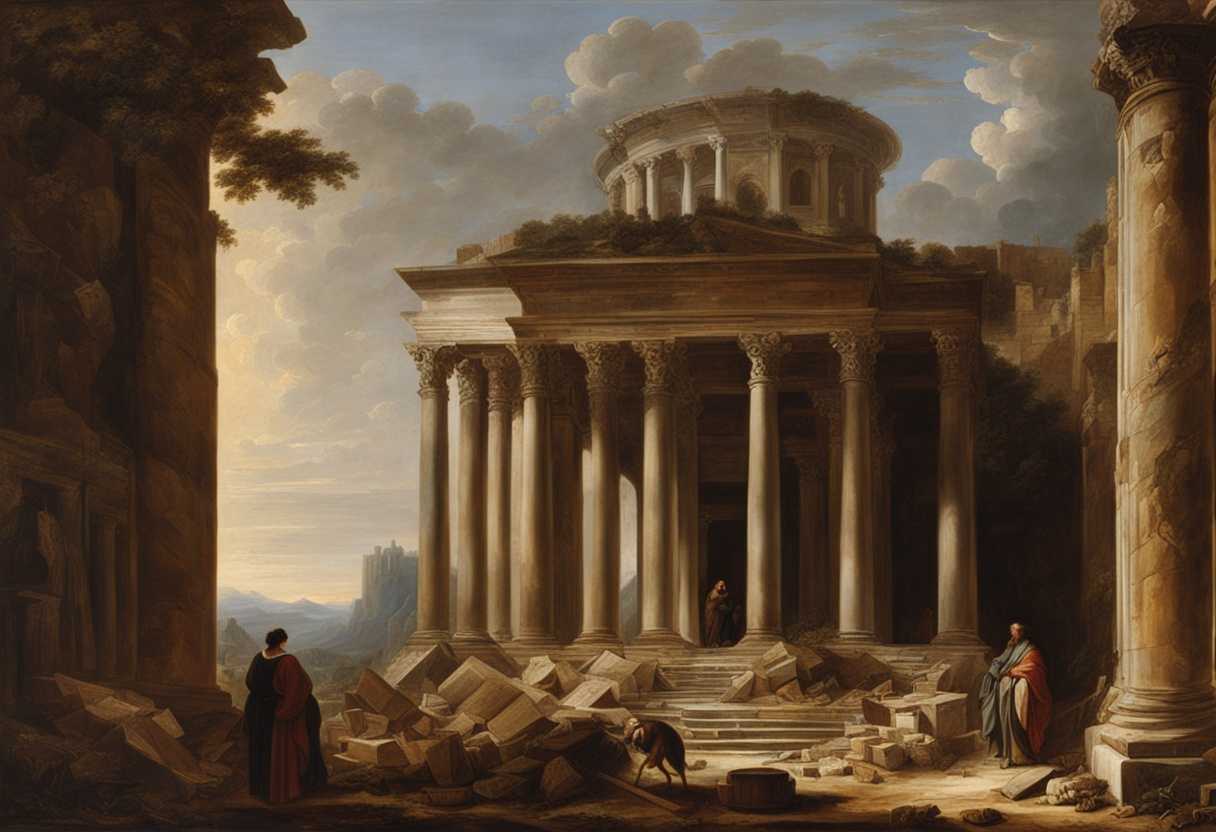
Setting the Scene for Haggai 1:1-9
The scene in Haggai chapter 1 opens with the prophet Haggai addressing the people of Judah who have returned from exile in Babylon. The setting is the city of Jerusalem, specifically in the second year of King Darius’ reign. The people have been back in their homeland for about 16 years, but instead of focusing on rebuilding the temple, they have been preoccupied with their own houses and fields. The temple lies in ruins, a stark reminder of their neglect of God’s house.
Haggai, filled with the spirit of God, calls out to Zerubbabel, the governor of Judah, and Joshua, the high priest, along with the remnant of the people. They gather in the dusty streets of Jerusalem, the rubble of the temple casting a shadow over them. Haggai’s words pierce through the air, challenging the people to consider their ways and prioritize the rebuilding of the Lord’s house. The prophet’s message stirs a sense of conviction and urgency among the listeners, prompting them to reflect on their neglect and commit to the task at hand.
As the sun sets over the city, a renewed sense of purpose fills the hearts of the people. Inspired by Haggai’s words, they set out to gather materials and labor for the reconstruction of the temple, a symbol of their dedication to God and their desire to honor Him. The scene is one of repentance, determination, and a rekindling of faith as the people of Judah respond to the prophetic call to prioritize the things of God above their own comforts and desires.
What is Haggai 1:1-9 about?
The prophet Haggai urges us to reflect on our priorities in this powerful verse. He challenges us to consider: Are we investing more time and energy into our own desires and pursuits rather than focusing on God’s work? Haggai reminds us that true fulfillment comes from aligning ourselves with God’s will and dedicating ourselves to His work. We honor God and find deep satisfaction and purpose in our lives by putting Him first and prioritizing His work. Haggai’s words serve as a wake-up call for us to reevaluate our priorities and make sure we are walking in alignment with God’s plans for us. Are we allowing distractions and personal ambitions to take precedence over serving God and advancing His kingdom?
Let this verse be a reminder to us all to seek first the kingdom of God and His righteousness, trusting that as we prioritize His work, He will take care of our needs and bring true fulfillment to our lives. We can realign our priorities to be in harmony with God’s purposes and experience the abundant blessings that come from serving Him wholeheartedly.
Understanding what Haggai 1:1-9 really means
The Book of Haggai provides a glimpse into the post-exilic period, a time when the Israelites returned from Babylonian captivity. In this context, Haggai, a prophet, delivers a message to the people who have neglected the crucial task of rebuilding the Temple in Jerusalem. The passage in Haggai 1:1-9 specifically highlights the people’s misplaced priorities and the repercussions of their actions. They make excuses, saying, “The time is not come, the time that the Lord’s house should be built,” revealing a lack of urgency and dedication to God’s work. This attitude prompts Haggai to urge them to “consider your ways,” emphasizing the need for self-reflection on their choices and priorities.
The vivid imagery used in the passage paints a picture of dissatisfaction and futility in the lives of the Israelites due to neglecting God’s house. They sow much but reap little, eat without being satisfied, and earn wages only to see them disappear like putting money into a bag with holes. These consequences serve as a stark warning about the outcomes of misplaced priorities and neglecting God’s work. The message resonates with the timeless wisdom found in other biblical passages like Matthew 6:33, which stresses the importance of seeking God’s kingdom first to receive His blessings.
In today’s fast-paced world, many individuals grapple with balancing their spiritual lives alongside the demands of work, family, and personal aspirations. The passage from Haggai serves as a poignant reminder for us to assess our priorities continually and ensure that we are not inadvertently sidelining our relationship with God. Consider the scenario of a prosperous businessperson consumed by their career, forsaking their family and spiritual well-being. Despite their material success, they feel a profound void and discontent. Only when they realign their priorities, reconnecting with loved ones and faith, do they discover genuine purpose and fulfillment.
Haggai 1:1-9 challenges us to scrutinize our priorities and the state of our spiritual journey. By prioritizing God and His work, we position ourselves in harmony with His divine will, paving the way for His abundant blessings. Let us heed the prophet’s call to “consider our ways” and ensure that our actions reflect a steadfast commitment to God. May we learn from the mistakes of the Israelites and strive to place God at the forefront of our lives, experiencing the true satisfaction and prosperity that come from aligning our priorities with His eternal purposes.
What are we prioritizing over God in our lives?
Based on the passage from Haggai 1:1-9, it is clear that the Israelites were prioritizing their own pursuits and desires over the worship and reverence of God. They were focused on building their own houses while neglecting God’s house, which was lying in ruins. This reflects a lack of prioritization of God in their lives, as they were placing their own comfort and material possessions above their relationship with Him. We may also be guilty of prioritizing things over God in our own lives. This could manifest in various ways, such as giving more importance to our careers, relationships, or hobbies than to spending time in prayer, worship, or serving others. When we neglect God or place Him lower on our list of priorities, we risk missing out on the blessings and guidance He wants to offer us.
The passage reminds us of the importance of putting God first in our lives and aligning our priorities with His will. When we make God the center of our lives and prioritize Him above all else, we are more likely to experience His peace, blessings, and provision in all areas of our lives. We should learn from the Israelites’ mistake and ensure that we do not neglect God or His work in favor of our own pursuits and desires.
Application
Are you devoting yourself entirely to God’s mission or are you consumed by your personal interests? Haggai 1:1-9 serves as a wake-up call to realign our focus on what truly matters. It’s time to assess where our dedication lies and commit to putting God at the forefront of our daily pursuits. Let’s not overlook the divine work that awaits us, for it is through our actions that His kingdom thrives. Will you choose to prioritize God’s work over all else and strive for spiritual fulfillment?

Reverend Michael Johnson is an experienced Church Minister with a profound expertise in spirituality and guidance. With a serene presence and a compassionate heart, he has faithfully served his congregation for over 20 years, leading them on a spiritual journey towards inner peace and enlightenment. Reverend Johnson’s extensive knowledge of religious philosophies and profound understanding of human nature have made him a trusted confidant and mentor to many, as he seamlessly weaves his profound wisdom into life teachings. Reverend Johnson’s calming demeanor and empathetic nature continue to uplift and heal souls, nurturing a sense of unity and tranquility within his community.