
Haggai 1:5-6 is about the people’s lack of prosperity and fruitfulness despite their efforts, which is attributed to their neglect of building God’s house and focusing solely on their own pursuits.
5 Now, therefore, thus says the Lord of hosts: Consider your ways.
6 You have sown much, and harvested little. You eat, but you never have enough; you drink, but you never have your fill. You clothe yourselves, but no one is warm. And he who earns wages does so to put them into a bag with holes.
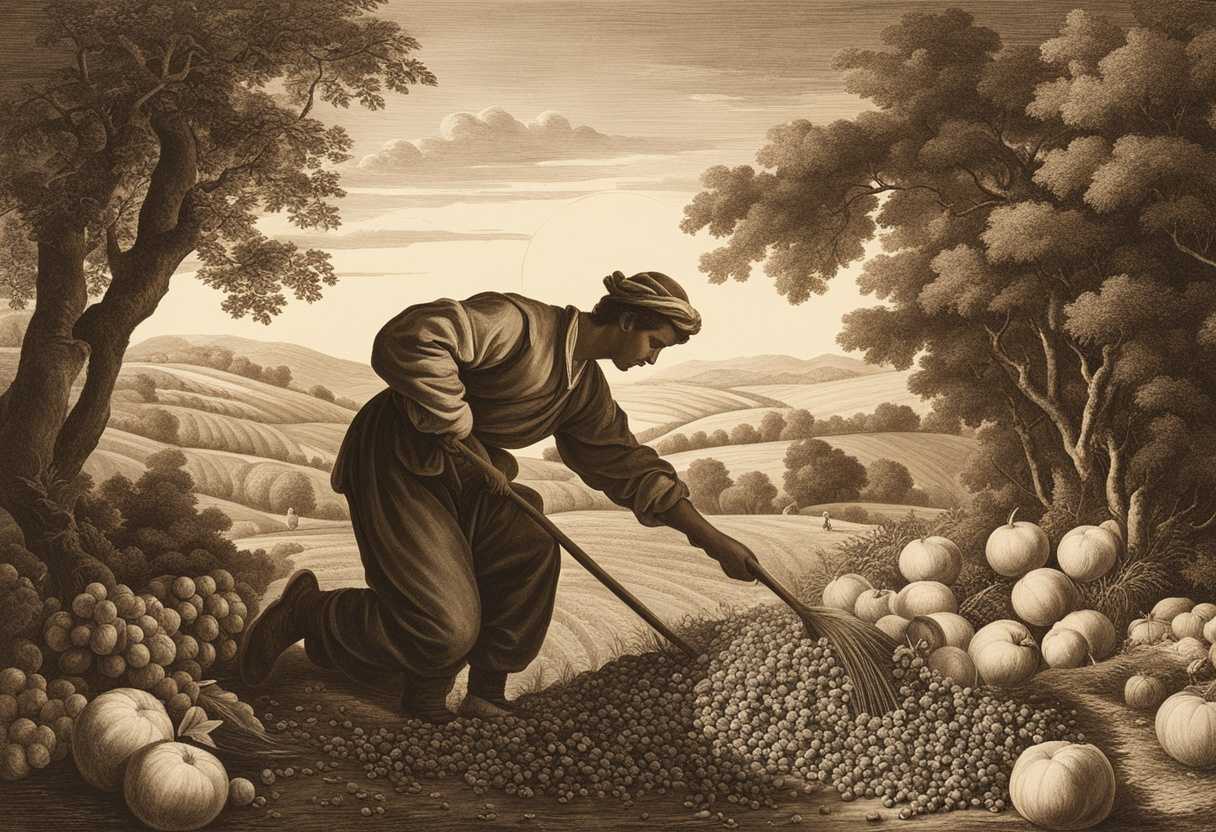
Setting the Scene for Haggai 1:5-6
The scene in Haggai chapter 1 opens with the prophet Haggai addressing the people of Judah who have returned from exile in Babylon to rebuild the temple in Jerusalem. The setting is the second year of King Darius’ reign, around 520 BC. The people have been back in their homeland for some time now, but instead of prioritizing the reconstruction of the temple, they have been focused on their own houses and personal affairs.
Haggai, a messenger of God, stands before the gathered assembly in Jerusalem, including Zerubbabel, the governor of Judah, and Joshua, the high priest. The atmosphere is one of neglect and apathy towards the house of the Lord. Haggai’s message is one of rebuke and exhortation, urging the people to consider their ways and to prioritize the rebuilding of the temple, emphasizing that their lack of progress is a reflection of their spiritual priorities being out of order.
The surroundings are likely modest, reflecting the impoverished state of the returned exiles. The temple lies in ruins, a stark reminder of the devastation wrought by the Babylonian conquest. The people’s homes, in contrast, may show signs of relative comfort as they have focused on their own dwellings rather than the house of God. Haggai’s words echo through the assembly, challenging them to reconsider their neglect of the temple and to realign their priorities with God’s will.
What is Haggai 1:5-6 about?
When we read this verse, we are prompted to pause and reflect on our actions, choices, and priorities. Are we truly focusing on what matters most in life, or are we getting caught up in materialistic pursuits that only provide temporary satisfaction? The verse is urging us to examine our ways, to evaluate if we are aligning our actions with our values, beliefs, and faith. We can find a deeper sense of fulfillment and purpose in our lives by prioritizing the work of God over personal gain. It challenges us to consider whether we are investing our time, energy, and resources in activities that have eternal significance or if we are simply chasing after fleeting pleasures. True satisfaction comes from serving God, helping others, and living in alignment with His will for our lives.
So, let’s take a moment to pause and consider our ways. Are we prioritizing God’s work above all else? Are we seeking true satisfaction that comes from serving Him and living a purpose-driven life? Let’s reflect on these questions and make any necessary adjustments to ensure that we are living in a way that brings honor and glory to God.
Understanding what Haggai 1:5-6 really means
In the book of Haggai, we are transported to a crucial period in Israel’s history, post-exile, where the prophet Haggai delivers messages to a people tasked with rebuilding the temple in Jerusalem. The verses in focus, Haggai 1:5-6, highlight the consequences of misplaced priorities among the Israelites. The phrase “Consider your ways” serves as a poignant call for self-examination, urging individuals to reflect on their actions and priorities. Despite their efforts in sowing much, the people reap little, emphasizing the disconnect between their labor and the outcomes they experience.
The imagery painted in the passage vividly portrays a sense of lack and insufficiency despite the people’s endeavors. They eat but do not have enough, drink but are not filled, and clothe themselves without finding warmth. The analogy of earning wages only to see them slip away like putting money into a bag with holes underscores the fleeting nature of their gains. These descriptions serve as a stark reminder of the consequences of neglecting spiritual responsibilities in favor of worldly pursuits.
Drawing parallels to contemporary life, we see a reflection of the Israelites’ predicament in the modern-day preoccupation with career advancement, material possessions, and personal ambitions at the expense of spiritual well-being. Just as the Israelites focused on their homes while neglecting the temple, individuals today often prioritize temporary gains over eternal truths. The passage from Haggai serves as a cautionary tale, warning against the emptiness and dissatisfaction that accompany misplaced priorities.
Connecting this message to other biblical passages reinforces the importance of prioritizing spiritual matters. Matthew 6:33 urges us to seek God’s kingdom first, promising that all other needs will be met. Proverbs 3:9-10 highlights the blessings that come from honoring the Lord with our possessions, while Luke 12:15 warns against the pursuit of material wealth at the expense of true life fulfillment. These verses echo the timeless wisdom found in Haggai, emphasizing the enduring relevance of aligning our priorities with God’s will.
Consider a scenario where a successful individual, consumed by the pursuit of wealth and status, realizes the hollowness of their achievements. Despite outward success, they feel a void within, recognizing the neglect of essential aspects like family, health, and spiritual growth. This realization prompts a reevaluation of priorities, leading to a quest for a more balanced and meaningful life. In this anecdote, we see a reflection of the transformative power of introspection and realignment with spiritual truths.
In conclusion, Haggai 1:5-6 serves as a timeless reminder to assess our priorities and ensure that we do not forsake spiritual responsibilities in the pursuit of worldly success. By heeding the call to “Consider your ways” and placing God at the forefront of our lives, we can find true fulfillment and blessings that transcend material gains. Let us learn from the lessons of the past and strive for a harmonious balance between our earthly endeavors and our spiritual well-being.
How can we prioritize God above material possessions?
We can prioritize God above material possessions by recognizing that our relationship with Him should be the most important aspect of our lives. When we prioritize God, we acknowledge His sovereignty, love, and provision for us. Material possessions are temporary and can easily distract us from our spiritual growth and connection with God. We demonstrate our faith and trust in His plans for us by focusing on building our relationship with Him.
Additionally, prioritizing God above material possessions involves aligning our actions and decisions with His will. This means seeking His guidance and wisdom in all areas of our lives, including our finances and possessions. When we put God first, we trust that He will provide for our needs and bless us abundantly. We demonstrate our commitment to following His ways and living a life that glorifies Him by surrendering our desires for material wealth and comfort to Him. A change in mindset and a deepening of our faith ultimately require prioritizing God above material possessions. This involves letting go of the pursuit of worldly wealth and finding true contentment and fulfillment in our relationship with God. When we choose to prioritize God above all else, we show that we value His presence, love, and grace more than any temporary, earthly possessions.
Application
Just as we balance work and family, we must prioritize our relationship with God. Let’s not forget to nourish our spiritual side amidst the hustle and bustle of the modern world. Take a moment to refocus and realign your priorities with what truly matters. Will you answer the call to put God at the forefront of your life?

Reverend Michael Johnson is an experienced Church Minister with a profound expertise in spirituality and guidance. With a serene presence and a compassionate heart, he has faithfully served his congregation for over 20 years, leading them on a spiritual journey towards inner peace and enlightenment. Reverend Johnson’s extensive knowledge of religious philosophies and profound understanding of human nature have made him a trusted confidant and mentor to many, as he seamlessly weaves his profound wisdom into life teachings. Reverend Johnson’s calming demeanor and empathetic nature continue to uplift and heal souls, nurturing a sense of unity and tranquility within his community.