
1 In the seventh month, on the twenty-first day of the month, the word of the Lord came by the hand of Haggai the prophet:
2 “Speak now to Zerubbabel the son of Shealtiel, governor of Judah, and to Joshua the son of Jehozadak, the high priest, and to all the remnant of the people, and say,
3 ‘Who is left among you who saw this house in its former glory? How do you see it now? Is it not as nothing in your eyes?
4 Yet now be strong, O Zerubbabel, declares the Lord. Be strong, O Joshua, son of Jehozadak, the high priest. Be strong, all you people of the land, declares the Lord. Work, for I am with you, declares the Lord of hosts,
5 According to the covenant that I made with you when you came out of Egypt. My Spirit remains in your midst. Fear not.
6 For thus says the Lord of hosts: Yet once more, in a little while, I will shake the heavens and the earth and the sea and the dry land.
7 And I will shake all nations, so that the treasures of all nations shall come in, and I will fill this house with glory, says the Lord of hosts.
8 The silver is mine, and the gold is mine, declares the Lord of hosts.
9 The latter glory of this house shall be greater than the former, says the Lord of hosts. And in this place I will give peace, declares the Lord of hosts.
10 On the twenty-fourth day of the ninth month, in the second year of Darius, the word of the Lord came by Haggai the prophet,
11 “Thus says the Lord of hosts: Ask the priests about the law:
8 The silver is mine, and the gold is mine, declares the Lord of hosts.
13 Then Haggai said, “If someone who is unclean by contact with a dead body touches any of these, does it become unclean?” The priests answered and said, “It does become unclean.”
14 Then Haggai answered, “So is this people, and so is this nation before me, declares the Lord, and so is every work of their hands. And what they offer there is unclean.
8 The silver is mine, and the gold is mine, declares the Lord of hosts.
16 how did you fare? When one came to a heap of twenty measures, there were but ten. When one came to the wine vat to draw fifty measures, there were but twenty.
17 I struck you and all the products of your toil with blight and with mildew and with hail, yet you did not turn to me, declares the Lord.
18 Consider from this day onward, from the twenty-fourth day of the ninth month. Since the day that the foundation of the Lord’s temple was laid, consider:
19 Is the seed yet in the barn? Indeed, the vine, the fig tree, the pomegranate, and the olive tree have yielded nothing. But from this day on I will bless you.”
7 And I will shake all nations, so that the treasures of all nations shall come in, and I will fill this house with glory, says the Lord of hosts.
21 “Speak to Zerubbabel, governor of Judah, saying, I am about to shake the heavens and the earth,
22 And I will overthrow the throne of kingdoms. I will destroy the strength of the kingdoms of the nations, and overthrow the chariots and their riders. And the horses and their riders shall go down, every one by the sword of his brother.
23 On that day, declares the Lord of hosts, I will take you, O Zerubbabel my servant, the son of Shealtiel, declares the Lord, and make you like a signet ring, for I have chosen you, declares the Lord of hosts.
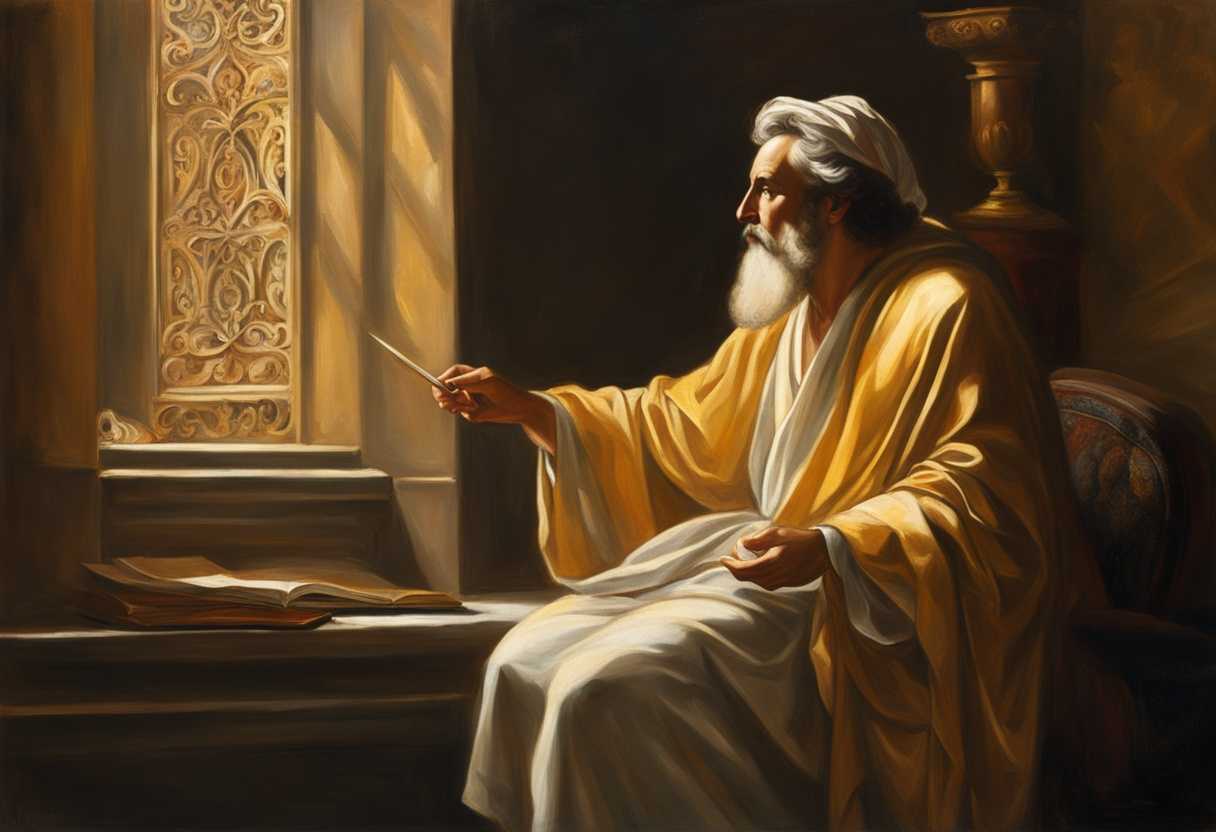
The True Meaning of Haggai 2
The book of Haggai was written by the prophet Haggai, who lived during the time of the Persian Empire’s rule over the Israelites. Haggai was a contemporary of the prophet Zechariah, and both men were instrumental in encouraging the Israelites to rebuild the temple in Jerusalem after their return from exile in Babylon. Haggai continues to urge the people in this chapter to complete the rebuilding of the temple, reminding them of God’s promise to bless them and their work. He also foretells the future glory of the temple, which will be greater than the previous one, and the coming of the Messiah, who will bring peace and prosperity to the land.
Haggai’s message is a powerful reminder of the importance of obedience to God’s commands and the blessings that come from faithful service. Haggai’s words provided encouragement and hope to the Israelites as they struggled to rebuild their lives and their nation, pointing them towards the ultimate fulfillment of God’s plan for His people.
Haggai 2:1-5
The prophet Haggai delivers a message from the Lord to Zerubbabel, the governor of Judah, and to Joshua, the high priest in Haggai 2:1-5. The passage begins with the Lord speaking to the leaders, encouraging them and the people not to be discouraged or fearful. This message is delivered about a month after the foundation of the second temple had been laid, and the people were feeling disheartened because the new temple they were building seemed far inferior to the grandeur of the first temple that Solomon had constructed.
The Lord reminds Zerubbabel, Joshua, and the people that His presence is with them, assuring them that they are not alone in their efforts to rebuild the temple. This reassurance is crucial because the people were facing opposition and obstacles in their rebuilding project. The Lord tells them to be strong and to continue the work, promising that His Spirit remains among them. This message of encouragement is meant to strengthen their faith and resolve to carry out the work despite the challenges they were facing.
This passage conveys a timeless message about the importance of faith and perseverance in the face of challenges. The Lord’s message to Zerubbabel and Joshua serves as a reminder that God’s presence and Spirit empower His people to overcome difficulties and carry out His purposes. It also underscores the significance of obedience to God’s instructions, as the people’s commitment to rebuilding the temple was an act of faith and obedience to His commands.
Throughout the Bible, we see similar messages of encouragement and reassurance to God’s people in times of difficulty. God commands Joshua to be strong and courageous in Joshua 1:9, reminding him that He will be with him wherever he goes. This promise of God’s presence and strength echoes through the ages, providing comfort and strength to believers facing challenges. Haggai 2:1-5 conveys a powerful message of faith, perseverance, and obedience in the midst of adversity. It encourages believers to trust in God’s presence and to continue their work with courage and determination, knowing that His Spirit is with them. This passage serves as a reminder that God equips His people to face obstacles and fulfill His purposes, regardless of the challenges they may encounter.
Haggai 2:6-9
The prophet Haggai delivers a message from the Lord to the people of Israel in Haggai 2:6-9. Let’s break down this passage into sections for a deeper understanding:
-
“For thus says the Lord of hosts: Yet once, it is a little while, and I will shake the heavens, and the earth, and the sea, and the dry land.”
This opening statement sets the tone for a powerful divine intervention. The imagery of shaking the heavens and the earth signifies a significant event orchestrated by God. The trembling of the elements is an indicator of God’s sovereignty and His ability to bring about massive change and reset to the world. -
“And I will shake all nations, and the desire of all nations shall come: and I will fill this house with glory, says the Lord of hosts.”
Here, God not only promises to shake the physical world but also all nations. This shaking of all nations implies a universal impact and suggests a global event that will capture the attention of all people. The “desire of all nations” could refer to the coming of the Messiah, Jesus Christ. Through His birth, life, death, and resurrection, Jesus fulfilled the deepest longings of all nations for salvation and redemption. This prophecy points to the ultimate glory that will be brought to the house of God through the presence of the Messiah. -
“The silver is mine, and the gold is mine, says the Lord of hosts. The glory of this latter house shall be greater than of the former, says the Lord of hosts: and in this place will I give peace, says the Lord of hosts.”
This section emphasizes God’s ownership of all things, including silver and gold. God is promising a restoration and renewal that surpasses what was previously known by stating that the glory of the latter house (the temple to be rebuilt by the Israelites) will be greater than the former. This anticipates the coming of Jesus, who brings a new and greater covenant of grace and salvation that surpasses the old covenant of the Law. The promise of peace in this place signifies not only a physical peace within the rebuilt temple but also the spiritual peace that comes through Christ’s sacrifice on the cross, reconciling humanity with God. We see a prophetic message in these verses that points to the coming of Jesus Christ and the establishment of a new covenant that surpasses the old. The shaking of the heavens and the earth signifies a divine intervention that will impact all nations, leading to the fulfillment of the deepest desires of humanity through Christ. It emphasizes God’s sovereignty, ownership, and promise of peace through the ultimate sacrifice of His Son. This message serves as a reminder of God’s faithfulness to His people throughout history and His ultimate plan of redemption through Jesus Christ.
Haggai 2:10-14
The prophet Haggai addresses the people of Israel in Haggai 2:10-14 by posing a series of questions concerning ritual purity and holiness. This passage focuses on the concept of defilement and its consequences on the people. The key sections can be broken down as follows:
-
“On the twenty-fourth day of the ninth month, in the second year of Darius, the word of the Lord came to the prophet Haggai” (Haggai 2:10): This verse sets the timeframe for the message that Haggai received from God. The specificity of the date lends a sense of importance to the prophecy, emphasizing its significance for the people of Israel.
-
“This is what the Lord Almighty says: Ask the priests what the law says” (Haggai 2:11): Here, God instructs the people to consult the priests regarding the requirements of the Law. The priests served as intermediaries between God and the people, responsible for upholding the religious laws and guiding the community in matters of faith and practice.
-
“If someone carries consecrated meat in the fold of their garment, and that fold touches some bread or stew, some wine, olive oil or other food, does it become consecrated?” (Haggai 2:12): This question posed by Haggai pertains to the principle of holiness and contamination. The concept of ritual purity was vital in ancient Israelite society, as any defilement could render a person or object unfit for sacred use.
-
“The priests answered, “No.” Then Haggai said, “If a person defiled by contact with a dead body touches one of these things, does it become defiled?” “Yes,” the priests replied, “it becomes defiled” (Haggai 2:13): The distinction made here between consecration and defilement highlights the importance of maintaining purity in the eyes of God. A person or object dedicated to God could not sanctify another object by mere contact, but defilement could easily spread and taint what it touched.
-
**”So it is with this people and this nation in my sight,” declares the Lord. God draws a parallel between the people of Israel and the defiled objects mentioned earlier in this concluding verse. The Israelites’ disregard for God’s commands and their neglect in rebuilding the temple had tainted their offerings and works, rendering them impure in the eyes of God.
Haggai’s message challenges the people to reflect on their actions and attitudes towards holiness and obedience to God’s commands. The prophet emphasizes the importance of maintaining spiritual purity and following the teachings of the Law. This passage serves as a reminder of the consequences of neglecting one’s relationship with God and the impact of impurity on worship and service.
The theme of ritual purity and defilement is prevalent throughout the Bible, emphasizing the importance of maintaining a clean heart and pure intentions in serving God. Jesus in the New Testament confronts the religious leaders of His time, condemning their hypocrisy and outward show of piety while neglecting the weightier matters of the Law, such as justice, mercy, and faithfulness (Matthew 23:23). This serves as a cautionary tale for believers to prioritize genuine devotion and obedience over religious formalities.
Haggai 2:15-19
We can break down several important sections in Haggai 2:15-19 to gain a deeper understanding of the verse.
First, let’s look at “And now, consider from this day onward.” This indicates a shift in focus towards the present moment. The message is calling for reflection and contemplation. It is a call to reassess their ways and acknowledge the consequences of their actions. This section serves as a wakeup call for the people to pay attention to their current situation and to consider the impact of their past neglect of the Lord’s house.
The next part, “Before stone was placed upon stone in the temple of the Lord,” refers to the time prior to the rebuilding of the temple. This serves as a reminder of the times when the temple lay in ruins due to the negligence of the people. The temple was a central place of worship and a symbol of their relationship with God. The verse underscores the significance of honoring and prioritizing their spiritual commitments by highlighting the condition of the temple before its restoration. “How did you fare?” is the sentence.” the focus shifts to accountability. The question posed challenges the people to reflect on their experiences and outcomes when they neglected their spiritual duties. This introspective query serves as a mirror for self-evaluation, prompting the people to assess the consequences of their actions. It highlights the importance of taking responsibility for their past choices and their impact on their current circumstances.
The mention of “From this day on, from this twenty-fourth day of the ninth month,” marks a specific point in time. The emphasis on a particular date signifies a new beginning or a fresh start. It symbolizes a turning point for the people to recommit themselves to the Lord and to prioritize their spiritual obligations. This specific date serves as a reminder that it’s never too late to return to God and rebuild what has been neglected. The promise of blessing concludes the verse, “Consider from the day onward, from the twenty-fourth day of the ninth month.” Since the day that the foundation of the Lord’s temple was laid, consider.” This promise of blessing is conditional on their obedience and commitment to God. It reaffirms the principle of reaping what you sow, and that obedience to God’s commands leads to His favor and blessings. It is a reminder of God’s faithfulness and His willingness to bless His people when they align their priorities with His will. The rebuilding of the temple in Haggai’s time serves as a metaphor for spiritual renewal and restoration in the broader context of the Bible. The temple represented God’s presence among His people, and its rebuilding signified a rekindling of their relationship with Him. This theme of renewal is echoed throughout the Bible, such as in Isaiah 43:18-19, where God promises to do a new thing and make a way in the wilderness. Haggai 2:15-19 underscores the importance of prioritizing one’s relationship with God, the need for self-reflection and accountability, the promise of blessings for obedience, and the possibility of renewal and restoration when one returns to God wholeheartedly.
Haggai 2:20-23
Identify the subject: A few important sections in Haggai 2:20-23 need to be broken down for a deeper understanding. “The word of the Lord came to Haggai a second time on the twenty-fourth day of the month” – This verse marks the specific time when the word of the Lord was delivered to the prophet Haggai. The call to rebuild the temple in Jerusalem is a major theme in the book of Haggai. This verse highlights the divine communication received by Haggai for the second time, emphasizing the importance of the message to follow.
-
“Speak to Zerubbabel governor of Judah, to Joshua son of Jozadak, the high priest, and to the remnant of the people” – Here, the prophet is instructed to convey the message to the key figures involved in the process of rebuilding the temple. Zerubbabel, the governor of Judah, was a descendent of King David and played a crucial role in overseeing the rebuilding efforts. Joshua, the high priest, held a prominent religious position and was responsible for the spiritual aspects of the community. The mention of these leaders underscores the cooperation between civil and religious authorities in fulfilling God’s commands.
-
“‘I will shake the heavens and the earth. I will overturn royal thrones and shatter the power of the foreign kingdoms. I will overthrow chariots and their drivers; horses and their riders will fall, each by the sword of his brother.” – This verse conveys a message of God’s power and sovereignty over earthly kingdoms. The imagery of shaking the heavens and the earth symbolizes divine intervention and the disruption of human structures of power. It serves as a reminder that human accomplishments and authorities are temporal, while God’s dominion is eternal. This theme is echoed in other parts of the Bible, such as Psalm 146:3 which states, “Put not your trust in princes, in a son of man, in whom there is no salvation.”
-
“On that day, declares the Lord Almighty, I will take you, my servant Zerubbabel son of Shealtiel, declares the Lord, and I will make you like my signet ring, for I have chosen you,’ declares the Lord Almighty.” – This concluding verse contains a message of divine favor and selection. Zerubbabel is singled out as a servant of the Lord, and the comparison to a signet ring symbolizes his importance and God’s special seal of approval upon him. This affirmation reinforces the idea that God’s chosen servants will be empowered and protected to fulfill their designated tasks. This concept resonates with other biblical figures like David, who was chosen by God to be king, and various prophets who were called to deliver God’s messages. Haggai 2:20-23 conveys a powerful message about God’s control over earthly affairs, the collaboration between human leaders in fulfilling God’s will, and the divine favor bestowed upon the chosen servants of God. It serves as a reminder of God’s ultimate authority and the importance of obedience and faithfulness in carrying out His purposes.
After Haggai 2
The prophet Haggai had delivered God’s message to the people. He urged them to rebuild the temple, reminding them of God’s promise to bless them. The people listened and began the work, encouraged by Haggai’s words. The people rejoiced as they laid the foundation. But some of the older men who had seen the first temple wept, for this new one seemed so small and insignificant in comparison. Haggai knew he must address their doubts and fears. With God’s authority, he spoke words of encouragement and hope.
The reverend closed the chapter with a solemn reminder. Though the new temple may seem humble, the Lord had promised to fill it with His glory. The people must trust in His plan, for the day was coming when the Lord would shake the heavens and the earth. All nations would bring their treasures to this house, and the glory of the latter temple would surpass the former. With this promise, the reverend turned the page, eager to see how the Lord would fulfill His word.

Reverend Michael Johnson is an experienced Church Minister with a profound expertise in spirituality and guidance. With a serene presence and a compassionate heart, he has faithfully served his congregation for over 20 years, leading them on a spiritual journey towards inner peace and enlightenment. Reverend Johnson’s extensive knowledge of religious philosophies and profound understanding of human nature have made him a trusted confidant and mentor to many, as he seamlessly weaves his profound wisdom into life teachings. Reverend Johnson’s calming demeanor and empathetic nature continue to uplift and heal souls, nurturing a sense of unity and tranquility within his community.