
Haggai 2:20-23 is about God promising to overthrow the kingdoms of the world and establish His chosen leaders, signifying His ultimate sovereignty and control over all nations.
20 The word of the Lord came a second time to Haggai on the twenty-fourth day of the month,
21 “Speak to Zerubbabel, governor of Judah, saying, I am about to shake the heavens and the earth,
22 And I will overthrow the throne of kingdoms. I will destroy the strength of the kingdoms of the nations, and overthrow the chariots and their riders. And the horses and their riders shall go down, every one by the sword of his brother.
23 On that day, declares the Lord of hosts, I will take you, O Zerubbabel my servant, the son of Shealtiel, declares the Lord, and make you like a signet ring, for I have chosen you, declares the Lord of hosts.
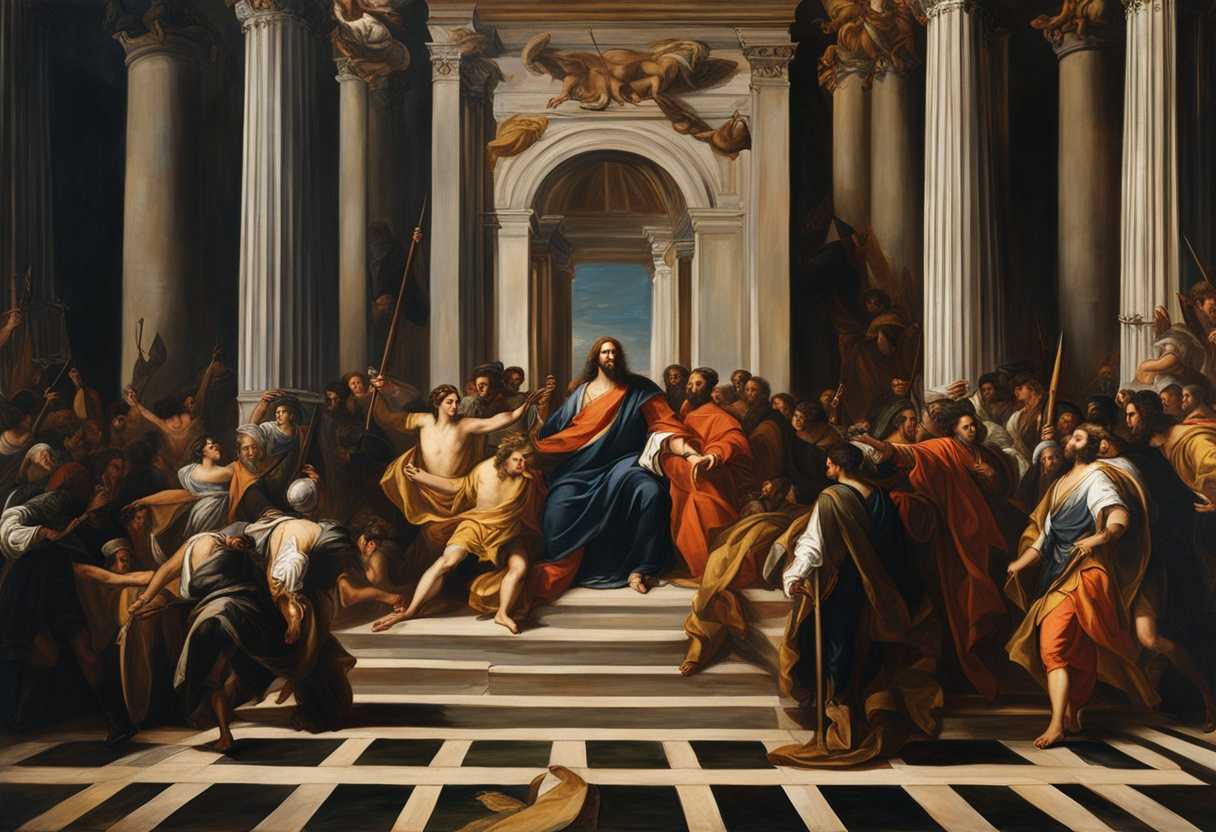
Setting the Scene for Haggai 2:20-23
The scene in Haggai 2:20-23 takes place in the second year of King Darius’ reign in Jerusalem. The prophet Haggai is addressing Zerubbabel, the governor of Judah, and Joshua, the high priest, along with the remnant of the people who had returned from exile in Babylon. The setting is the temple in Jerusalem, which had been in ruins but was now being rebuilt under the leadership of Zerubbabel and Joshua.
Haggai delivers a message from the Lord to Zerubbabel, Joshua, and the people, encouraging them to be strong and continue the work of rebuilding the temple. He assures them that God is with them and will bless them, despite the challenges they may face. The scene is filled with a sense of determination and hope as the leaders and the people are reminded of God’s faithfulness and promises.
The atmosphere in the temple is one of reverence and anticipation as Haggai’s words sink in, reminding everyone of the importance of their task and the significance of the temple in their worship and relationship with God. Zerubbabel, Joshua, and the people are inspired to press on with the rebuilding project, knowing that God is watching over them and will ultimately bring about His purposes for His people.
What is Haggai 2:20-23 about?
This verse highlights the divine sovereignty and power of God over the affairs of the world. It emphasizes that God is actively involved in the rise and fall of kingdoms and leaders, ultimately determining their fate. It serves as a reminder that despite the chaos and uncertainty of the world, there is a higher power at work who is in control of all things. Reflect on this verse, considering the significance of trusting in God’s plan and timing. It is a reassurance that even when things seem out of control, God is orchestrating events according to His divine will. This verse challenges us to look beyond the visible circumstances and to have faith in God’s ultimate authority and rule over all creation. It prompts us to surrender our fears and anxieties, knowing that God is in control and will ultimately bring about justice and order in His perfect timing.
Understanding what Haggai 2:20-23 really means
The Book of Haggai provides a glimpse into the post-exilic period when the Israelites were returning from Babylonian captivity and reconstructing the Temple in Jerusalem. Within this context, Haggai 2:20-23 delivers a divine message from God to Zerubbabel, the governor of Judah, through the prophet Haggai. The key phrases in this passage hold profound meanings: “I will shake the heavens and the earth” symbolizes God’s power and the transformative changes He will bring about, indicating divine intervention and the establishment of His kingdom. “I will overthrow the throne of kingdoms” signifies God’s sovereignty over earthly powers, showcasing His authority to dismantle human structures. Moreover, “I will take you, Zerubbabel… and make you like my signet ring” highlights God’s selection of Zerubbabel as a significant figure in His divine plan, representing the Davidic line and the future Messiah.
Related biblical passages such as Hebrews 12:26-27, Jeremiah 22:24, and Revelation 11:15 further illuminate the themes of God’s sovereignty, His chosen vessels, and the ultimate establishment of His kingdom. These verses provide a broader perspective on God’s overarching plan throughout history. In today’s world, where uncertainties abound and powers shift, Haggai 2:20-23 offers believers assurance of God’s sovereignty, reminding them that His plans will ultimately prevail. It instills hope in divine intervention, both in historical contexts like Zerubbabel’s time and in contemporary lives, where God continues to work for the good of His people.
The passage also underscores the importance of faithfulness, drawing parallels between Zerubbabel’s obedience to God’s call and the significance of our own faithfulness in fulfilling the roles assigned to us. Zerubbabel’s unwavering trust in God’s promise amidst the monumental task of rebuilding the Temple serves as a poignant example of faith in action. Consider a community facing a calamity, where a leader, inspired by faith, mobilizes efforts for restoration. Despite the chaos, the community unites, rebuilds, and emerges stronger—a reflection of Zerubbabel’s leadership and the collective faith of the people in God’s plan.
In conclusion, Haggai 2:20-23 resonates as a powerful testament to God’s unshakable kingdom and His sovereign will. It calls believers to trust in His promises, remain steadfast in their roles, and find solace in His divine interventions. This passage serves as a beacon of hope, reminding us that God is always at work, even amidst turmoil, guiding His people towards His ultimate purposes.
What can we learn from God’s sovereignty?
From God’s sovereignty as depicted in these verses, we can learn that He is in control of all things, including nations and rulers. God holds ultimate power and authority over the entire earth. This knowledge reminds us that no matter how chaotic or uncertain the world may seem, God reigns supreme and is orchestrating all things according to His divine plan. God has a specific plan and purpose for each individual and each nation, as we can understand from these verses. He raises up leaders and orchestrates events in accordance with His will. This shows us that even in times of upheaval and change, we can trust in God’s sovereignty to bring about His purposes and fulfill His promises. This should bring us peace and assurance as we navigate through life’s challenges, knowing that ultimately God is in control and working all things for the good of those who love Him.
Application
Just as Zerubbabel was blessed for his unwavering dedication, we too can receive God’s promises by obeying His word. Let’s commit to following His path and trust in His faithfulness to guide us through life’s challenges. Are you ready to walk in faith and witness the abundance of blessings that await you?

Reverend Michael Johnson is an experienced Church Minister with a profound expertise in spirituality and guidance. With a serene presence and a compassionate heart, he has faithfully served his congregation for over 20 years, leading them on a spiritual journey towards inner peace and enlightenment. Reverend Johnson’s extensive knowledge of religious philosophies and profound understanding of human nature have made him a trusted confidant and mentor to many, as he seamlessly weaves his profound wisdom into life teachings. Reverend Johnson’s calming demeanor and empathetic nature continue to uplift and heal souls, nurturing a sense of unity and tranquility within his community.