
Hebrews 5:10 is about Jesus being designated by God as a high priest according to the order of Melchizedek, highlighting his unique role as the ultimate mediator between God and humanity.
10 being designated by God a high priest after the order of Melchizedek.
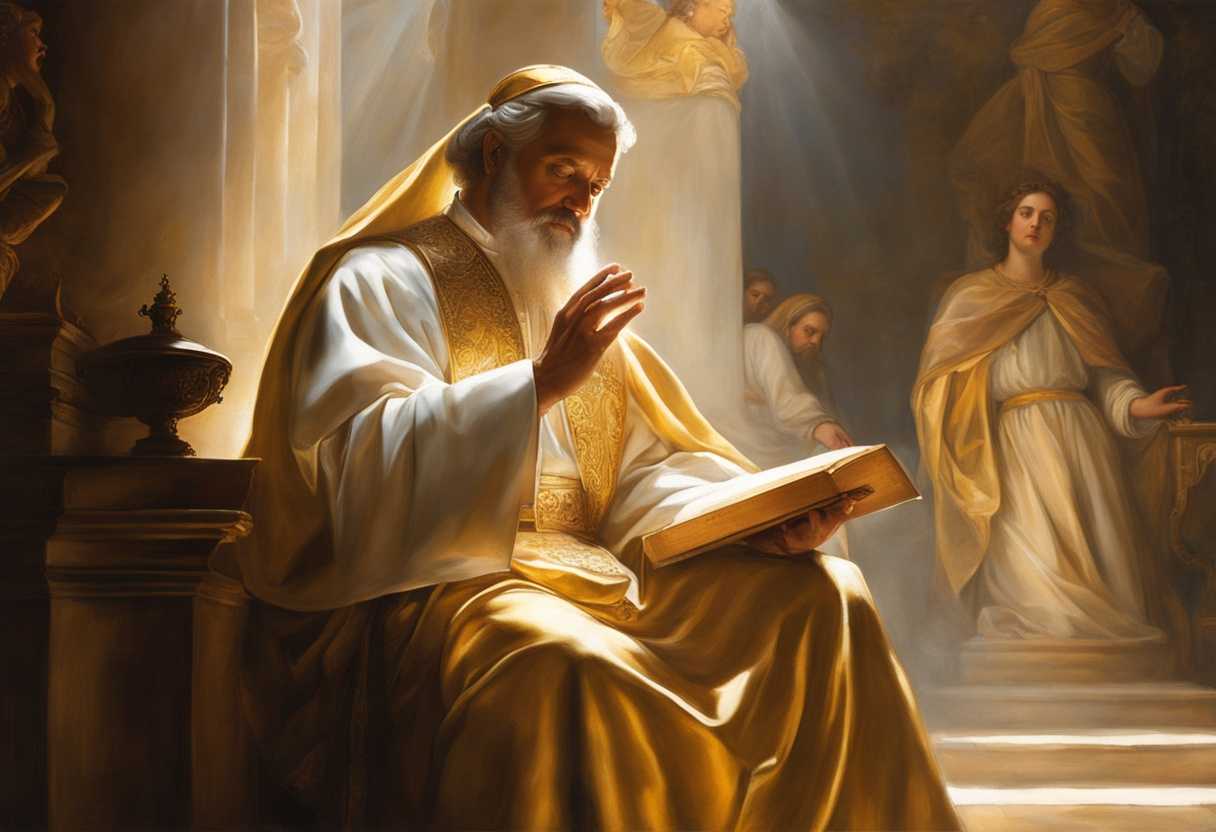
Setting the Scene for Hebrews 5:10
In Hebrews chapter 5, the scene is set in the heavenly realm, where Jesus Christ is being described as a high priest according to the order of Melchizedek. The author of Hebrews is explaining to the Jewish Christians the significance of Jesus’ role as a high priest who can sympathize with their weaknesses. The scene is filled with a sense of reverence and awe as the author highlights Jesus’ obedience to God and his perfect sacrifice for the forgiveness of sins.
The heavenly scene includes Jesus Christ, who is depicted as the ultimate high priest, interceding on behalf of believers before God. The author emphasizes Jesus’ divine appointment as a high priest, chosen by God himself. The surroundings are described as majestic and holy, befitting the divine nature of the discussion taking place. The author uses this scene to encourage the readers to hold fast to their faith in Jesus, who is the source of eternal salvation for all who obey him.
The Jewish Christians in the scene are grappling with the concept of Jesus as a high priest, a role traditionally reserved for the Levitical priesthood. The author is guiding them through a deeper understanding of Jesus’ priesthood, which surpasses that of the Levitical priests. The scene is filled with theological depth and spiritual insight, as the author seeks to strengthen the faith of the believers and deepen their understanding of Jesus’ role in their lives.
What is Hebrews 5:10 about?
Jesus is revealed to be appointed by God to serve as a high priest in the order of Melchizedek in Hebrews 5:10. This holds profound significance as the priesthood of Melchizedek is unique and predates the Levitical priesthood established in the Mosaic Law. The passage underscores the eternal and transcendent nature of Christ’s priesthood by aligning Jesus with Melchizedek. It highlights how Jesus’ role as a high priest surpasses that of the Levitical priests, offering a superior and unchanging intercession on behalf of believers.
Reflecting on this verse prompts us to ponder the deep theological implications it carries. Why did God choose to designate Jesus as a high priest in the order of Melchizedek rather than the traditional Levitical priesthood? How does this designation emphasize Jesus’ eternal and universal priesthood that transcends human boundaries and limitations? We can gain a deeper understanding of Christ’s redemptive work and the eternal intercession he provides for all who believe in him by delving into the symbolism and significance of Melchizedek’s priesthood. We will explore the profound mystery and beauty of Christ’s priesthood as revealed in Hebrews 5:10, recognizing the unparalleled privilege we have in Jesus as our high priest according to the order of Melchizedek.
Understanding what Hebrews 5:10 really means
The Book of Hebrews provides a rich tapestry of theological insights and exhortations to early Jewish Christians. In Hebrews 5:10, we encounter a profound declaration about Jesus being appointed by God as a high priest in the order of Melchizedek.
In Jewish tradition, the high priest held a central role in mediating between the people and God, offering sacrifices for sins, and interceding on behalf of the community. Melchizedek, a mysterious figure who appears in Genesis 14:18-20 and Psalm 110:4, is significant for his unique priesthood that predates the Levitical priesthood and is characterized by its eternal nature.
The phrase “designated by God” underscores the divine ordination of Jesus’ high priesthood, highlighting that His role is not self-assumed but appointed by God Himself. As a high priest, Jesus embodies the responsibilities of intercession and sacrifice, offering a perfect and eternal atonement for humanity’s sins.
Being in the order of Melchizedek sets Jesus apart from the Levitical priesthood, emphasizing the eternal and unchanging nature of His priestly ministry. This distinction underscores the superiority of Jesus’ priesthood in bringing about a new covenant and a more perfect relationship between God and humanity.
In Genesis 14:18-20, Melchizedek blesses Abram, foreshadowing the priestly role that Jesus would fulfill. Psalm 110:4 prophesies about a priest forever in the order of Melchizedek, pointing to the eternal nature of Jesus’ priesthood. Hebrews 7:1-3 further elaborates on the mysterious and enduring qualities of Melchizedek’s priesthood, drawing parallels to Jesus’ own priesthood.
Understanding Jesus as our high priest in the order of Melchizedek holds immense relevance for believers today. It means that we have direct access to God through Him, and His eternal priesthood assures us of His continual intercession on our behalf. This assurance brings comfort and confidence in God’s redemptive plan and Jesus’ unique role in our salvation.
Consider a story of someone who, in a moment of trial or distress, found solace in the knowledge that Jesus intercedes for them. This anecdote can illustrate how grasping the significance of Jesus’ high priesthood can bring peace and assurance in the midst of life’s challenges, strengthening one’s faith and trust in God’s unfailing promises.
In conclusion, Hebrews 5:10 illuminates the profound truth of Jesus being designated as a high priest in the order of Melchizedek, emphasizing the eternal and divine nature of His priesthood. Let us reflect on the implications of this truth for our faith journey, finding comfort in the unchanging intercession of our great high priest and drawing near to God with confidence in His grace and mercy.
How can we be made perfect through suffering?
Through suffering, we can be made perfect as we learn obedience and trust in God through our hardships. Suffering teaches us to rely on God’s strength and grace, revealing our weaknesses and pointing us to our need for Him. It refines our character, deepens our faith, and produces endurance, patience, and perseverance in us.
When we face trials and suffering with a mindset of trusting God and seeking His will, it can lead us to greater spiritual maturity and dependency on Him. Instead of allowing suffering to discourage or defeat us, we can allow it to shape us into the image of Christ, conforming us to His likeness as we walk through the fire with Him by our side. Through this process, we can be made perfect in our faith and in our relationship with God.
Application
Let us follow the footsteps of Jesus, who served with humility and obedience. We are all called to serve others with love and kindness in our daily lives. Let’s embrace our unique purpose with faith and determination. Will you rise to the occasion and serve others with the same dedication and grace as Jesus did?

Reverend Michael Johnson is an experienced Church Minister with a profound expertise in spirituality and guidance. With a serene presence and a compassionate heart, he has faithfully served his congregation for over 20 years, leading them on a spiritual journey towards inner peace and enlightenment. Reverend Johnson’s extensive knowledge of religious philosophies and profound understanding of human nature have made him a trusted confidant and mentor to many, as he seamlessly weaves his profound wisdom into life teachings. Reverend Johnson’s calming demeanor and empathetic nature continue to uplift and heal souls, nurturing a sense of unity and tranquility within his community.