
4 For it is impossible, in the case of those who have once been enlightened, who have tasted the heavenly gift, and have shared in the Holy Spirit,
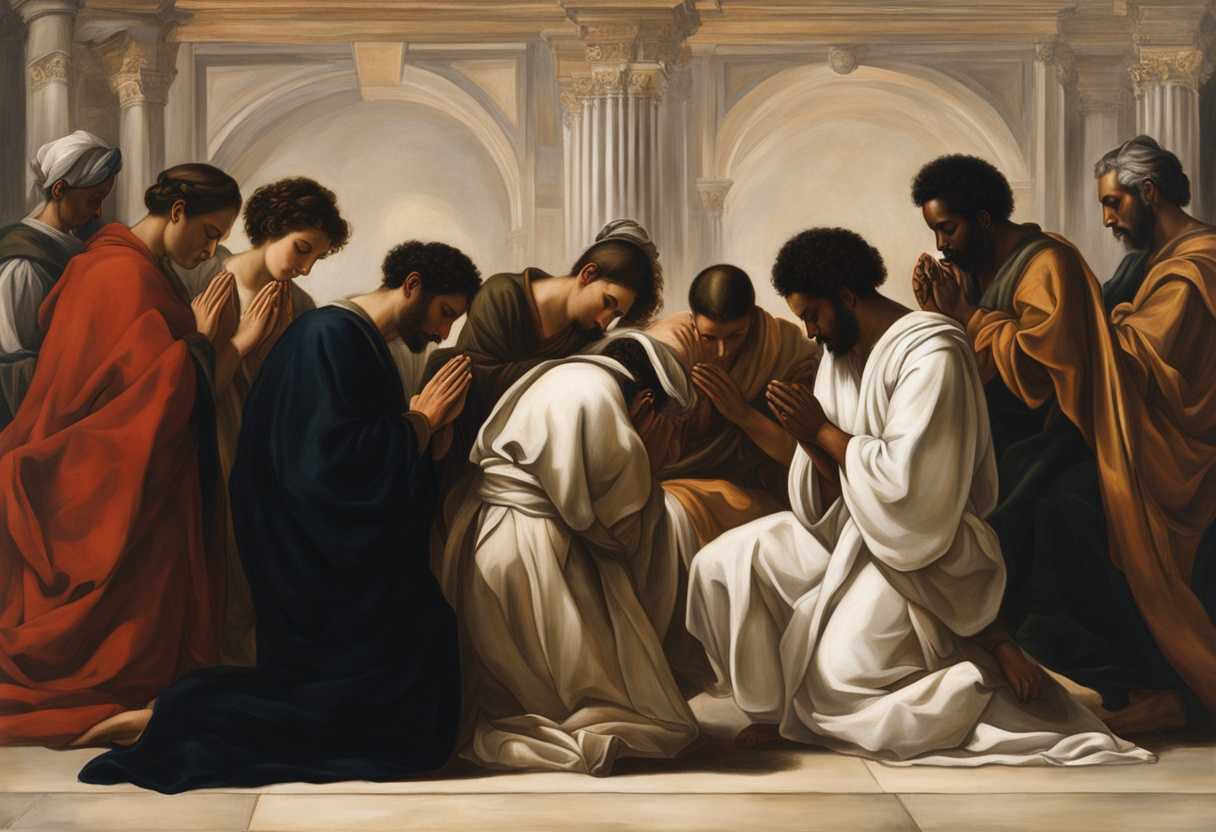
Setting the Scene for Hebrews 6:4
In Hebrews chapter 6, the scene opens with a group of early Christian believers gathered in a humble meeting space in the city of Jerusalem. The room is dimly lit by oil lamps, casting a warm glow on the faces of those present. The air is filled with a mixture of incense and the faint sounds of the bustling city outside.
Among the group are prominent figures in the early Christian community, including Paul, Barnabas, and Timothy. They have come together to discuss the importance of spiritual maturity and perseverance in the face of trials and temptations. The believers, both young and old, listen intently as Paul passionately shares about the dangers of falling away from the faith and the need to press on towards spiritual growth.
As the discussion unfolds, the room is filled with a sense of reverence and awe at the weight of the message being conveyed. The flickering light of the oil lamps casts shadows on the walls, adding to the solemn atmosphere of the gathering. The believers are challenged to examine their own faith and commitment to following Christ, knowing that their perseverance will lead to a rich reward in the kingdom of God.
What is Hebrews 6:4 about?
This verse from Hebrews 6:4 serves as a poignant reminder of the importance of remaining steadfast in one’s faith even after experiencing God’s grace. It warns against the possibility of falling away, highlighting the delicate nature of spiritual growth and the need for perseverance in the Christian journey.
Have you ever felt the warm embrace of God’s grace and love in your life? It is in those moments that we are reminded of the power and presence of God. However, this verse urges us to not become complacent or take for granted our faith journey. It asks us to reflect on our commitment to God and the responsibility that comes with receiving His grace.
So, as you navigate your spiritual path, remember the significance of holding onto your faith even in the face of challenges or temptations. Allow this verse to guide you in remaining steadfast and dedicated to your relationship with God, knowing that His grace is a gift to cherish and nurture throughout your life.
Understanding what Hebrews 6:4 really means
We will delve into the profound message found in Hebrews 6:4, breaking it down into understandable and applicable insights.
Structure of the Commentary:
- Contextual Background
- Key Phrases and Their Meanings
- Parallel Biblical References
- Relevance to Modern Readers
- Anecdotal Illustration
- Reflective Questions and Conclusion
1. Contextual Background
Hebrews 6:4 is part of a larger discourse warning against apostasy and urging believers to mature in their faith. The author of Hebrews addresses a community familiar with the teachings of Christ but warns them of the grave consequences of falling away after having received enlightenment.
2. Key Phrases and Their Meanings
“Enlightened”: This term refers to those who have received the knowledge of the truth, who have grasped the essential teachings of Christianity. It signifies an initial, transformative understanding of God’s grace.
“Tasted the heavenly gift”: This phrase suggests experiencing the initial blessings and joys that come with salvation. It is akin to partaking in the grace and favor of God, a foretaste of eternal life.
“Partakers of the Holy Spirit”: This indicates those who have received the Holy Spirit, who have experienced the Spirit’s work in their lives, guiding, comforting, and sanctifying them.
3. Parallel Biblical References
To deepen our understanding, we can look at passages like Matthew 12:31-32, where Jesus speaks about the unforgivable sin of blasphemy against the Holy Spirit. This highlights the seriousness of turning away after fully experiencing God’s truth.
Another reference is in 2 Peter 2:20-22, which discusses the tragedy of those who escape the world’s corruption through Christ but then become entangled in it again. These passages collectively underscore the severe implications of apostasy.
4. Relevance to Modern Readers
Today, this verse serves as a sobering reminder of the importance of perseverance in our faith journey. It cautions us against complacency and the dangers of taking our spiritual experiences lightly. This message urges us to remain vigilant and deeply rooted in our beliefs in an age where distractions abound.
5. John, a dedicated church member, begins to drift away due to personal and professional challenges after years of active participation. Initially, his faith gave him purpose and comfort, but as life’s demands increased, he found himself neglecting his spiritual practices. One day, he realizes that his sense of peace and direction has diminished significantly. Reflecting on Hebrews 6:4, John understands the gravity of his situation and recommits to his faith journey, seeking renewal and deeper engagement with his spiritual community.
6. Reflective Questions and Conclusion
- How steadfast is your commitment to your faith?
- Have you allowed life’s challenges to distance you from your spiritual practices? You can seek renewal and deeper engagement with your faith community in what ways?
Hebrews 6:4, with its stern warning, invites us to introspect and rejuvenate our spiritual lives. It calls us to cherish and nurture the enlightenment and blessings we have received, ensuring that we do not fall away but continue to grow and mature in our faith.
May this reflection encourage you to hold firm to your faith, recognizing the immeasurable value of the spiritual gifts you have received.
Can a person lose their salvation?
The author in Hebrews 6:4 describes a situation where someone has experienced the blessings of God and then turns away from the faith. The verse highlights that such a person cannot be brought back to repentance because they are essentially rejecting Christ again and subjecting Him to public disgrace. This suggests that if a person were to lose their salvation, it would be a deliberate and conscious choice to turn away from God after previously accepting Him.
The passage indicates that there is a point of no return for those who blatantly reject Christ after having experienced His grace. It emphasizes the seriousness of apostasy and the irreversible consequences of turning away from the faith. It implies that the person has willfully chosen to reject salvation and cannot be reconciled to God through repentance, thus indicating that salvation can be lost under certain conditions. Hebrews 6:4 provides a warning against falling away from the faith and emphasizes the importance of perseverance and continuing in the knowledge and acceptance of Christ. While the verse suggests that salvation can be forfeited through deliberate rejection of God, it also serves as a reminder of the need for a steadfast and unwavering commitment to the Christian faith.
Application
Look at your life like juggling work and family demands. There’s no room for complacency. Dive deep into your spiritual well-being and align your actions with God’s will. The time is now to grow and to bear good fruit. Don’t settle for a lukewarm faith. Are you ready to fully commit to Christ and mature in every part of your life?

Reverend Michael Johnson is an experienced Church Minister with a profound expertise in spirituality and guidance. With a serene presence and a compassionate heart, he has faithfully served his congregation for over 20 years, leading them on a spiritual journey towards inner peace and enlightenment. Reverend Johnson’s extensive knowledge of religious philosophies and profound understanding of human nature have made him a trusted confidant and mentor to many, as he seamlessly weaves his profound wisdom into life teachings. Reverend Johnson’s calming demeanor and empathetic nature continue to uplift and heal souls, nurturing a sense of unity and tranquility within his community.