
Hebrews 7:1-2 is about the significance of Melchizedek as a priest and king, illustrating his role as a foretype of Christ, emphasizing the divine order of priesthood that transcends the Levitical system and the importance of recognizing Jesus’ eternal priesthood.
1 For this Melchizedek, king of Salem, priest of the Most High God, met Abraham returning from the slaughter of the kings and blessed him,
2 and to him Abraham apportioned a tenth part of everything. He is first, by translation of his name, king of righteousness, and then he is also king of Salem, that is, king of peace.
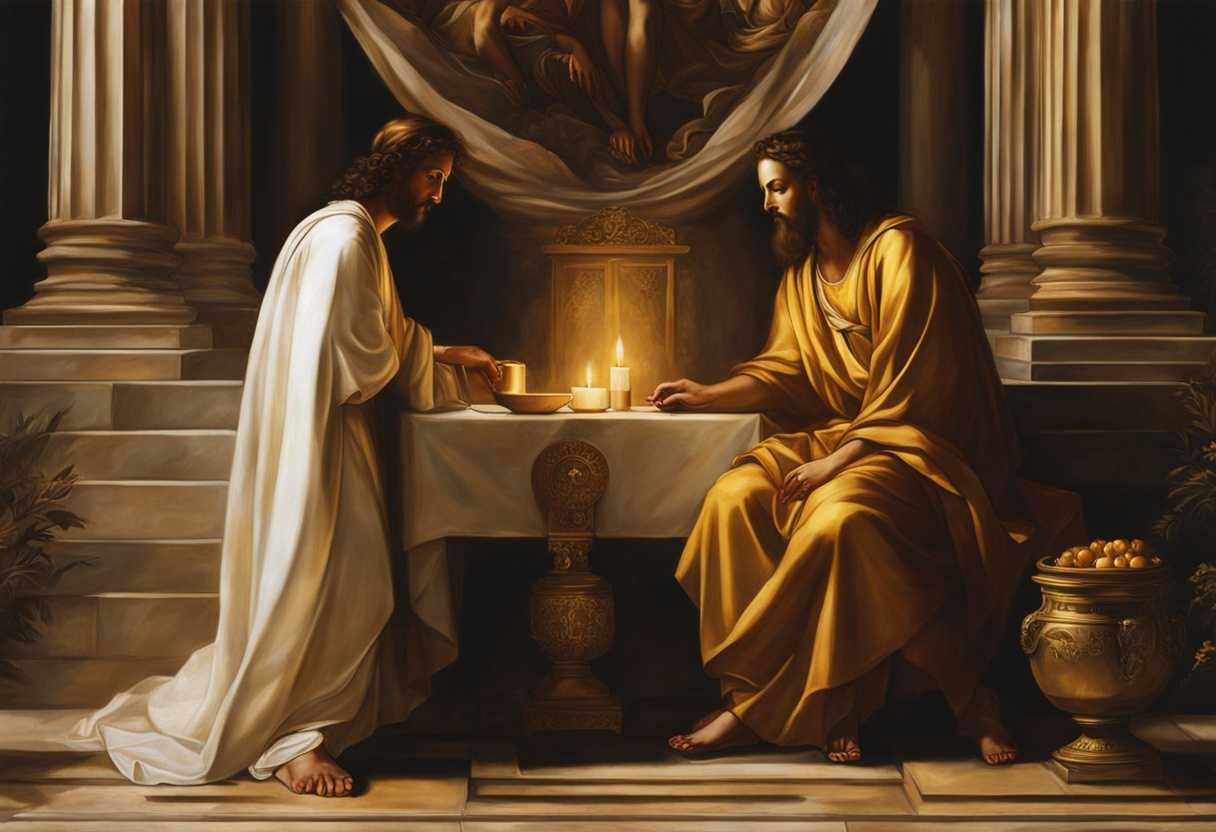
Setting the Scene for Hebrews 7:1-2
In the ancient city of Jerusalem, a gathering of notable figures unfolds in a sun-drenched courtyard, where the air is thick with the scent of spices and the sounds of bustling merchants fill the streets. Among the crowd, two prominent figures stand out: Melchizedek, the enigmatic king of Salem, and Abraham, the revered patriarch of the Israelites. This meeting is not merely a chance encounter; it is a moment steeped in significance, as Abraham has just returned from a victorious battle against a coalition of kings, having rescued his nephew Lot and reclaimed the spoils of war. The atmosphere is charged with reverence and curiosity, as the people of the city gather to witness the interaction between these two powerful men.
Melchizedek, adorned in regal robes that shimmer in the sunlight, approaches Abraham with an air of authority and grace. He carries with him bread and wine, symbols of sustenance and blessing, which he offers to Abraham as a gesture of peace and recognition. The crowd watches in awe as Melchizedek blesses Abraham, proclaiming him a man favored by God. This moment is pivotal, as it establishes Melchizedek not only as a king but also as a priest, a unique combination that foreshadows the coming of a greater priesthood. The significance of this encounter resonates deeply within the hearts of those present, as they understand that they are witnessing the intertwining of divine purpose and human history.
As the sun begins to set, casting a golden hue over the city, the conversation between Melchizedek and Abraham deepens. They discuss the covenant that God has made with Abraham, the promise of descendants as numerous as the stars, and the land that will be given to his offspring. The people around them feel the weight of this moment, recognizing that they are part of a larger narrative that transcends their immediate reality. The blessings exchanged between Melchizedek and Abraham echo through the ages, establishing a foundation for the faith that will shape generations to come. In this sacred space, the legacy of Melchizedek and Abraham is woven into the fabric of the divine story, a testament to the enduring relationship between God and His chosen people.
What is Hebrews 7:1-2 about?
Hebrews 7:1-2 introduces us to Melchizedek, a figure steeped in mystery yet brimming with significance. Melchizedek, embodying a unique role as both king and priest, would have been found profound by the audience of Hebrews. Why does the author choose to highlight Melchizedek here? Could it be that this character serves as a foreshadowing of Christ? We begin to understand the dual nature of Jesus’ identity by presenting Melchizedek as a type of Christ. This intertwining of kingship and priesthood was significant to the early Christians who were grappling with the traditional Jewish understanding of these roles being separate. The verse emphasizes Melchizedek’s eternal nature, suggesting that Christ’s priesthood transcends time unlike the Levitical priests who offered sacrifices on behalf of the people but were bound by their mortality. The mention of Melchizedek without a recorded beginning or end serves to illustrate this ideal of eternal intervention. How comforting is it to know that the priest who stands before God for us is everlasting and unchanging? This assurance underscores the point that Christ, like Melchizedek, brings a new covenant—one characterized by grace rather than law, fulfilling promises made long ago. Let’s reflect as we explore this passage together: How does Christ’s eternal priesthood provide us with hope and connection to God? How does this shift in perspective invite us to deepen our faith?
Understanding what Hebrews 7:1-2 really means
In Hebrews 7:1-2, we encounter Melchizedek, a figure shrouded in mystery yet rich in theological significance. This passage introduces us to a character who serves as a type of Christ, inviting us to explore the deeper implications of Jesus’ priesthood. Understanding Melchizedek’s role is essential for grasping the transformative nature of the new covenant established through Christ.
The title “King of Salem” is particularly noteworthy. It signifies peace, with Salem often linked to Jerusalem, a name that itself means “peace.” This connection is not merely coincidental; it reflects the peace that Christ brings into our lives. When we think of Jesus as the Prince of Peace, we can appreciate how Melchizedek’s title foreshadows the tranquility that comes from a relationship with Him. How often do we seek peace in our chaotic lives?
Moreover, Melchizedek is described as the “Priest of the Most High God.” This dual role as both king and priest is significant, as it prefigures Jesus’ own dual role in our salvation. In a world where we often feel disconnected from God, this phrase reassures us that Jesus acts as our mediator, bridging the gap between humanity and the divine. It raises an important question: How does knowing Jesus as our high priest change the way we approach God in prayer?
The encounter between Melchizedek and Abraham further illustrates the importance of this passage. When Melchizedek blesses Abraham, it signifies the superiority of his priesthood over the Levitical priesthood that would later emerge. This is crucial for understanding the new covenant, as it emphasizes that Jesus, in the order of Melchizedek, offers a more profound and eternal priesthood. This connection is reinforced by Psalm 110:4, which speaks of Christ’s eternal priesthood, reminding us that His role is not temporary but everlasting.
In today’s context, the themes of peace and access to God resonate deeply. In a world filled with uncertainty, the peace that Christ offers is a balm for our weary souls. Just as Melchizedek brought reassurance to Abraham, Jesus extends that same peace to us amid our struggles. How often do we forget that we can approach God directly, especially when life feels overwhelming?
Consider a moment in your life when you faced significant challenges—perhaps a job loss or a family crisis. In those times, the peace that surpasses understanding can feel elusive. Yet, just as Melchizedek provided comfort to Abraham, we can find solace in knowing that Jesus, our high priest, intercedes for us. This relationship allows us to approach God with confidence, understanding that He is intimately aware of our struggles and offers us peace.
In conclusion, the significance of Melchizedek in Hebrews 7:1-2 is profound. It not only highlights the superiority of Christ’s priesthood but also serves as a reminder of the peace and access we have through Him. As we reflect on this passage, let us embrace the assurance that we are never alone in our struggles. Through Christ, we can find true peace and hope, inviting us to engage more deeply with our faith and the God who loves us.
How can I embrace my identity in Christ?
Embracing your identity in Christ involves recognizing the transformative power of His grace and the significance of being part of a new covenant. This means understanding that your worth and purpose are not defined by worldly standards or achievements but by your relationship with Jesus. He embodies both kingly authority and priestly intercession, positioning you as a beloved child of God who has access to the divine. This perspective encourages you to live with confidence, knowing that you are accepted and valued.
Furthermore, acknowledging your identity in Christ entails fully grasping the magnitude of His sacrifice and its implications for your life. You are called to reflect His love, mercy, and righteousness in your daily interactions and choices. This personal commitment to embodying Christ-like characteristics helps solidify your identity, allowing you to shine as a beacon of hope and truth in a world often filled with confusion and strife. Your identity is a foundation that informs how you view yourself and others, fostering a sense of community and purpose in the body of Christ.
Finally, embracing your identity in Christ involves the practice of faith and obedience. Engaging with scripture, prayer, and fellowship nurtures your relationship with Him, deepening your understanding of what it means to be part of His family. Growing in faith attunes you more to the Holy Spirit’s guidance, leading you to live out your identity in tangible ways. By affirming your place in God’s kingdom, you not only encourage others to explore and embrace their own identities in Him.
Application
Think of Melchizedek as the ultimate team player in the game of life, guiding us in how to lead with service and grace. Just as a boss supports their staff or a parent nurtures their kids, you can embody this spirit of giving every day. Look for opportunities to uplift someone around you—maybe lend a hand at work or offer a listening ear to a friend. Your actions can pave the way for stronger bonds and deeper faith. So, how will you step up today and make your mark in the lives of those you care about?

Reverend Michael Johnson is an experienced Church Minister with a profound expertise in spirituality and guidance. With a serene presence and a compassionate heart, he has faithfully served his congregation for over 20 years, leading them on a spiritual journey towards inner peace and enlightenment. Reverend Johnson’s extensive knowledge of religious philosophies and profound understanding of human nature have made him a trusted confidant and mentor to many, as he seamlessly weaves his profound wisdom into life teachings. Reverend Johnson’s calming demeanor and empathetic nature continue to uplift and heal souls, nurturing a sense of unity and tranquility within his community.