
Hebrews 7:11-14 is about the superiority of the priesthood of Jesus Christ, who belongs to the tribe of Judah rather than the tribe of Levi, emphasizing a new and greater covenant that surpasses the old Mosaic law and priesthood.
11 Now if perfection had been attainable through the Levitical priesthood (for under it the people received the law), what further need would there have been for another priest to arise after the order of Melchizedek, rather than one named after the order of Aaron?
12 For when there is a change in the priesthood, there is necessarily a change in the law as well.
13 For the one of whom these things are spoken belonged to another tribe, from which no one has ever served at the altar.
14 For it is evident that our Lord was descended from Judah, and in connection with that tribe Moses said nothing about priests.
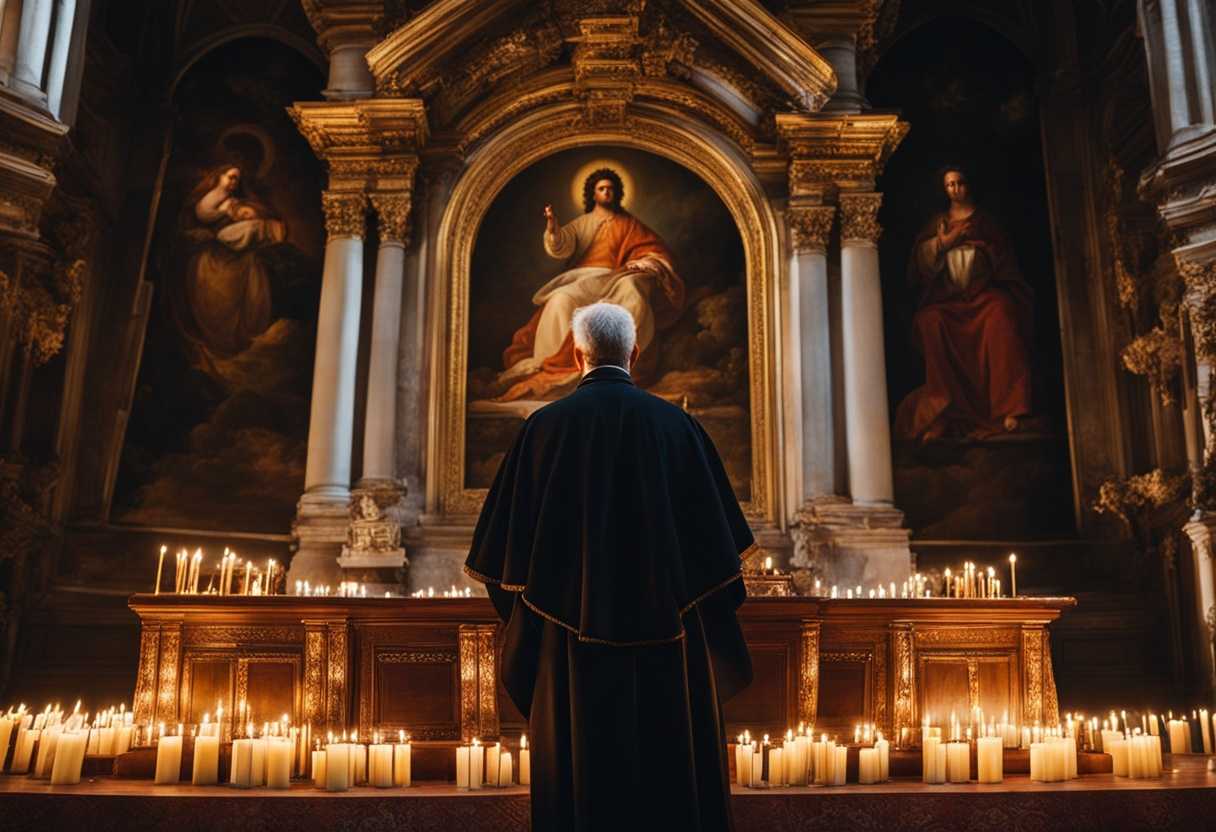
Setting the Scene for Hebrews 7:11-14
In the scene described in Hebrews 7:11-14, we find ourselves in the midst of a discussion between a group of Jewish Christians who are grappling with the concept of Jesus being the ultimate high priest. The setting is a gathering in a humble meeting place, likely a home or a small community hall, where these believers have come together to study and reflect on the teachings of the early Christian church.
Among those present are individuals who were raised in the Jewish faith and are well-versed in the traditions and laws of the Old Testament. They are joined by newer converts to Christianity who are eager to understand the significance of Jesus’ role as the high priest in the order of Melchizedek. The atmosphere is one of earnest inquiry and contemplation, as these individuals seek to reconcile their understanding of the Mosaic law with the revolutionary teachings of the gospel.
As the discussion unfolds, there is a sense of tension and anticipation in the air, as the group grapples with the implications of Jesus’ priesthood superseding that of the Levitical priests. The room is filled with a mix of curiosity, reverence, and a deep desire to comprehend the mysteries of God’s plan for salvation through His son. The scene is a poignant reminder of the transformative power of faith and the ongoing journey of discovery and growth that comes with seeking a deeper understanding of the scriptures.
What is Hebrews 7:11-14 about?
Jesus is conveyed as the ultimate and eternal high priest in this verse. This comes with significant implications for believers. Jesus, as a high priest, serves as the mediator between humanity and God, offering a new way for people to have a relationship with God. Jesus, by being the eternal high priest, fulfills the requirements of the law and institutes a new covenant, one based on grace and redemption rather than strict adherence to laws and rituals.
Have you ever considered the profound impact of Jesus being our eternal high priest? This concept signifies the completion of the Old Testament sacrificial system and the establishment of a new way for people to connect with God. Through Jesus’ role as the high priest, believers can experience forgiveness, grace, and a restored relationship with God. It is a powerful reminder of the depth of God’s love and the lengths He went to in order to reconcile humanity to Himself. So, as you reflect on this verse, consider how Jesus’ role as our eternal high priest impacts your own faith journey and relationship with God.
Understanding what Hebrews 7:11-14 really means
Hebrews 7:11-14 delves into the imperfections of the Levitical priesthood and the necessity for a new priesthood in the order of Melchizedek. The passage forms part of the broader argument in the Book of Hebrews, asserting Jesus Christ as the ultimate high priest. It emphasizes that true spiritual perfection could not be attained through the Levitical priesthood, hinting at its inadequacy under the Law of Moses. Instead, it points towards the arrival of another priest in the order of Melchizedek, alluding to Jesus Christ, whose priesthood is eternal and flawless.
The phrase “For when the priesthood is changed, the law must be changed also” signifies the arrival of Jesus necessitating a new covenant, superseding the old laws with a more perfect way. This concept aligns with Psalm 110:4, which prophesies Jesus as a priest forever in the order of Melchizedek, emphasizing His eternal priesthood. Jeremiah 31:31-34 further reinforces this idea by speaking of a new covenant fulfilled in Jesus Christ. Hebrews 4:14-16 underscores Jesus as the great high priest who empathizes with our weaknesses and extends grace and mercy to us.
In today’s context, this passage highlights the futility of human efforts and religious rituals in achieving genuine spiritual perfection. It underscores the indispensable need for Jesus Christ as the perfect and eternal solution to our spiritual inadequacies. In a world where people often seek fulfillment through various avenues, Hebrews 7:11-14 serves as a poignant reminder that true fulfillment and perfection are exclusively found in Jesus.
Consider a scenario where someone attempts to mend a broken relationship through gifts, apologies, and good deeds, yet fails to achieve reconciliation. Then, a mediator intervenes, comprehending both parties perfectly and offering a solution that brings genuine harmony. This mediator mirrors Jesus, stepping in to provide a flawless solution where human endeavors falter.
Hebrews 7:11-14 urges us to acknowledge the limitations of our efforts and the old ways, urging us to embrace the new and perfect path through Jesus Christ. It prompts us to rely on Jesus as our eternal high priest, who presents a new covenant and a route to authentic spiritual perfection.
How do we reconcile old and new covenants?
The concept of priesthood and covenant is discussed in Hebrews 7:11-14 in light of Jesus being from the tribe of Judah rather than from the tribe of Levi, which was the traditional tribe for priests under the Mosaic law. This passage highlights the change in priesthood that came with the arrival of Jesus Christ, who is our High Priest according to the order of Melchizedek. This transition symbolizes the shift from the old covenant under the law of Moses to the new covenant established through Jesus’ sacrifice on the cross.
The passage emphasizes the superiority of the new covenant over the old one, as Jesus, who is not a priest in the order of Levi but in the order of Melchizedek, brings a better hope for salvation. This transition signifies a shift in how we relate to God, moving from a system of laws and sacrifices to one based on grace and faith in Jesus Christ. It demonstrates God’s plan for a new way of connecting with Him, one that is not bound by the rituals and requirements of the old covenant but based on a personal relationship with Jesus as our High Priest. We can reconcile the old and new covenants by understanding the significance of Jesus’ priesthood in the order of Melchizedek as compared to the Levitical priesthood of the old covenant. The shift in priesthood signifies a deeper spiritual truth about the fulfillment of the law through Christ and the establishment of a new covenant based on grace and faith. This passage helps us see the continuity and progression from the old covenant to the new covenant, showing how Jesus Christ fulfills and surpasses the requirements of the law to bring us into a closer relationship with God.
Application
Unearth the timeless wisdom in Hebrews 7:11-14, urging you to ponder the unparalleled priesthood of Jesus, surpassing earthly bounds to touch the very essence of your soul. Dive deep into the sacred teachings, and unlock the eternal connection between Christ’s intercession and your own spiritual journey. Let this revelation seep into your being, shaping your interactions, decisions, and the core of who you are. Will you embrace this divine reality and let it illuminate the path you walk in the world today?

Reverend Michael Johnson is an experienced Church Minister with a profound expertise in spirituality and guidance. With a serene presence and a compassionate heart, he has faithfully served his congregation for over 20 years, leading them on a spiritual journey towards inner peace and enlightenment. Reverend Johnson’s extensive knowledge of religious philosophies and profound understanding of human nature have made him a trusted confidant and mentor to many, as he seamlessly weaves his profound wisdom into life teachings. Reverend Johnson’s calming demeanor and empathetic nature continue to uplift and heal souls, nurturing a sense of unity and tranquility within his community.