
Hebrews 7:19 is about the inadequacy of the old priesthood and the law to bring perfection, which is why a better hope is introduced, enabling us to draw near to God.
19 (for the law made nothing perfect); but on the other hand, a better hope is introduced, through which we draw near to God.
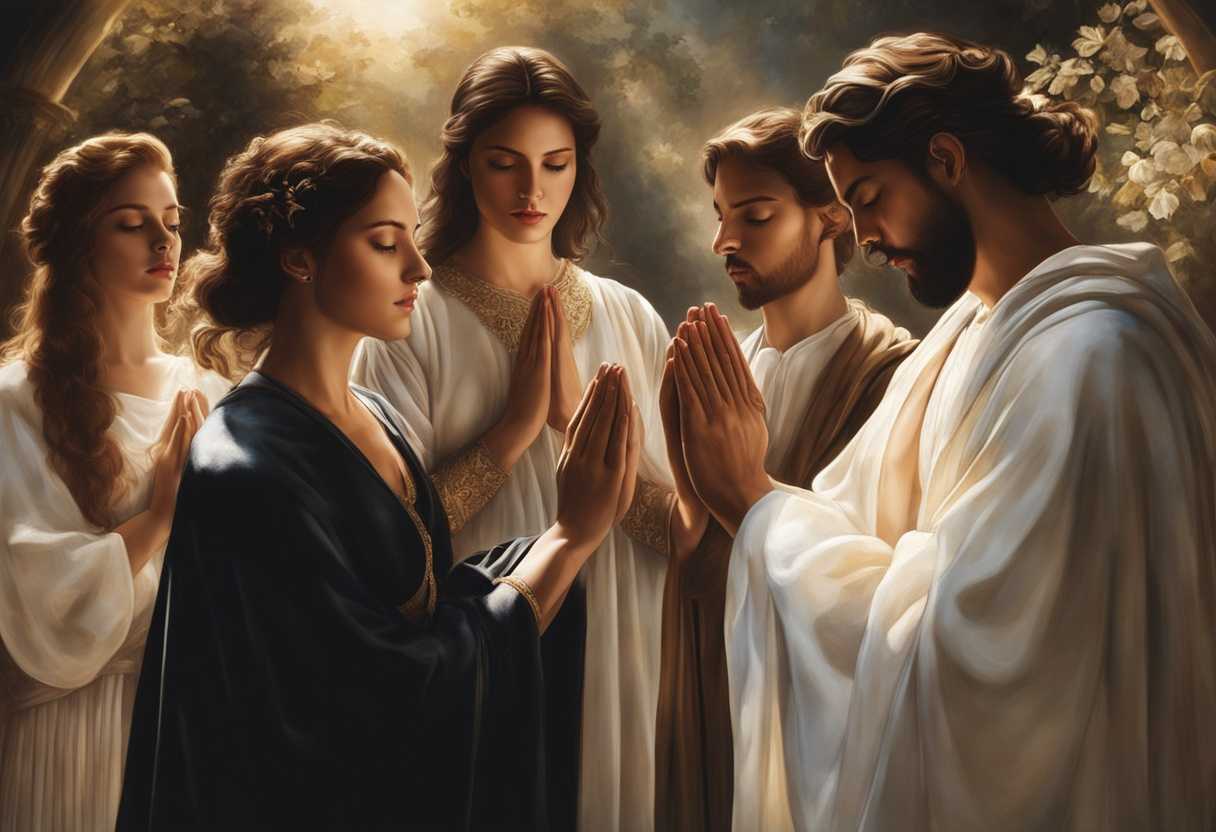
Setting the Scene for Hebrews 7:19
In Hebrews chapter 7, the scene is set in the city of Jerusalem during the time when the author is addressing a group of Jewish Christians. The author is explaining the significance of Jesus Christ as the high priest in the order of Melchizedek, emphasizing the superiority of Christ’s priesthood over the Levitical priesthood. The audience consists of Jewish believers who are familiar with the Old Testament scriptures and the practices of the Jewish faith.
The setting is likely a gathering in a house church or a meeting place where the Jewish Christians have come together to study and discuss the teachings of the author. The room is dimly lit with oil lamps, and the air is filled with the scent of incense. The audience is seated on cushions or low stools, listening intently as the author expounds on the complexities of the priesthood and the fulfillment of the law in Christ.
Among the attendees are individuals with Hebrew names like Jacob, Sarah, and David, who have come to faith in Jesus as the Messiah. They are engaged in deep theological discussions, asking questions and seeking to understand how Jesus fulfills the prophecies and promises of the Old Testament. The atmosphere is one of reverence and awe as they grapple with the profound truths being presented to them about the priesthood of Christ.
What is Hebrews 7:19 about?
This verse from Hebrews highlights the limitations of the law in bringing about perfection. The law in the Old Testament served as a guideline for moral conduct and righteousness, but it could not ultimately save or perfect humanity. The author of Hebrews contrasts the law with the hope and closeness to God that Jesus brings. The verse points to the transformative power of faith in Christ by emphasizing Jesus as the source of hope and the one who draws us near to God.
Reflecting on this verse, we are encouraged to consider the profound impact of Jesus’ redemption on our lives. It prompts us to ponder on how our relationship with God has been transformed through Jesus’ sacrifice and how our hope for salvation rests in Him. This verse serves as a reminder that true perfection and closeness to God can only be found through faith in Jesus in a world where we often strive for perfection and fulfillment through our own efforts. We should meditate on these words, be grateful for the hope and nearness to God that Jesus offers us, and seek to deepen our relationship with Him each day.
Understanding what Hebrews 7:19 really means
In the book of Hebrews, specifically in Hebrews 7:19, we find a pivotal verse that sheds light on the superiority of Jesus’ priesthood over the Levitical priesthood. This verse is nestled within a larger discussion about the limitations of the old law and the profound hope ushered in by Jesus. It serves as a beacon of truth, illuminating the inadequacies of the Mosaic Law and pointing towards the transformative power of Christ’s priesthood.
To grasp the significance of Hebrews 7:19, we must first understand the backdrop against which it is set. The Levitical priesthood and the Mosaic Law were foundational to the Jewish faith, serving as a framework for worship and moral conduct. However, despite its importance, the old law fell short in bringing about perfection or complete reconciliation with God. It was a precursor, a shadow of the greater reality to come through Jesus Christ.
“The law made nothing perfect” encapsulates the essence of Hebrews 7:19. While the Mosaic Law was holy and good, it lacked the potency to achieve true spiritual perfection. It pointed towards a future fulfillment that could only be realized through Christ. With the introduction of a better hope through Jesus’ priesthood, a new covenant was established, offering a pathway for humanity to draw near to God in a way previously unattainable.
In related biblical passages such as Romans 8:3-4, Galatians 3:24-25, and Hebrews 10:1, we see a consistent theme of the law’s insufficiency and the redemptive work of Christ. These verses underscore the transition from the old covenant to the new covenant, emphasizing the role of faith in Christ as the key to true righteousness and reconciliation with God. The law served as a tutor, guiding humanity towards the ultimate fulfillment found in Jesus.
Today, many still grapple with the pursuit of perfection through their own efforts or adherence to rules, mirroring the struggles faced under the old law. However, the message of Hebrews 7:19 remains as relevant as ever – true hope and reconciliation with God come not through human striving, but through faith in Jesus Christ. It is in embracing this better hope that we find true peace and fulfillment, drawing near to God in a way that transcends mere rule-keeping.
Consider the story of an individual who, like many, sought fulfillment through their own efforts and adherence to rules, only to discover the profound peace and hope that come through a personal relationship with Jesus. This transformation mirrors the shift from the constraints of the old covenant to the freedom and grace of the new covenant in Christ, illustrating the transformative power of faith.
In conclusion, Hebrews 7:19 beckons us to recognize the limitations of the old law and to embrace the superior hope found in Jesus. Let us heed this call to draw near to God through faith in Christ, relinquishing our reliance on human efforts and rules, and embracing the transformative power of the new covenant.
How can we draw nearer to God with confidence?
We can draw nearer to God with confidence by understanding the meaning behind the verse. The verse explains that the Law made nothing perfect, but it introduces a better hope through which we can draw near to God. This better hope refers to the perfection brought by Jesus Christ and His sacrifice for our sins. Therefore, we can approach God confidently, not based on our own works or adherence to the Law, but through the perfect sacrifice of Jesus on our behalf. We can draw near to God with assurance by recognizing that our confidence doesn’t come from our own efforts but from the perfect work of Christ. This assurance is based on the unchanging nature of God and the faithfulness of His promises. Understanding that it is through Christ that we have access to God allows us to approach Him boldly, knowing that we are accepted and loved because of the work of Jesus on the cross. Drawing nearer to God with confidence ultimately requires a deep trust and reliance on the work of Jesus. It is not about our own abilities or righteousness but about accepting the grace and mercy offered to us through Christ. This understanding allows us to approach God with boldness, knowing that we are welcomed into His presence because of the sacrifice of Jesus and His perfect intercession on our behalf.
Application
Embrace the perfect sacrifice of Jesus as your key to draw near to God. Let go of fear and doubt, and boldly step into His presence with confidence and a thankful heart. Lean on the purity and power of Christ’s sacrifice to strengthen your faith. Will you seize this opportunity to get closer to God, with a heart full of gratitude and unwavering belief?

Reverend Michael Johnson is an experienced Church Minister with a profound expertise in spirituality and guidance. With a serene presence and a compassionate heart, he has faithfully served his congregation for over 20 years, leading them on a spiritual journey towards inner peace and enlightenment. Reverend Johnson’s extensive knowledge of religious philosophies and profound understanding of human nature have made him a trusted confidant and mentor to many, as he seamlessly weaves his profound wisdom into life teachings. Reverend Johnson’s calming demeanor and empathetic nature continue to uplift and heal souls, nurturing a sense of unity and tranquility within his community.