
Hebrews 9:19-20 is about the symbolic importance of blood in the Old Testament covenant, which required the sprinkling of blood on people and items to purify and establish the agreement between God and the Israelites.
19 For when every commandment of the law had been declared by Moses to all the people, he took the blood of calves and goats, with water and scarlet wool and hyssop, and sprinkled both the book itself and all the people,
20 saying, “This is the blood of the covenant that God commanded for you.”
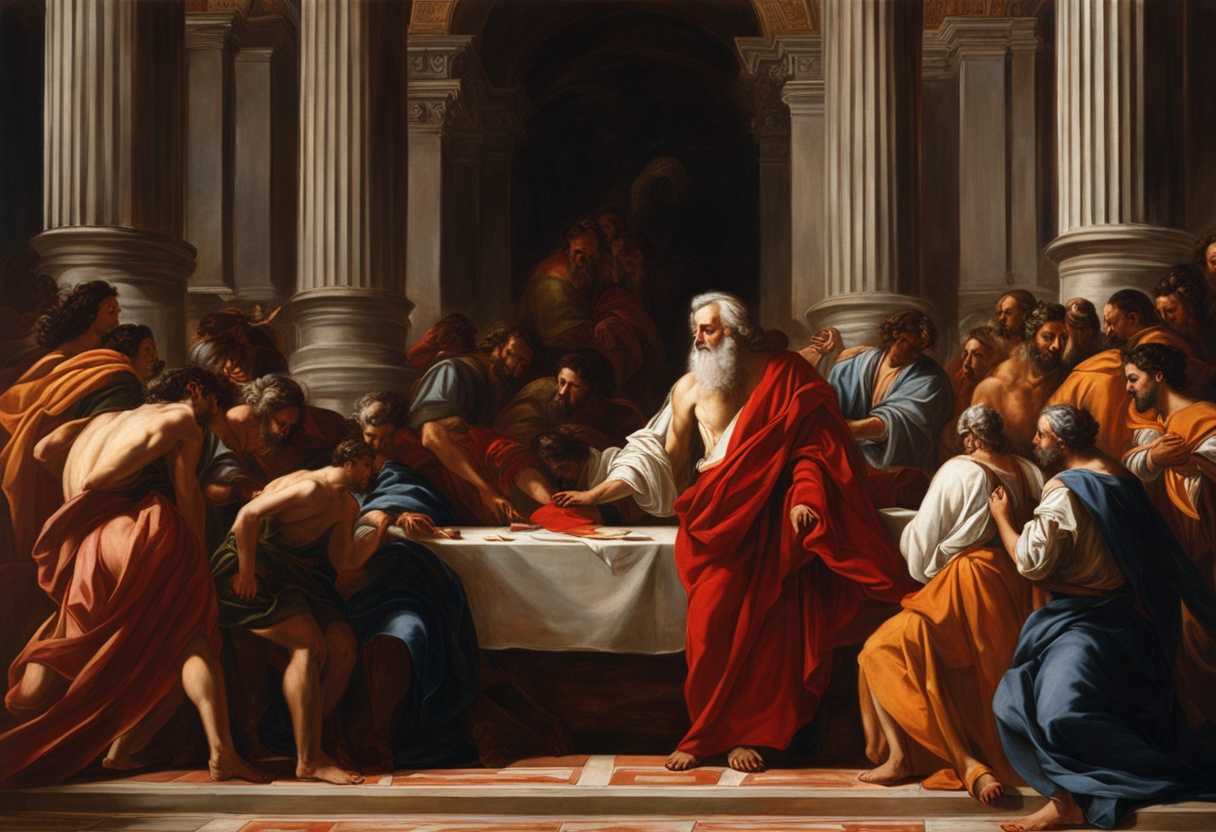
Setting the Scene for Hebrews 9:19-20
The scene described in Hebrews 9:19-20 takes place in the context of the Old Testament, specifically during the time of Moses and the establishment of the Mosaic covenant between God and the Israelites. The setting is the foot of Mount Sinai, where Moses had received the Ten Commandments and other laws from God. The Israelites had been wandering in the wilderness after their exodus from Egypt, and now they were gathered at the base of the mountain.
In this scene, Moses is leading the people in a solemn ceremony to ratify the covenant with God. The surroundings are awe-inspiring, with the majestic Mount Sinai towering above them, surrounded by desert landscapes. The people are likely feeling a mix of fear, reverence, and anticipation as they witness this significant moment in their history.
As part of the ceremony, Moses takes the blood of sacrificial animals and sprinkles it on the book of the covenant and on all the people, symbolizing the sealing of the covenant with blood. This act underscores the seriousness and sacredness of the agreement between God and His chosen people, highlighting the importance of obedience and faithfulness to the covenant.
What is Hebrews 9:19-20 about?
The practice of sprinkling blood for the purification of sins as per the law is read about in Hebrews 9:19-20. This verse highlights the importance of blood in atoning for sins in the Old Testament context. The shedding of blood was a fundamental aspect of the sacrificial system in ancient Jewish practices, symbolizing the cleansing of sins and the restoration of the relationship between humanity and God.
Have you ever considered the significance of blood in religious rituals? This verse serves as a reminder of the seriousness of sin and the ultimate sacrifice required for forgiveness. It points to the need for a perfect atonement to cleanse us from our sins completely. Reflecting on this verse can deepen our understanding of the depth of God’s love and the importance of Christ’s sacrificial death for our redemption. Let us ponder these verses as we contemplate the profound symbolism of blood in the Bible and the magnitude of Christ’s sacrifice for our salvation. It prompts us to consider our own need for repentance and the transformative power of God’s forgiveness in our lives. May we be reminded of the cost of our redemption and the incredible grace extended to us through Jesus’ blood shed for us on the cross.
Understanding what Hebrews 9:19-20 really means
The Book of Hebrews, nestled in the New Testament, is a poignant letter that underscores the supremacy of Christ and His new covenant over the old. Hebrews 9:19-20 delves into the practices of Moses, harking back to Exodus 24:6-8, where the blood of animals was utilized to sanctify both the people and the covenant. As Moses meticulously proclaimed every command of the law to the assembly, it underscored the gravity of understanding and adhering to God’s decrees. The symbolic act of sprinkling the scroll and the people with a concoction of blood, water, scarlet wool, and hyssop signified purification and the sealing of the covenant through blood—a customary ritual in ancient Israel.
In Exodus 24:6-8, the foundational event of blood sprinkling by Moses on the people and the altar solidified the old covenant. Fast forward to Matthew 26:28, where Jesus, in instituting the new covenant, refers to His blood as the “blood of the covenant,” marking a transformative shift. Hebrews 9:22 succinctly encapsulates the essence that without the shedding of blood, forgiveness remains unattainable, emphasizing the indispensable role of blood in atonement. The covenant, a concept resonant even today, embodies a solemn pact akin to a modern-day contract, symbolizing profound commitment and fidelity.
The theological core of purification and atonement through sacrifice reverberates through Christian doctrine, serving as a poignant reminder of Christ’s ultimate sacrifice for the expiation of sins. Picture a fractured community plagued by discord and strife, where a revered figure intervenes, forging a new accord that mandates unity and peace. This agreement, akin to planting a tree together, signifies renewal and dedication. Similarly, the blood in the covenant epitomizes an unbreakable commitment to a renewed spiritual journey and a profound bond with God.
Hebrews 9:19-20 stands as a poignant testament to the gravity of God’s covenants and His unwavering commitment to fostering and nurturing a relationship with His people. It beckons believers to introspect on the weight of Jesus’ sacrifice and the new covenant ushered in through His blood, urging a life characterized by unwavering dedication, purity, and faithfulness. The passage serves as a beacon, guiding individuals towards a deeper understanding of the sacrificial love that underpins the Christian faith, calling for a response of wholehearted devotion and steadfast allegiance.
How can we approach God with a pure conscience?
To approach God with a pure conscience, we can draw meaning from the verse by recognizing the significance of the blood of Christ as a symbol of purity and redemption. We can come before God knowing that our sins are forgiven and our conscience is cleansed by understanding the sacrificial nature of Christ’s blood. Approaching God with sincerity and humility, we can be free from the burden of guilt and shame. Moreover, continually seeking forgiveness for our sins and repenting of any wrongdoing involves maintaining a pure conscience. It requires a heart that is genuine and transparent before God, willing to acknowledge and turn away from sin. We can experience the cleansing power of His blood and approach God with a conscience that is pure and blameless by confessing our sins and seeking God’s forgiveness through Christ. Approaching God with a pure conscience involves recognizing the sacrificial atonement of Christ’s blood, seeking forgiveness for our sins, and maintaining a sincere and repentant heart before God. We can approach God with confidence and assurance by understanding the significance of Christ’s sacrifice and continually seeking His forgiveness, knowing that we are cleansed and redeemed in His sight.
Application
Just like in our busy lives balancing work and family, let’s take a moment to pause and appreciate the sacrifice that was made for us. Dive deep into the meaning of this sacrifice and let it guide your actions every day. Let’s embrace this gift of love and allow it to shape our thoughts, words, and deeds. How will you show your gratitude for this ultimate act of love today?

Reverend Michael Johnson is an experienced Church Minister with a profound expertise in spirituality and guidance. With a serene presence and a compassionate heart, he has faithfully served his congregation for over 20 years, leading them on a spiritual journey towards inner peace and enlightenment. Reverend Johnson’s extensive knowledge of religious philosophies and profound understanding of human nature have made him a trusted confidant and mentor to many, as he seamlessly weaves his profound wisdom into life teachings. Reverend Johnson’s calming demeanor and empathetic nature continue to uplift and heal souls, nurturing a sense of unity and tranquility within his community.