
Hebrews 9:19-22 is about the importance of blood as a symbol of atonement for sin, emphasizing the necessity of sacrifice for forgiveness and the ultimate significance of Jesus Christ’s blood as the ultimate atonement for humanity’s sins.
19 For when every commandment of the law had been declared by Moses to all the people, he took the blood of calves and goats, with water and scarlet wool and hyssop, and sprinkled both the book itself and all the people,
20 saying, “This is the blood of the covenant that God commanded for you.”
21 And in the same way he sprinkled with the blood both the tent and all the vessels used in worship.
22 Indeed, under the law almost everything is purified with blood, and without the shedding of blood there is no forgiveness of sins.
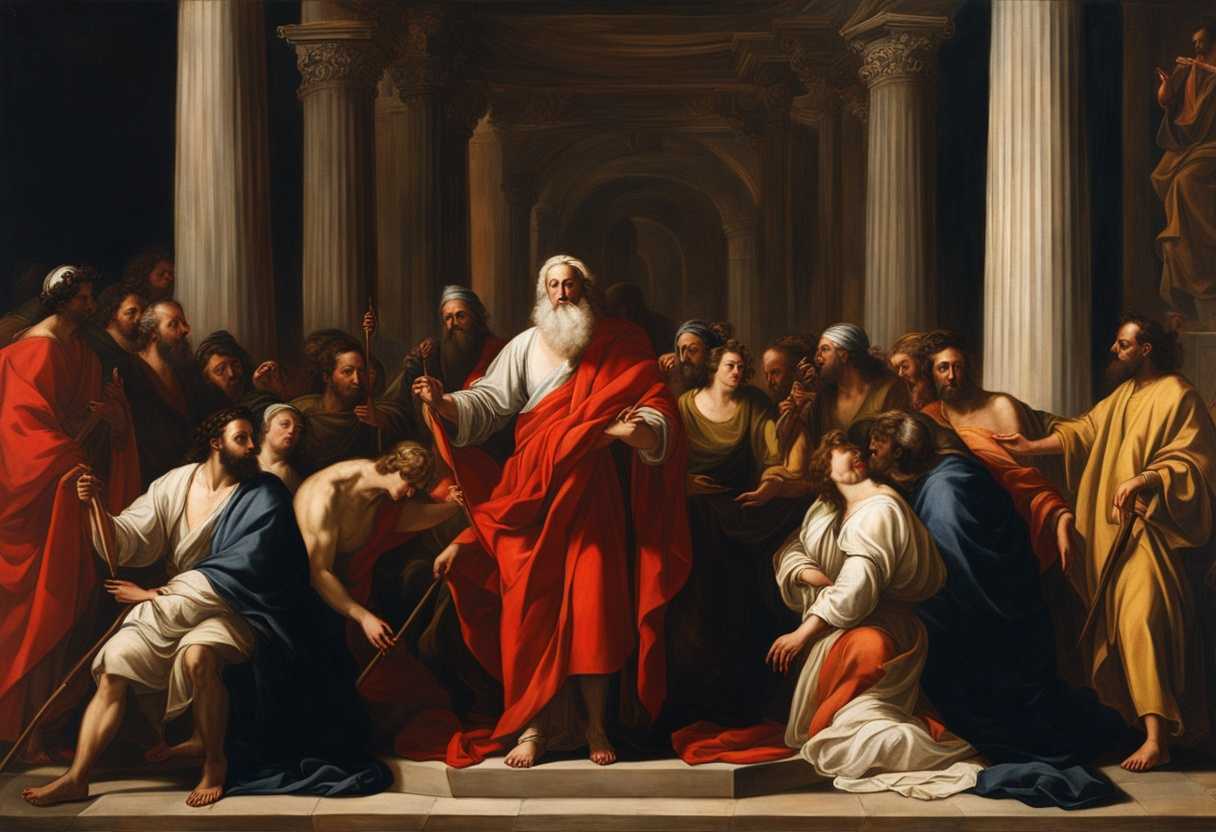
Setting the Scene for Hebrews 9:19-22
The scene described in Hebrews 9:19-22 takes place in the context of the Old Testament sacrificial system. The verse refers to Moses, who is instructed by God to take the blood of calves and goats, along with water, scarlet wool, and hyssop, to purify the people and the tabernacle. This purification ritual was a crucial part of the Israelites’ worship practices, symbolizing the atonement for sins and the need for cleansing before approaching a holy God.
In this scene, Moses, the revered leader of the Israelites, stands before the tabernacle with the gathered community. The people have come together to witness the purification ceremony that Moses is about to perform according to God’s command. The tabernacle, a portable sanctuary for worship, is set up in the wilderness, surrounded by the tents of the Israelites. The atmosphere is solemn and reverent as the people await the outcome of the ritual that will restore their relationship with God.
As Moses follows the precise instructions given to him, the air is filled with the scent of incense and the sounds of prayers and chants. The blood of the sacrificial animals is sprinkled on the people and the tabernacle, signifying the cleansing of sin and the restoration of fellowship with God. The scarlet wool and hyssop are used as symbols of purification and atonement, highlighting the importance of these rituals in the religious life of the Israelites. The scene is a powerful reminder of the need for atonement and the ultimate sacrifice that would be fulfilled in the person of Jesus Christ.
What is Hebrews 9:19-22 about?
The author emphasizes the critical role of blood in the Old Testament sacrificial system in Hebrews 9:19-22. The verse teaches us that without the shedding of blood, there is no forgiveness of sins. This concept was deeply ingrained in the ancient Jewish tradition, where animals were sacrificed as a way to atone for the sins of the people. The shedding of blood was symbolic of the seriousness and consequence of sin, highlighting the need for a perfect sacrifice to cleanse and redeem humanity. Ponder on this verse as you consider the significance of blood as a symbol of life and sacrifice. Reflect on how this ancient practice of offering blood for forgiveness points towards a greater reality – the ultimate sacrifice of Jesus Christ on the cross. Through His shed blood, we are offered eternal forgiveness and redemption. This verse serves as a powerful reminder of the magnitude of God’s love and the depth of His grace towards us. We should approach this verse with humility and gratitude, acknowledging the incredible gift of salvation we have received through the blood of Jesus.
Understanding what Hebrews 9:19-22 really means
The Book of Hebrews was penned to Jewish Christians facing persecution, highlighting Christ’s superiority over the Mosaic Law. In Hebrews 9:19-22, the focus is on the purification rituals of the Old Covenant, symbolizing Christ’s ultimate sacrifice. The phrase “The blood of calves and goats” alludes to temporary animal sacrifices for sin atonement. “He sprinkled both the book itself and all the people” signifies purification from sin, emphasizing the need for cleansing. “Without the shedding of blood there is no forgiveness” underscores the sacrificial principle, fulfilled in Jesus’ ultimate sacrifice.
Leviticus 17:11 emphasizes blood as atonement, foreshadowing Christ’s sacrifice. Matthew 26:28 speaks of Jesus’ blood poured out for forgiveness, linking to Hebrews’ theme. 1 John 1:7 highlights Jesus’ blood purifying believers, echoing the cleansing symbolism. Today, the timeless need for purification and forgiveness resonates in a guilt-ridden world, offering liberation through Jesus. Understanding that true forgiveness demands sacrifice reveals God’s love depth and sin’s gravity.
Consider a person drowning in unpayable debt, living in fear until a benefactor clears it entirely. Similarly, Jesus’ sacrificial death pays our sin debt, granting freedom and peace. Hebrews 9:19-22 prompts reflection on sin’s weight and Jesus’ forgiveness gift, urging us to grasp God’s love depth and live in the freedom His sacrifice provides.
How can we approach God without blood sacrifice?
The author in Hebrews 9:19-22 explains the significance of blood in the Old Testament sacrificial system as a means of cleansing and forgiveness of sins. However, the verse also points towards a new way of approaching God without the need for blood sacrifice. Instead of the continuous shedding of animal blood, the sacrifice of Jesus Christ is presented as the ultimate and once-for-all atonement for sin.
This passage underscores that through the sacrifice of Jesus Christ, believers now have direct access to God without the need for any additional sacrifices. The shedding of Jesus’ blood on the cross served as the perfect and complete sacrifice, providing forgiveness and reconciliation for all who believe. This new covenant established through Christ’s sacrifice offers a greater and more permanent relationship between God and humanity, inviting all to approach God with faith and confidence in the work of Christ. Believers are called to approach God not through repetitive blood sacrifices, but through faith in the finished work of Christ, as stated in Hebrews 9:19-22. This passage highlights the central role of Jesus’ sacrifice in providing access to God, emphasizing the importance of faith and obedience as the means to draw near to Him. The verses ultimately point towards the grace and mercy extended through Christ, offering believers a new and everlasting way to approach God in worship and communion.
Application
Reflect on the powerful symbolism of blood in the Old Testament rituals. Christ’s sacrifice is the ultimate cleansing agent for our sins. Embrace the transformative power of His blood, commit to a life of gratitude and repentance. Let His sacrifice inspire you to walk in righteousness and faith. Will you allow this truth to guide your path forward?

Reverend Michael Johnson is an experienced Church Minister with a profound expertise in spirituality and guidance. With a serene presence and a compassionate heart, he has faithfully served his congregation for over 20 years, leading them on a spiritual journey towards inner peace and enlightenment. Reverend Johnson’s extensive knowledge of religious philosophies and profound understanding of human nature have made him a trusted confidant and mentor to many, as he seamlessly weaves his profound wisdom into life teachings. Reverend Johnson’s calming demeanor and empathetic nature continue to uplift and heal souls, nurturing a sense of unity and tranquility within his community.