
Hebrews 9:2 is about emphasizing the distinction between the earthly sanctuary constructed by human hands and the true heavenly sanctuary made by God, pointing to the superiority of the latter in terms of divine presence and fulfillment of salvation.
2 For a tent was prepared, the first section, in which were the lampstand and the table and the bread of the Presence. It is called the Holy Place.
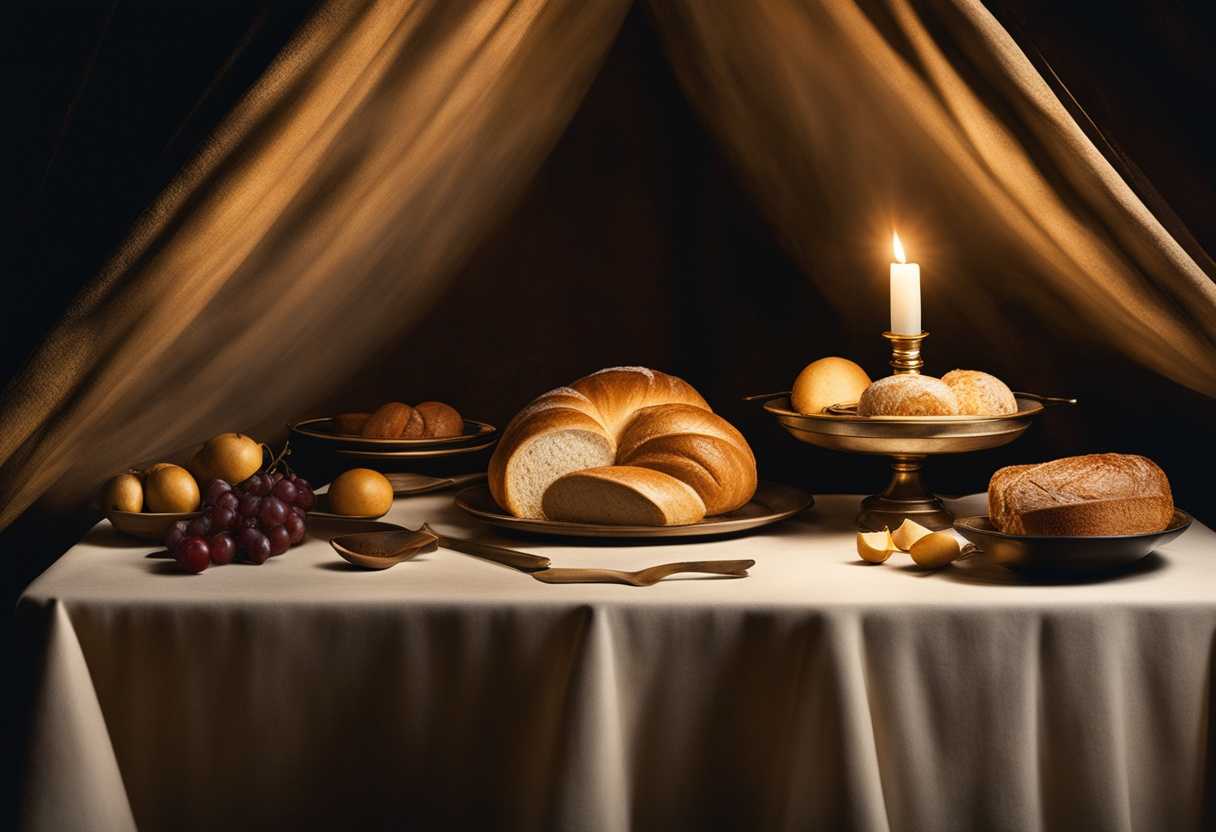
Setting the Scene for Hebrews 9:2
The scene described in Hebrews 9:2 takes place in the Tabernacle, a sacred tent constructed by the Israelites during their time in the wilderness. The Tabernacle was divided into two main sections: the Holy Place and the Most Holy Place. The Holy Place contained the golden lampstand, the table of the Bread of the Presence, and the altar of incense. The Most Holy Place, also known as the Holy of Holies, housed the Ark of the Covenant.
In this particular scene, we find the high priest, along with his fellow priests, performing the rituals and ceremonies required by the Mosaic Law. The high priest, dressed in his elaborate garments, is preparing to enter the Most Holy Place to offer incense and make atonement for the sins of the people. The other priests are busy tending to the various duties within the Tabernacle, ensuring that everything is done according to God’s instructions.
The atmosphere is one of reverence and solemnity, as the priests understand the gravity of their responsibilities and the importance of their role in mediating between God and the people. The flickering light of the lampstand casts a warm glow over the sacred objects, creating a sense of holiness and awe. The scent of incense fills the air, symbolizing the prayers of the people rising up to God. It is a moment of connection between the earthly realm and the divine, as the priests seek to make atonement and seek forgiveness on behalf of the people.
What is Hebrews 9:2 about?
The verse in Hebrews 9:2 provides a detailed account of the interior design of the tabernacle, a sacred space used for worship and sacrifices in the Old Testament. The author intricately describes the different compartments within the tabernacle, highlighting the significance of each area for the rituals and ceremonies that took place there. This verse aims to emphasize the importance of the tabernacle in the religious practices of the Israelites, showcasing how every detail and element had a specific purpose and represented a deeper spiritual meaning. This verse prompts us to consider the symbolism behind the tabernacle and how it served as a physical representation of God’s presence among His people as we reflect on it. The meticulous layout and arrangement of the tabernacle illustrate the meticulous nature of God’s instructions and the reverence with which His people were to approach Him. It challenges us to ponder on how our own places of worship and spiritual practices reflect the reverence and devotion we have for God. How can we ensure that our own sacred spaces are imbued with purpose and meaning, just as the tabernacle was in ancient times? Let’s delve deeper into the significance of the tabernacle and its layout, drawing parallels to our own faith journey and the way we honor God in our lives.
Understanding what Hebrews 9:2 really means
The Book of Hebrews delves into the comparison between the old covenant and the new covenant, shedding light on the significance of each. Hebrews 9:2 specifically zooms in on the intricate details of the tabernacle, a central place of worship for the Israelites. This verse serves as a window into the meticulous care and reverence that characterized worship in the Old Testament, emphasizing the importance of understanding the tabernacle’s design.
In Exodus 25-27, God provides detailed instructions to Moses on constructing the tabernacle, underlining the divine guidance behind its creation. Hebrews 8:5 further elucidates that the tabernacle was a mere reflection of heavenly realities, hinting at deeper spiritual truths beyond its physical form. Revelation 21:3 points towards the ultimate fulfillment of God dwelling among humanity, a promise foreshadowed by the tabernacle’s existence.
The tabernacle symbolizes God’s desire to be in communion with His people, a desire ultimately fulfilled through Jesus Christ and the indwelling of the Holy Spirit in believers. It serves as a poignant reminder for us to cultivate sacred spaces in our lives where we can encounter God intimately. The meticulous design of the tabernacle prompts us to approach our relationship with God with utmost reverence and intentionality.
Consider a cherished family heirloom passed down through generations, meticulously preserved and revered for its significance and the stories it holds. Similarly, the tabernacle was a sacred space meticulously designed and maintained, symbolizing the deep reverence and care we should exhibit in our relationship with God.
“A tabernacle was set up” signifies the deliberate creation of a sacred space for worship, highlighting the intentionality behind our worship practices. “In its first room were the lampstand, the table, and the consecrated bread” unveils the symbolic meanings behind each item. The lampstand represents God’s light, the table signifies fellowship, and the consecrated bread symbolizes God’s provision and presence. These elements collectively underscore the holistic nature of worship, encompassing guidance, community, and sustenance.
Reflecting on Hebrews 9:2 prompts us to create intentional spaces for worship in our lives, grasp the profound symbolism embedded in our practices, and approach our relationship with God with the reverence and care it deserves.
What does the earthly tabernacle represent in my life?
The earthly tabernacle represents the physical realm or the temporal aspects of our lives. Our earthly tabernacle symbolizes our temporary existence here on Earth, just as the tabernacle in the Old Testament was a temporary dwelling place for God among His people. It reminds us that our time on this earth is limited and that we are only passing through on our journey towards eternity.
Additionally, the earthly tabernacle serves as a reminder of our human limitations and mortality. Our physical bodies, like the tabernacle constructed by human hands and subject to decay, are also perishable and finite. This comparison underscores the idea that our true home is not in this world, but in the spiritual realm where we will dwell with God for all of eternity. It serves as a call to remain focused on the things that are eternal and not become too attached to the temporary pleasures and possessions of this world.
Application
Let’s show our appreciation for the sacrifices made for us by approaching life with reverence and gratitude. Cherish the forgiveness and atonement bestowed upon us through Christ’s sacrifice. Let’s express gratitude by living out our faith with a new zeal and commitment. Will you answer this call and spread love and service to those around you?

Reverend Michael Johnson is an experienced Church Minister with a profound expertise in spirituality and guidance. With a serene presence and a compassionate heart, he has faithfully served his congregation for over 20 years, leading them on a spiritual journey towards inner peace and enlightenment. Reverend Johnson’s extensive knowledge of religious philosophies and profound understanding of human nature have made him a trusted confidant and mentor to many, as he seamlessly weaves his profound wisdom into life teachings. Reverend Johnson’s calming demeanor and empathetic nature continue to uplift and heal souls, nurturing a sense of unity and tranquility within his community.