
Hebrews 9:21 is about the author citing the practice of Moses sprinkling blood on the tabernacle and its vessels to symbolize the cleansing power of blood in the Old Testament rituals, which foreshadows the ultimate sacrifice of Jesus Christ as the perfect atonement for sin in the New Testament.
21 And in the same way he sprinkled with the blood both the tent and all the vessels used in worship.
Setting the Scene for Hebrews 9:21
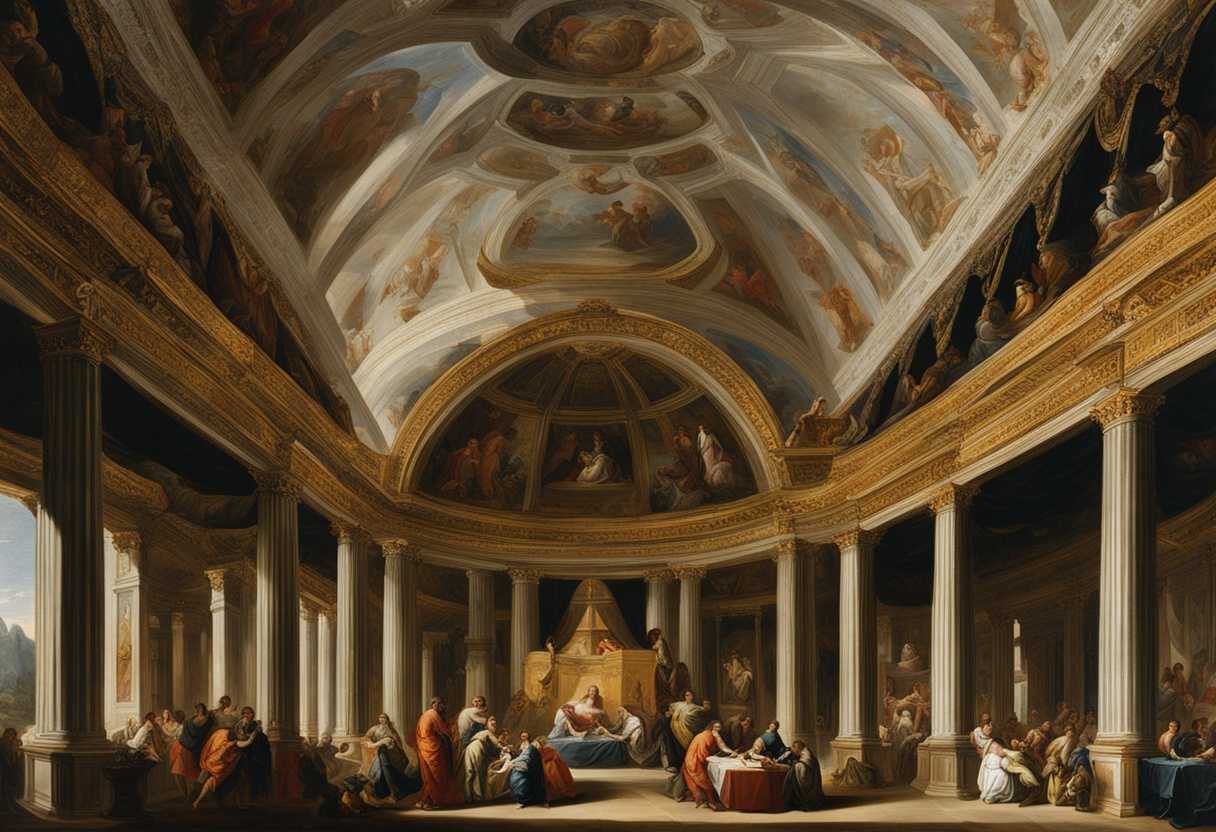
In Hebrews chapter 9, the scene described is set in the context of the Old Testament tabernacle. The author of Hebrews is recounting the rituals and practices of the Jewish high priests as they performed their duties in the tabernacle. The specific verse, Hebrews 9:21, mentions how Moses sprinkled blood on the tabernacle and all the sacred vessels used in the worship as part of the purification process according to the law.
In this scene, we can imagine Moses, the revered leader of the Israelites, standing in the midst of the tabernacle. He is surrounded by the priests and Levites, each carrying out their designated tasks with reverence and precision. The air is heavy with the scent of incense and the flickering light of the oil lamps casts a warm glow over the sacred space. The tabernacle itself is a marvel of craftsmanship, with its intricately woven curtains, golden furnishings, and the Ark of the Covenant at its center.
As Moses follows the instructions given to him by God, the people watch in awe and reverence, understanding the significance of these rituals in atoning for their sins and maintaining their covenant relationship with the Almighty. The scene is one of solemnity and holiness, as the Israelites are reminded of the importance of obedience and faithfulness in their worship of the one true God.
What is Hebrews 9:21 about?
The author in Hebrews 9:21 draws a powerful parallel between the cleansing power of blood in earthly rituals and the eternal cleansing of sins made possible by Christ’s sacrifice. Blood has long been considered a symbol of atonement and purification in many cultures and religions. Ancient Jewish customs used blood in various rituals to cleanse and purify earthly objects and people. However, the author of Hebrews emphasizes that Christ’s blood goes beyond mere physical cleansing; it has the power to cleanse our sins for eternity. This verse underscores the transformative and enduring nature of Christ’s sacrifice, which transcends the temporary and limited efficacy of earthly rituals.
Reflecting on this verse prompts us to ponder the significance of Christ’s sacrifice in our lives. How does the idea of Christ’s blood washing away our sins for eternity impact our understanding of redemption and grace? What does it mean for us to have access to a cleansing power that goes beyond the surface and delves deep into our hearts and souls? We are challenged to consider the magnitude of Christ’s sacrifice and its implications for our spiritual journey as we contemplate the profound symbolism of blood as a purifying agent. We should embrace the transformative power of Christ’s blood, allowing it to purify us from within and guide us towards a life of true repentance and renewal.
Understanding what Hebrews 9:21 really means
In the Book of Hebrews, we encounter a profound exploration of the transition from the old covenant to the new covenant, emphasizing the supremacy of Christ’s sacrifice. Hebrews 9 delves into the rituals of the old covenant, particularly the sacrificial system, contrasting them with the ultimate and perfect sacrifice of Jesus Christ. The imagery of blood plays a central role in understanding the significance of these sacrifices, symbolizing purification and the establishment of a covenant between God and His people.
The phrase “He sprinkled with blood both the tabernacle and all the vessels of the ministry” refers to Moses’ act of consecrating the tabernacle and its vessels with the blood of sacrificial animals. This act was not merely ceremonial but held deep symbolic meaning, pointing towards the necessity of a blood sacrifice for the atonement of sins. The sprinkling of blood underscores the gravity of sin and the requirement for a sacrificial offering to make amends before God.
In Exodus 24:6-8, we see a prefiguration of the new covenant as Moses sprinkles blood on the people, establishing a covenant with the Lord. This act anticipates the ultimate covenant sealed by Jesus through His sacrificial death. Leviticus 16:14-19 further illustrates the importance of blood in atonement, particularly on the Day of Atonement, where the high priest would sprinkle blood for the forgiveness of sins. Hebrews 9:22 succinctly captures the essence of this theme, stating that forgiveness of sins is impossible without the shedding of blood, a truth ultimately fulfilled in Christ’s sacrifice.
While the practice of animal sacrifices has ceased, the concept of atonement and the need for purification remain relevant today. Jesus’ sacrificial death on the cross serves as the ultimate fulfillment of these Old Testament practices, offering a once-for-all atonement for the sins of humanity. Just as the blood sprinkled in the tabernacle symbolized purification and the establishment of a new covenant, Jesus’ blood shed on the cross purifies us and establishes a new covenant relationship with God.
Consider the analogy of a courtroom where a guilty person faces a penalty they cannot pay. In a profound act of substitution, someone steps in to bear the punishment on their behalf. This mirrors what Jesus did for us—taking our place and offering Himself as the perfect sacrifice. The sprinkling of blood in the tabernacle foreshadowed this ultimate sacrifice, emphasizing the seriousness of sin and the depth of God’s love in providing redemption for humanity.
As we reflect on Hebrews 9:21, we are reminded of the cost of our redemption and the immeasurable grace extended to us through Christ’s sacrifice. This verse calls us to live in gratitude and reverence, acknowledging the profound love that led to our reconciliation with God. May we continually appreciate the magnitude of Christ’s sacrifice and strive to walk in the light of His redemption, embracing the new covenant sealed with His precious blood.
How can the blood of Jesus cleanse our sins?
The blood of Jesus is seen as a symbolic representation of his sacrificial death on the cross. Blood was often used in rituals in the Old Testament to symbolize the atonement for sin. The blood of Jesus is understood to serve as the ultimate and complete sacrifice for the forgiveness of sins for all who believe in Him, just as people used the blood of animals for purification and forgiveness of sins in those rituals.
The shedding of Jesus’ blood on the cross is believed to have the power to cleanse us from our sins because His sacrifice was pure, perfect, and without blemish. Jesus willingly gave His life as a sacrifice, taking upon Himself the punishment that we deserve for our sins, thereby making it possible for us to be forgiven and restored in our relationship with God. The blood of Jesus is thus seen as the ultimate price paid for our redemption and the means through which we can be reconciled to God and washed clean from our sins.
Application
Hey there, are you ready to upgrade your operating system to align with divine commands? Like updating your software, it’s time to actively engage in obedience at work, with family, and in all facets of life. Dive into self-reflection and see where you can fine-tune your alignment with God’s purpose. Let’s step up our game and embrace obedience wholeheartedly. Are you in?

Reverend Michael Johnson is an experienced Church Minister with a profound expertise in spirituality and guidance. With a serene presence and a compassionate heart, he has faithfully served his congregation for over 20 years, leading them on a spiritual journey towards inner peace and enlightenment. Reverend Johnson’s extensive knowledge of religious philosophies and profound understanding of human nature have made him a trusted confidant and mentor to many, as he seamlessly weaves his profound wisdom into life teachings. Reverend Johnson’s calming demeanor and empathetic nature continue to uplift and heal souls, nurturing a sense of unity and tranquility within his community.