
Hebrews 9:6-7 is about the priestly duties and rituals of the old covenant, emphasizing that while these practices were essential for the worship within the earthly sanctuary, they reflect the limitations of the sacrificial system that required continual offerings for sin, ultimately pointing towards the need for a more perfect and eternal sacrifice in Christ.
6 These preparations having thus been made, the priests go regularly into the first section, performing their ritual duties.
7 but into the second only the high priest goes, and he but once a year, and not without taking blood, which he offers for himself and for the unintentional sins of the people.
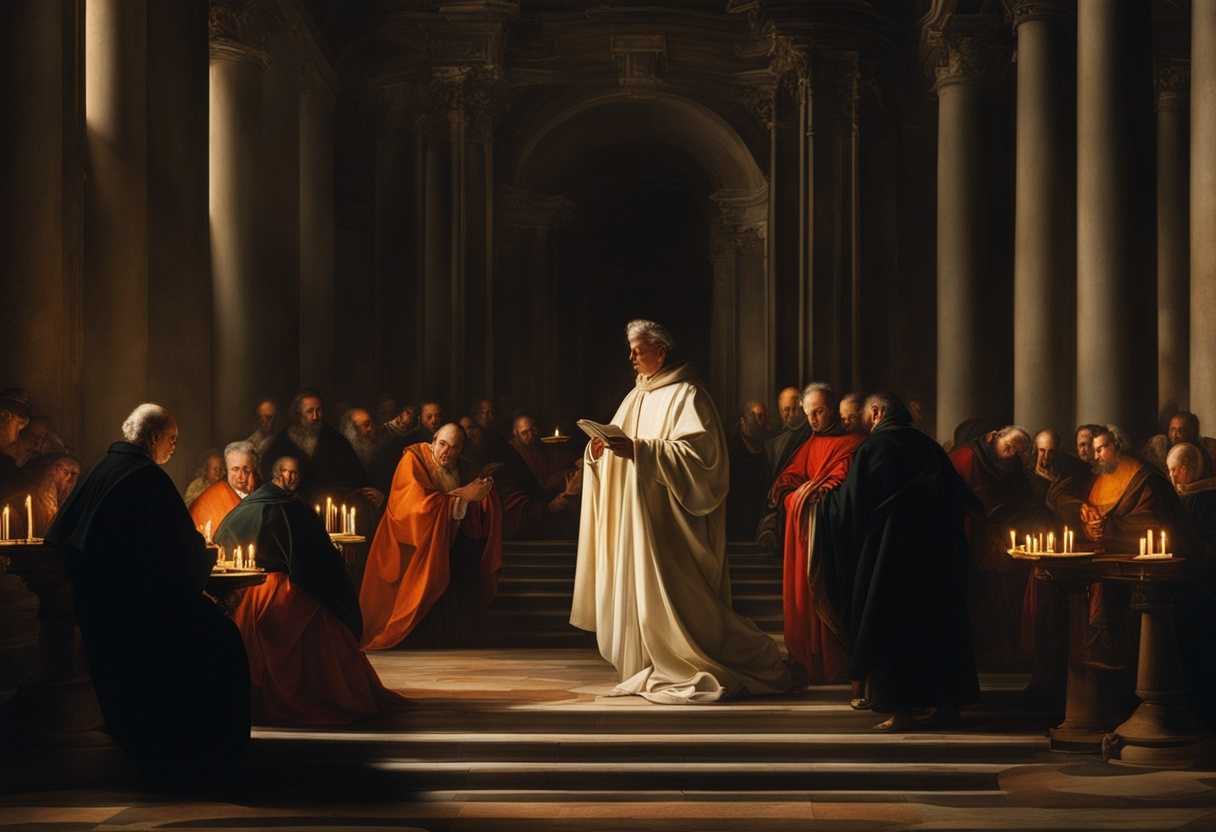
Setting the Scene for Hebrews 9:6-7
In the heart of the ancient Jerusalem temple, a sacred atmosphere envelops the space, filled with the scent of incense and the soft flickering of oil lamps casting shadows on the intricately woven tapestries that adorn the walls. The temple, a magnificent structure of stone and gold, stands as a testament to the devotion of the Israelites. Within its confines, the Holy Place is meticulously arranged, with the Table of Showbread on one side, the golden lampstand on the other, and the altar of incense positioned before the veil that separates the Holy Place from the Most Holy Place. This veil, rich in color and texture, symbolizes the barrier between the divine and the earthly, a reminder of the holiness of God.
In this sacred setting, the high priest, adorned in his ceremonial garments, prepares for the solemn duties of the day. His name is Caiaphas, a man of great authority and responsibility, tasked with entering the Most Holy Place once a year to offer sacrifices for the sins of the people. The air is thick with anticipation as he recalls the weight of his lineage, the generations of priests who have come before him, each one fulfilling this sacred duty with reverence and fear. The high priest’s heart beats in rhythm with the prayers of the faithful outside, who gather in the outer courts, their voices rising in a chorus of supplication, seeking atonement and mercy.
As Caiaphas approaches the veil, he is acutely aware of the significance of this moment. He carries with him the blood of the sacrificial animal, a symbol of life given for the sake of the people’s transgressions. The rituals of the past echo in his mind, the solemnity of the Day of Atonement, when the sins of the nation are laid upon the scapegoat, sent into the wilderness as a sign of their removal. The high priest knows that he stands at the threshold of divine encounter, a moment where the sacred and the profane meet, and he must enter with the utmost purity and intention. The weight of the responsibility is palpable, as he prepares to step beyond the veil, into the presence of God, where the mercy seat awaits, a place of grace and judgment intertwined.
What is Hebrews 9:6-7 about?
The high priest played a vital role in the process of atonement within the earthly sanctuary, as depicted in Hebrews 9:6-7. This passage invites us to reflect on the significance of these ancient practices. Why do you think the author of Hebrews chose to emphasize the high priest’s annual atonement for sins? Perhaps it is an attempt to underline the gravity and seriousness of sin and the lengths to which the covenants of old went to reconcile humanity with God.
The high priest’s role was not merely ceremonial but deeply symbolic, serving as an intermediary between God and His people. Each year, he would enter the Most Holy Place with the blood of sacrificial offerings, representing the weight of sin and the desperate need for forgiveness. This ritual was far from a mere formality; it was a powerful reminder of the consequences of sin and the necessity of atonement. Have you ever considered how this ancient practice informs our understanding of grace today? It provides context for the depth of God’s mercy, as well as the seriousness of sin, leading ultimately to Jesus Christ—the ultimate High Priest who offers a once-and-for-all sacrifice. Reflecting on these verses invites us to consider the implications for our own lives. Are we aware of the sacrifices made for our redemption? Do we grasp the gravity of sin in our lives, or has it become a casual concern? The rituals described highlight that God desires a relationship with us, one that requires a genuine acknowledgment of our failings and a sincere response. Let’s not overlook how these ancient practices resonate with our present call to repentance and grace as we nurture our relationship with the divine. We can better appreciate the immeasurable grace that is extended to us through Christ by understanding our need for forgiveness.
Understanding what Hebrews 9:6-7 really means
In Hebrews 9:6-7, we encounter a pivotal moment in understanding the transition from the old covenant to the new covenant established through Christ. The author of Hebrews, writing to a Jewish audience, emphasizes the significance of the sacrificial system and the role of the high priest. This context is essential for grasping the depth of these verses. The earthly sanctuary, with its rituals and sacrifices, serves as a shadow of the heavenly reality that Christ embodies.
The passage highlights the distinction between the two sections of the tabernacle: the Holy Place and the Most Holy Place. The Holy Place, where priests ministered daily, symbolizes the ongoing need for mediation. It reflects the limitations of the old covenant, where sacrifices were made repeatedly, yet never fully atoning for sin. In contrast, the Most Holy Place, entered only once a year by the high priest, underscores the holiness of God and the seriousness of sin. This annual ritual, as described in Exodus 30:10, reveals the inadequacy of the sacrificial system, which relied on the blood of goats and calves—temporary measures that could not provide lasting redemption.
As we reflect on these themes, we must consider their relevance in our lives today. Many individuals grapple with feelings of guilt and unworthiness, often seeking to atone for their mistakes through various means. This passage serves as a reminder that true atonement is not found in our efforts but through the ultimate sacrifice of Christ. Romans 8:1 reassures us that there is no condemnation for those who are in Christ Jesus, contrasting the burdensome nature of the old system with the grace and freedom found in Him.
To illustrate this point, let’s consider the story of Sarah, a young woman burdened by her past mistakes. In her quest for forgiveness, she attempted to earn her way back to acceptance through good deeds and self-improvement. However, the weight of her guilt only grew heavier. It was only when she encountered the message of grace in Christ that her perspective shifted. Realizing her worth was not based on her actions but on Christ’s sacrifice, she experienced transformative freedom. Sarah’s journey exemplifies how understanding the role of the high priest and the finality of Christ’s sacrifice can liberate us from the chains of guilt.
The phrases used in this passage are rich with meaning. “The first section of the tent” refers to the Holy Place, emphasizing the ongoing need for mediation. “The second section,” or the Most Holy Place, represents the holiness of God and the seriousness of sin. The mention of the “blood of goats and calves” highlights the temporary nature of the old covenant sacrifices, pointing to their inadequacy in fully cleansing humanity. The phrase “once a year” signifies the repetitive nature of these sacrifices, contrasting sharply with the once-for-all sacrifice of Christ, which offers eternal redemption.
In conclusion, Hebrews 9:6-7 serves as a powerful reminder of the limitations of the old covenant and the profound grace found in Christ. As we reflect on these truths, we are called to embrace our identity as children of God, liberated from the burden of guilt and empowered to live in the light of His love. This understanding invites us to engage with our faith more deeply, recognizing that our worth is rooted in Christ’s sacrifice, not our own efforts. How might this perspective change the way we approach our struggles and our relationships with others?
What sacrifices am I making for my spiritual growth?
I am making significant sacrifices by prioritizing my relationship with the divine over various worldly pleasures and distractions in my journey toward spiritual growth. This means setting aside time for deep reflection, prayer, and spiritual practices that draw me closer to a higher understanding. These moments often require me to forego social engagements or leisure activities that may not contribute positively to my inner development, emphasizing the importance of seeking fulfillment in my spiritual pursuits rather than in temporary, earthly joys.
Additionally, I find myself letting go of the desire for control and certainty in life. Embracing uncertainty means accepting that not everything will go according to my plans or expectations. This surrender allows me to cultivate trust in a greater purpose and the unfolding of my spiritual path, even when it feels uncomfortable or challenging. I open myself to deeper insights and a richer connection with the spiritual truths that guide my existence by releasing the need to dictate my future. I ultimately highlight a commitment to living in alignment with my values and beliefs by making sacrifices, often choosing integrity over convenience. This can manifest in making ethical decisions that may conflict with societal norms or the expectations of those around me. I navigate a path that, while sometimes lonely or challenging, ultimately leads me to a greater sense of purpose and fulfillment in my spiritual evolution by holding steadfast to my spiritual principles.
Application
Imagine your work life, where dedication and effort lead to success. Now think of your family, where love and connection build a home. In the same way, your worship requires sincerity and respect. Hebrews 9:6-7 reminds us that just as we reflect on our roles at work and in family, we should approach God with that same reverence. As you dive deeper into these ancient rituals, consider how they reflect on your life today and how Christ fulfills those shadows. What steps will you take this week to strengthen that important relationship with God?

Reverend Michael Johnson is an experienced Church Minister with a profound expertise in spirituality and guidance. With a serene presence and a compassionate heart, he has faithfully served his congregation for over 20 years, leading them on a spiritual journey towards inner peace and enlightenment. Reverend Johnson’s extensive knowledge of religious philosophies and profound understanding of human nature have made him a trusted confidant and mentor to many, as he seamlessly weaves his profound wisdom into life teachings. Reverend Johnson’s calming demeanor and empathetic nature continue to uplift and heal souls, nurturing a sense of unity and tranquility within his community.