
Hosea 12:10-11 is about God sending prophets to warn and guide his people, calling them to repentance and righteousness, yet they continued to follow their own deceit and idolatry.
10 I spoke to the prophets; it was I who multiplied visions, and through the prophets gave parables.
11 If Gilead is iniquity,
they shall surely come to nothing.
In Gilgal they sacrifice bulls;
their altars also are like stone heaps
on the furrows of the field.
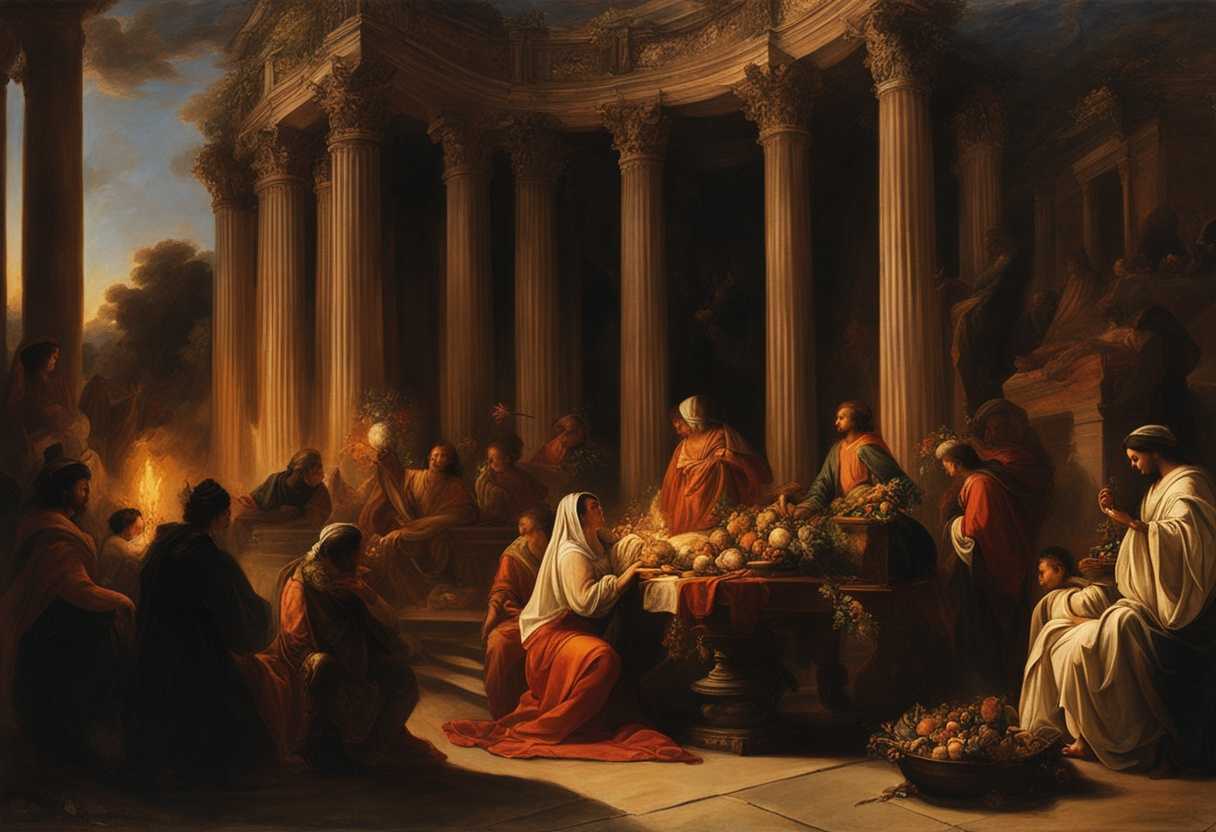
Setting the Scene for Hosea 12:10-11
In the book of Hosea, we find the prophet Hosea addressing the people of Israel, recounting their history and reminding them of their covenant with God. The scene is set in a humble dwelling in the ancient kingdom of Israel, with Hosea standing before a group of Israelites gathered to hear his words. The room is dimly lit by oil lamps, casting flickering shadows on the faces of those present.
Among the listeners are men and women of various ages, their faces reflecting a mix of curiosity, reverence, and perhaps a hint of guilt as Hosea speaks. Some have come out of genuine desire to hear the prophet’s message, while others may be there out of obligation or curiosity. The air is heavy with the weight of Hosea’s words, as he recounts the history of Israel’s relationship with God, from their humble beginnings as a people chosen by God to their subsequent unfaithfulness and idolatry.
As Hosea speaks, his voice rises and falls with emotion, his words a mix of rebuke and pleading. He reminds the people of God’s faithfulness and love, despite their constant turning away. The scene is charged with tension as Hosea implores the people to return to God and seek forgiveness for their sins. The room is filled with a sense of urgency and the weight of impending judgment, as Hosea’s words hang heavy in the air, challenging the people to choose between their sinful ways and the path of righteousness.
What is Hosea 12:10-11 about?
The prophet Hosea highlights the way God communicates with His people through prophetic messages in Hosea 12:10-11. When we dissect these verses, we see that God uses various methods to convey His will to humanity. He speaks through prophets, who serve as intermediaries between Him and the people. These prophets are given parables and visions, symbolic representations that hold deep spiritual truths for those who seek to understand God’s words. God engages with His creation in intricate ways that we are reminded of as we reflect on these verses. God invites us to delve deeper into His mysteries through parables and visions, urging us to seek a deeper understanding of His plans and desires for us. We too are called to open our hearts and minds to the messages God wants to impart to us through various means, just as prophets in the past were given visions and parables to share with others.
Have you ever pondered the significance of parables and visions in understanding God’s will? How do you think these methods of communication help us grasp the profound truths that God wants us to know? Let us appreciate the beauty of God’s intricate ways of revealing Himself to us and strive to deepen our understanding of His will through the messages He sends us, just as He did with the prophets of old.
Understanding what Hosea 12:10-11 really means
Hosea, a prophet in the Northern Kingdom of Israel, delivered a message during a period of moral decay, calling for repentance amidst Israel’s unfaithfulness. In Hosea 12:10-11, God speaks of His communication with the prophets, emphasizing the role of prophecy in guiding His people. Through visions and parables, God actively sought to reveal His will and plans, using various methods to convey messages with depth and clarity. The rhetorical question about Gilead’s wickedness challenges the spiritual state of a region known for healing, highlighting the disconnect between reputation and reality. The imagery of altars as useless piles of stones on a plowed field symbolizes the emptiness of Israel’s worship practices devoid of genuine devotion.
The passage resonates with the broader biblical theme of God communicating through prophets, as seen in Amos 3:7, underscoring the significance of heeding divine messages. Jesus’ use of parables in Matthew 13:34-35 aligns with God’s method of teaching through stories with spiritual truths. Isaiah 1:11-13 echoes the criticism of empty rituals and sacrifices, mirroring Hosea’s rebuke of insincere worship. Today, the text prompts reflection on the authenticity of our worship and devotion, urging us to move beyond superficial practices to cultivate a genuine relationship with God.
Consider a farmer meticulously arranging stones in a field but neglecting to plant seeds. No matter the precision, without sowing, the stones remain unproductive. Similarly, focusing solely on outward religious acts without nurturing personal spiritual growth leads to barren faith. Attending church without personal prayer and Bible study renders one’s faith visible yet unfruitful, akin to stones on a plowed field. Hosea’s message challenges us to assess the depth of our faith and response to God’s guidance, urging us to seek a meaningful relationship beyond mere rituals.
In conclusion, Hosea 12:10-11 prompts introspection on the sincerity of our faith and the depth of our connection with God. It calls for a shift from empty practices to a genuine pursuit of God, ensuring our spiritual lives bear fruit aligned with His will. By embracing the lessons within this passage, we can enrich our faith journey and cultivate a relationship with God that transcends mere religious routines.
How can we maintain integrity and seek God?
To maintain integrity and seek God, we must rely on God’s guidance and trust in Him. We should be honest and sincere in our actions, living a life that reflects our commitment to God. Seeking God requires humility and a willingness to surrender our own will to His. We demonstrate our integrity and faithfulness to God by following His commands and living according to His Word.
It is important to continuously seek God through prayer, meditation on His Word, and seeking His will in all aspects of our lives. This requires a sincere desire to know God more deeply and to align our thoughts and actions with His. We are able to maintain our integrity and walk in His ways, even when faced with challenges or temptations, by seeking God earnestly and consistently. Seeking God ultimately requires dedication, perseverance, and a steadfast commitment to living a life that honors Him throughout a lifelong journey.
Application
Let’s be the CEOs of kindness and the executives of empathy in our modern world. Let love and mercy be the tools of our trade, and seeking God our top priority. Let’s hustle in righteousness, making our families proud and our coworkers inspired. Will you join the mission to spread love like a successful business expanding globally, impacting lives one act of kindness at a time?

Reverend Michael Johnson is an experienced Church Minister with a profound expertise in spirituality and guidance. With a serene presence and a compassionate heart, he has faithfully served his congregation for over 20 years, leading them on a spiritual journey towards inner peace and enlightenment. Reverend Johnson’s extensive knowledge of religious philosophies and profound understanding of human nature have made him a trusted confidant and mentor to many, as he seamlessly weaves his profound wisdom into life teachings. Reverend Johnson’s calming demeanor and empathetic nature continue to uplift and heal souls, nurturing a sense of unity and tranquility within his community.