
Hosea 4:13 is about the consequences of worshiping false gods and engaging in idolatry, leading to a loss of understanding, wisdom, and spiritual guidance.
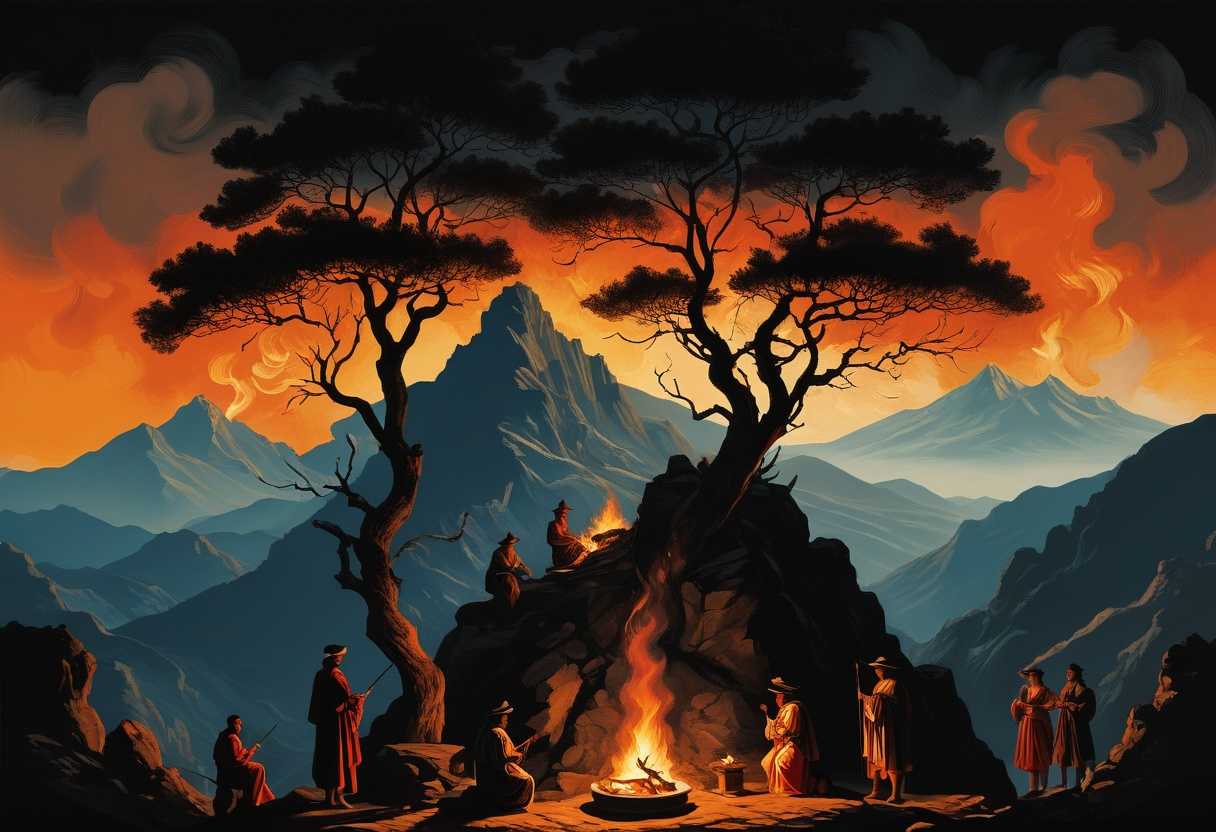
13 They sacrifice on the tops of the mountains
and burn offerings on the hills,
under oak, poplar, and terebinth,
because their shade is good.
Setting the Scene for Hosea 4:13
In Hosea chapter 4, the prophet Hosea is addressing the people of Israel, specifically calling out the priests for their lack of knowledge and understanding of God’s ways. The scene is set in a bustling marketplace in the ancient city of Samaria, where the priests are gathered to conduct their religious duties and offer sacrifices to the Lord. The air is filled with the sounds of animals being traded, merchants haggling over prices, and the murmurs of the people going about their daily business.
Among the priests present is a group led by a man named Eli, known for his arrogance and disregard for the laws of God. He and his followers have become entangled in the worship of idols and have forsaken the true teachings of the Lord. As Hosea approaches the group, he is filled with righteous anger at their betrayal of their sacred duty to lead the people in worship and obedience.
The scene is tense as Hosea confronts the priests, accusing them of leading the people astray and bringing judgment upon the nation. The priests, caught off guard by the prophet’s words, react with a mixture of defiance and fear, realizing the gravity of their actions. The marketplace falls silent as Hosea’s voice echoes through the streets, calling for repentance and a return to the ways of the Lord.
What is Hosea 4:13 about?
The prophet Hosea is condemning the people of Israel for engaging in corrupt and unauthorized religious practices in this verse. The people were deviating from the prescribed ways of worship and disobeying God’s commands by sacrificing on mountaintops and burning offerings on hills. Instead of offering sacrifices in the designated places like the tabernacle or temple, they were choosing to worship in places associated with pagan rituals and idolatry.
This verse serves as a reminder of the importance of following God’s instructions and worshiping Him in spirit and in truth. It emphasizes the significance of obedience and faithfulness in our relationship with God. The people of Israel were not only dishonoring God but also putting their faith and salvation at risk by deviating from God’s ways and incorporating practices of other religions. Let’s consider the sincerity and reverence with which we approach our worship as we reflect on this verse. Are we following God’s commands diligently, or are we allowing ourselves to be swayed by worldly influences and false practices? Let us remain steadfast in our faith, adhering to God’s teachings and offering Him worship that is pure, genuine, and pleasing in His sight.
Understanding what Hosea 4:13 really means
Hosea, a prophet in the Northern Kingdom of Israel, delivered a message during a period of moral decay and spiritual waywardness. His words were a poignant call to repentance, warning of the impending consequences of the people’s unfaithfulness to God. In Hosea 4:13, the imagery of sacrificing on mountaintops and burning offerings on hills vividly portrays the Israelites’ involvement in idolatry, forsaking the true God for false deities. The mention of worship under specific trees like oaks, poplars, and terebinths underscores the allure of false religions and the people’s departure from the path of righteousness.
The phrase “because their shade is good” in Hosea 4:13 hints at the people’s inclination towards seeking comfort and convenience in their worship practices, rather than genuine devotion to God. This inclination towards ease and comfort over true commitment is a timeless struggle that resonates with people today. While physical idol worship may not be prevalent in modern times, the concept of idolatry manifests in various forms, such as materialism, obsession with success, or prioritizing relationships above one’s relationship with God.
Drawing parallels to Hosea’s message, the modern tendency to seek comfort over commitment in matters of faith is a stark reminder of the dangers of spiritual complacency. Just as the Israelites sought solace under the shade of trees, individuals today may opt for superficial faith practices that offer temporary comfort but lack true depth and sincerity. This reflection prompts us to evaluate our own lives for signs of modern idolatry and to reexamine the depth of our relationship with God.
Consider a scenario where someone attends church sporadically, relying on faith only when convenient, akin to the Israelites seeking shade for comfort in their worship. When faced with a personal crisis, this individual realizes the inadequacy of their shallow faith and the need for a more profound connection with God. This moment of awakening mirrors Hosea’s call to repentance, urging us to move beyond superficial faith practices and embrace a genuine, committed relationship with the Divine.
In conclusion, Hosea 4:13 serves as a poignant reminder of the pitfalls of idolatry and the significance of unwavering devotion to God. It challenges us to scrutinize our lives for modern forms of idol worship and to pursue a deeper, more authentic bond with the Creator, rather than settling for what is convenient or comfortable. Let us heed this call to introspection and strive for a faith that is rooted in sincerity and steadfastness.
What practices or beliefs lead us astray?
Putting faith in false gods or seeking guidance from unreliable sources can lead individuals astray. When people turn away from the one true God and place their trust in idols or worldly desires, they open themselves up to deception and misguided paths. Instead of staying firm in their belief in the divine, they chase after fleeting pleasures or misguided teachings that ultimately lead them away from the truth.
Furthermore, disregarding the wisdom and guidance provided in sacred scriptures can also lead individuals astray. People risk falling into sinful behavior or making decisions that contradict the values and principles outlined in religious texts by neglecting the commandments and teachings that serve as a compass for righteous living. This deviation from the intended path can result in spiritual confusion and moral missteps, ultimately leading individuals down a detrimental and misguided journey.
Application
Don’t stray from the path that leads to light and fulfillment. Let Hosea 4:13 be a compass guiding you back to the right track. Commit wholeheartedly to staying true to what is right and just. Are you willing to take that step towards righteousness today?

Reverend Michael Johnson is an experienced Church Minister with a profound expertise in spirituality and guidance. With a serene presence and a compassionate heart, he has faithfully served his congregation for over 20 years, leading them on a spiritual journey towards inner peace and enlightenment. Reverend Johnson’s extensive knowledge of religious philosophies and profound understanding of human nature have made him a trusted confidant and mentor to many, as he seamlessly weaves his profound wisdom into life teachings. Reverend Johnson’s calming demeanor and empathetic nature continue to uplift and heal souls, nurturing a sense of unity and tranquility within his community.