
Isaiah 10:12 is about God using the powerful Assyrian empire as a tool for judgment and discipline, but ultimately holding them accountable for their pride and cruelty.
12 When the Lord has finished all his work on Mount Zion and on Jerusalem, he will punish the speech of the arrogant heart of the king of Assyria and the boastful look in his eyes.
Setting the Scene for Isaiah 10:12
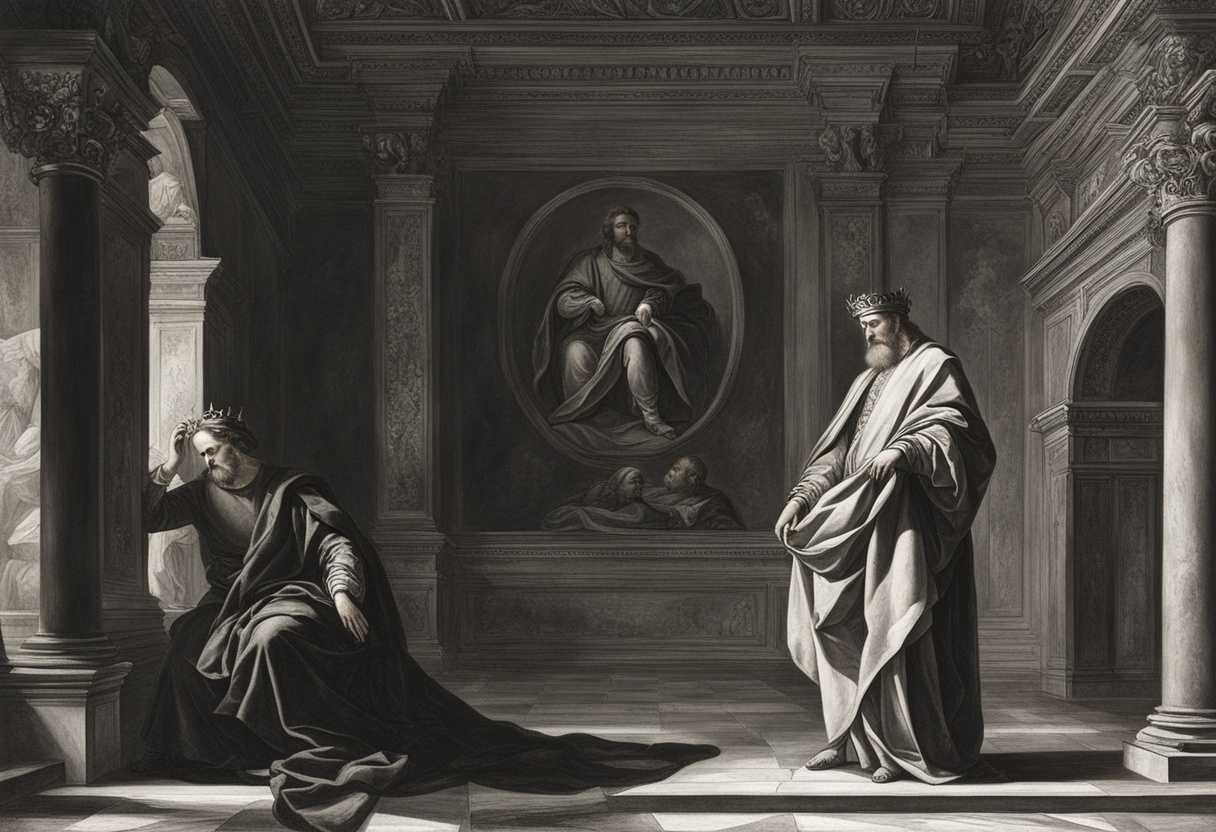
In Isaiah chapter 10, we find the prophet Isaiah delivering a message from God to the nation of Assyria. The scene is set in the royal court of the Assyrian king, likely King Sennacherib, who was known for his military conquests and arrogance. Surrounding the king are his advisors, military commanders, and court officials, all gathered to hear his plans for expanding the empire.
Isaiah, a prophet of God, has been called to deliver a warning to the Assyrian king. He stands before the king and his court, a lone figure amidst the opulence and power of the royal court. Isaiah’s presence is a stark contrast to the extravagance and pride that fill the room, as he speaks with authority and conviction, delivering a message of judgment and warning from the Lord.
As Isaiah proclaims the words of God, the atmosphere in the court grows tense. The king and his advisors listen intently, their expressions shifting from curiosity to concern as they hear of the impending consequences of their actions. The scene is charged with a sense of urgency and gravity, as Isaiah calls the Assyrian king to repentance and warns of the judgment that will come if they do not turn from their wicked ways.
What is Isaiah 10:12 about?
This verse teaches us an important lesson about the consequences of arrogance and pride. Assyria’s leaders thought they were invincible and above everyone else. They oppressed others and acted as if their power was limitless. However, God does not tolerate such behavior. The verse shows that even the mightiest nations are not beyond God’s reach when they stray from his path. It serves as a reminder that humility and righteousness are virtues that should be upheld at all times.
Have you ever witnessed someone acting arrogantly and prideful, thinking they are better than everyone else? This verse shows us that such behavior is not only harmful but also incurs consequences. It prompts us to reflect on our own actions and ensure that we do not fall into the trap of self-importance. We should learn from Assyria’s fate and strive to cultivate humility and grace in our own lives, knowing that God values these traits above all else.
Understanding what Isaiah 10:12 really means
Isaiah 10:12 delves into the divine justice meted out by God upon Assyria, a nation once used as a tool of God’s wrath against Israel. However, Assyria’s downfall was not solely due to their actions against Israel but stemmed from their own hubris and arrogance. This verse serves as a poignant reminder of the consequences of pride and the inevitable downfall that accompanies it. Proverbs 16:18 echoes this sentiment, stating that pride precedes destruction, emphasizing the recurring theme of pride’s role in downfall found in Isaiah 10:12.
James 4:6 further reinforces this concept by highlighting God’s opposition to the proud while showing favor to the humble. The correlation between pride and divine resistance is a consistent theme throughout the Bible, emphasizing the importance of humility in the eyes of God. Isaiah 2:12 continues this narrative by prophesying a day of reckoning for the proud and lofty, where their exalted status will be humbled, further emphasizing the theme of divine judgment against pride present in Isaiah 10:12.
The relevance of Isaiah 10:12 transcends time, resonating with individuals in contemporary society where success and power often breed arrogance. This verse serves as a cautionary tale, reminding us that regardless of our achievements, succumbing to pride can lead to our downfall. Whether in personal relationships, professional endeavors, or societal positions, the message of humility found in Isaiah 10:12 remains pertinent and applicable.
Consider a narrative of a successful CEO whose initial triumphs led to a sense of superiority and disregard for others. As his pride grew, so did his poor decisions, ultimately resulting in significant losses for his company. This anecdote mirrors the warning of Isaiah 10:12, illustrating how unchecked pride can pave the way for downfall, regardless of one’s initial success.
Delving into the specifics of Isaiah 10:12, the phrase “When the Lord has finished all his work against Mount Zion and Jerusalem” underscores the deliberate and purposeful nature of God’s actions. It assures us that God’s justice is not arbitrary but part of a meticulous divine plan. The mention of punishing the king of Assyria for his “willful pride” and “haughty look” emphasizes the sins of arrogance and pride. This serves as a stark reminder that God scrutinizes not only our actions but also the intentions of our hearts, holding us accountable for our attitudes and behaviors.
Reflecting on Isaiah 10:12 prompts introspection on our own humility and reliance on God’s guidance. It urges us to evaluate our hearts and attitudes, ensuring that we remain grounded in humility and guarded against the pitfalls of pride. In a world where self-importance often overshadows humility, the timeless message of Isaiah 10:12 serves as a beacon, guiding us towards a path of humility and righteousness.
How do we handle power and authority responsibly?
Handling power and authority responsibly means recognizing that they are given to us by God for a purpose. We are called to use our power and authority to bring about justice, mercy, and righteousness, and not for selfish gain or personal glory. When we acknowledge that our position of influence is a responsibility from God, we are more likely to use it in a way that honors Him and benefits others.
Additionally, responsible leadership requires humility and an awareness of our own limitations. We must not become arrogant or abusive in our exercise of power, but rather approach our authority with a servant’s heart. We can make decisions that reflect His character and lead others with integrity and compassion by seeking wisdom and guidance from God. Ultimately, a deep commitment to following God’s will and seeking His guidance in all our actions involves handling power and authority responsibly. When we submit our will to His and use our influence in alignment with His purposes, we can be confident that we are fulfilling our role as stewards of the power and authority entrusted to us.
Application
Just like in a well-oiled machine, God holds the ultimate power and control over everything in this fast-paced world. Let’s not just be bystanders in this grand masterpiece of life, but take an active role in surrendering to His divine plan. Trust in His unseen hand that steers us through the chaos and uncertainties of our daily grind. Will you take that leap of faith and let God’s guiding light illuminate your path to a fulfilling existence?

Reverend Michael Johnson is an experienced Church Minister with a profound expertise in spirituality and guidance. With a serene presence and a compassionate heart, he has faithfully served his congregation for over 20 years, leading them on a spiritual journey towards inner peace and enlightenment. Reverend Johnson’s extensive knowledge of religious philosophies and profound understanding of human nature have made him a trusted confidant and mentor to many, as he seamlessly weaves his profound wisdom into life teachings. Reverend Johnson’s calming demeanor and empathetic nature continue to uplift and heal souls, nurturing a sense of unity and tranquility within his community.