
Isaiah 11:3-4 is about the wisdom and discernment endowed upon the Messiah by God to judge the needy with righteousness and equity, striking the earth with the rod of his mouth and slaying the wicked with the breath of his lips.
3 And his delight shall be in the fear of the Lord. He shall not judge by what his eyes see, or decide disputes by what his ears hear,
4 but with righteousness he shall judge the poor, and decide with equity for the meek of the earth; and he shall strike the earth with the rod of his mouth, and with the breath of his lips he shall kill the wicked.
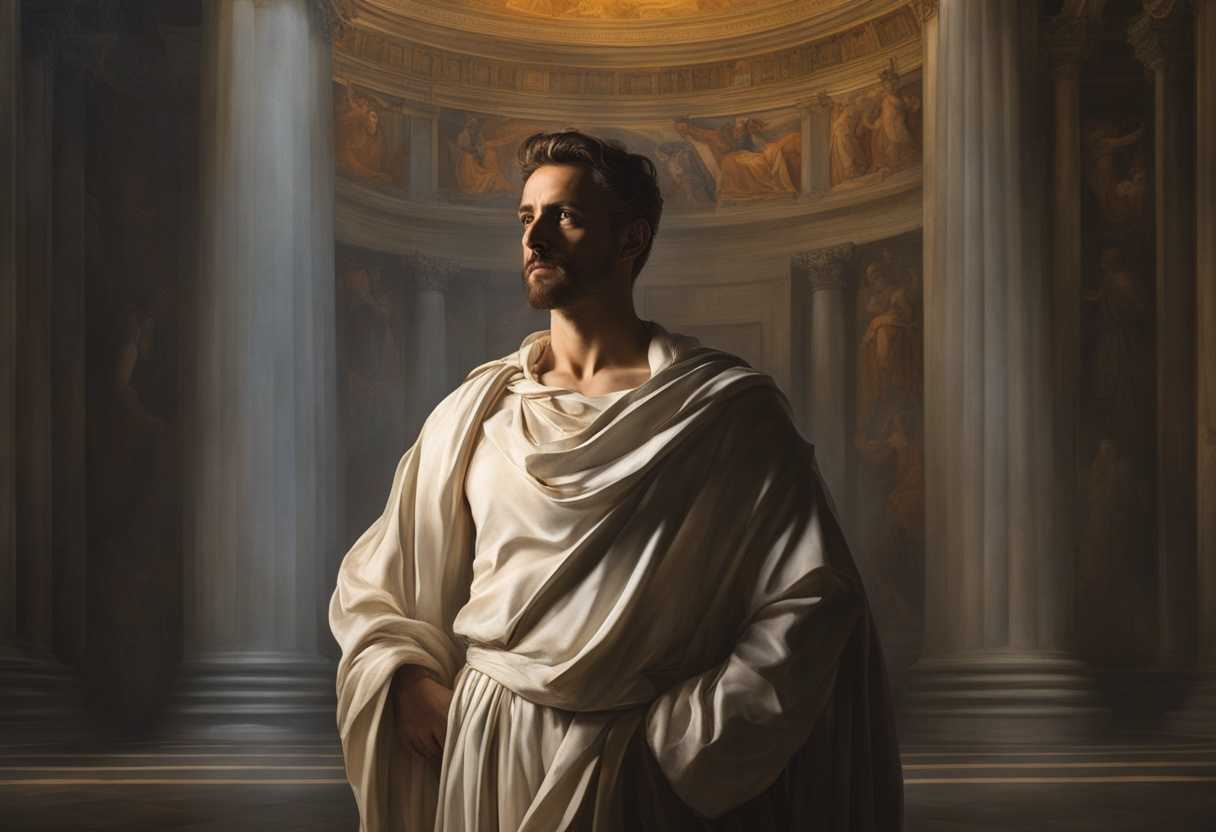
Setting the Scene for Isaiah 11:3-4
In Isaiah chapter 11, we find a scene set in the royal court of a kingdom. The king, King Hezekiah, is seated on his throne, surrounded by his advisors and courtiers. Among them is the prophet Isaiah, known for his close relationship with the king and his unwavering commitment to delivering messages from God. The atmosphere in the court is tense as they discuss matters of great importance to the kingdom.
As they deliberate, Isaiah begins to speak, his voice resonating through the grand hall. He prophesies about a future ruler, a descendant of King David, who will bring justice and righteousness to the land. The room falls silent as Isaiah describes this future leader as one who will be filled with the Spirit of the Lord, possessing wisdom, understanding, counsel, might, knowledge, and fear of the Lord. The king and his advisors listen intently, pondering the implications of this prophecy for the future of their kingdom.
The scene is rich with symbolism and anticipation as Isaiah’s words hang in the air, stirring the hearts of those present. The flickering torches cast a warm glow on the intricate tapestries adorning the walls, creating a sense of reverence and awe. In this moment, the promise of a righteous and just ruler brings hope and reassurance to all who are gathered in the royal court.
What is Isaiah 11:3-4 about?
Isn’t it incredible to think that the Messiah is depicted as someone filled with wisdom and understanding in Isaiah 11:3-4? This verse highlights the qualities of the Messiah who brings guidance and fairness to the world. It speaks to the idea that the Messiah will make decisions based on righteousness and justice, ensuring that truth and equity prevail.
Imagine a world where wisdom and justice reign supreme, where decisions are made with clarity and fairness for all. This verse reminds us of the hope and promise that the Messiah brings, offering us guidance and direction in a world filled with uncertainty and chaos. It challenges us to embody these qualities in our own lives, striving to bring righteousness and judgment in our own actions and interactions with others.
Understanding what Isaiah 11:3-4 really means
Isaiah 11:3-4 is a prophetic passage that speaks about the coming of a righteous ruler from the line of David, often interpreted as a messianic figure embodying wisdom, justice, and righteousness. The preceding verses in Isaiah 11:1-2 introduce the “shoot from the stump of Jesse,” indicating the Davidic lineage of the Messiah. Similarly, Isaiah 9:6-7 also speaks of a child born to us, a son given, who will establish and uphold justice and righteousness. In Matthew 3:16-17, the baptism of Jesus, where the Spirit of God descends like a dove, echoes the Spirit of the Lord resting upon the Messiah in Isaiah 11. Revelation 19:11 describes Jesus as the righteous judge, aligning with the themes of justice and righteousness in Isaiah 11:3-4.
In a world often marked by injustice and corruption, the promise of a ruler who judges with righteousness and fairness is profoundly relevant. The emphasis on not judging by appearances but with righteousness encourages us to seek deeper understanding and wisdom in our own judgments. This passage offers hope that true justice will ultimately prevail, providing comfort and assurance to those who feel oppressed or marginalized. Imagine a community leader known for their fairness and wisdom, embodying the qualities described in Isaiah 11:3-4, offering a glimpse of the justice and righteousness that the Messiah brings.
“He will delight in the fear of the Lord” indicates a deep reverence and respect for God, suggesting that the Messiah’s judgments are rooted in divine wisdom and understanding. “He will not judge by what he sees with his eyes, or decide by what he hears with his ears” emphasizes the importance of spiritual discernment over superficial appearances, encouraging us to look beyond the surface in our own judgments. “With righteousness he will judge the needy, with justice he will give decisions for the poor of the earth” highlights the Messiah’s commitment to justice, particularly for the marginalized and oppressed, reflecting God’s heart for the vulnerable.
Isaiah 11:3-4 offers a powerful vision of a just and righteous ruler, providing hope and assurance in a world often marked by injustice. By embodying these qualities in our own lives, we can reflect the character of the Messiah and contribute to a more just and compassionate world.
How can we seek faithfulness and righteousness in leadership?
Seeking faithfulness and righteousness in leadership can be achieved by looking for leaders who are guided by the Spirit of the Lord. When leaders are filled with the Spirit of the Lord, they are equipped with wisdom, understanding, counsel, power, knowledge, and the fear of the Lord. These qualities enable them to make decisions that are just and fair, ensuring that they lead with integrity and righteousness.
It is important to prioritize character and values over mere external appearances or charisma when selecting leaders. We should seek leaders who have the discernment to look beyond surface-level qualities and focus on what truly matters – faithfulness, righteousness, and a heart that is aligned with God’s will, just as the verse describes a leader who does not judge by what they see with their eyes or make decisions based on what they hear with their ears. Leaders and followers both require vigilance and discernment to seek faithfulness and righteousness in leadership ultimately. Leaders must continually strive to align themselves with the values and principles of the Lord, while followers must hold their leaders accountable and support those who demonstrate a commitment to integrity and justice.
Application
Embrace the light within you and let it guide your actions. Stand tall in the face of injustice, be a stronghold for the oppressed. Your purpose is clear – to bring peace and righteousness to a world in need. Will you heed this call to be a beacon of hope in a world shrouded in darkness?

Reverend Michael Johnson is an experienced Church Minister with a profound expertise in spirituality and guidance. With a serene presence and a compassionate heart, he has faithfully served his congregation for over 20 years, leading them on a spiritual journey towards inner peace and enlightenment. Reverend Johnson’s extensive knowledge of religious philosophies and profound understanding of human nature have made him a trusted confidant and mentor to many, as he seamlessly weaves his profound wisdom into life teachings. Reverend Johnson’s calming demeanor and empathetic nature continue to uplift and heal souls, nurturing a sense of unity and tranquility within his community.