
Isaiah 13:19-22 is about the prophetic destruction of the city of Babylon, foretelling its complete desolation and its transformation into a dwelling place for wild animals, symbolizing God’s judgment on the city for its sins.
19 And Babylon, the glory of kingdoms, the splendor and pomp of the Chaldeans, will be like Sodom and Gomorrah when God overthrew them.
20 It will never be inhabited or lived in for all generations; no Arab will pitch his tent there; no shepherds will make their flocks lie down there.
21 But wild animals will lie down there, and their houses will be full of howling creatures; there ostriches will dwell, and there wild goats will dance.
22 Hyenas will cry in its towers, and jackals in the pleasant palaces; its time is close at hand and its days will not be prolonged.
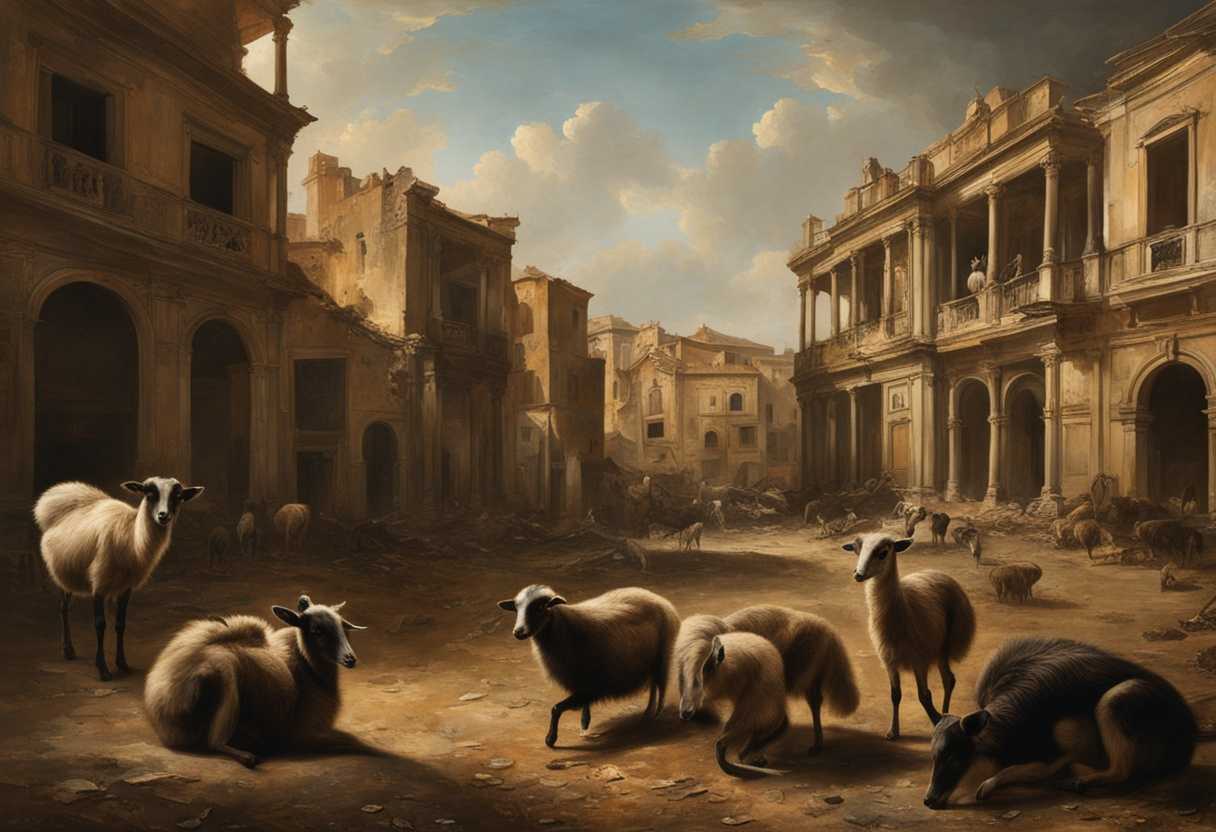
Setting the Scene for Isaiah 13:19-22
In Isaiah chapter 13, the prophet Isaiah delivers a message of judgment against Babylon. The scene unfolds in a grand hall within the royal palace of Babylon, where King Belshazzar is holding a lavish banquet. The room is adorned with opulent decorations, including golden goblets and luxurious tapestries. The air is filled with the sounds of music and laughter as the king and his nobles indulge in feasting and revelry.
Among the guests at the banquet are the high-ranking officials of the Babylonian court, including the queen mother, the royal concubines, and the military commanders. They have gathered to celebrate their wealth and power, unaware of the impending doom that Isaiah has prophesied. As the festivities reach a crescendo, a sense of foreboding hangs in the air, foreshadowing the fall of Babylon and the judgment that will befall the kingdom.
In the midst of the revelry, a hand mysteriously appears and writes a message on the wall, foretelling the downfall of Babylon. The king is filled with fear and calls for his wise men and astrologers to interpret the writing, but none can decipher its meaning. It is in this moment of confusion and fear that the prophecy of Isaiah is fulfilled, as the kingdom of Babylon is brought to its knees by the conquering forces of the Medes and Persians.
What is Isaiah 13:19-22 about?
This verse from the book of Isaiah paints a vivid picture of the complete and utter desolation of Babylon, a once-great city that will be left abandoned and uninhabited forever. The prophecy foretells a powerful empire reduced to ruins, with no signs of life or civilization ever returning to reclaim its former glory. The vivid imagery used in this verse serves as a stark warning of the consequences of sin and pride, leading to the downfall of even the most powerful nations. We can ponder on the fleeting nature of worldly power and wealth as we reflect on this verse. It challenges us to consider the consequences of our actions and the importance of humility and righteousness in our lives. This prophecy serves as a reminder of the impermanence of earthly achievements and the need for spiritual values to guide our actions. It ultimately prompts us to contemplate our own legacy and how we choose to live our lives in alignment with God’s will.
Understanding what Isaiah 13:19-22 really means
In Isaiah 13:19-22, we delve into a prophecy against Babylon, a city renowned for its grandeur and power. This passage serves as a poignant declaration of Babylon’s impending destruction, symbolizing the collapse of human pride and arrogance. The historical backdrop involves the Babylonian Empire, once a formidable force that eventually succumbed to the Medes and Persians.
Revelation 18:2 echoes the theme of Babylon’s downfall, emphasizing the consequences of pride and idolatry. Similarly, Jeremiah 50:39-40 prophesies the desolation of Babylon, reinforcing the message of divine judgment. In Daniel 5:30-31, the capture of King Belshazzar signifies the fulfillment of prophetic warnings regarding Babylon’s fall.
The relevance of this passage to contemporary audiences lies in its reminder of the fleeting nature of human power and the ultimate sovereignty of God. It cautions against the perils of pride, arrogance, and reliance on worldly might. In today’s context, it serves as a clarion call to humility and trust in God’s plan over human accomplishments.
Consider a successful businessperson who, consumed by arrogance and unethical practices, witnesses the collapse of their empire due to poor decisions and lack of integrity. This narrative mirrors Babylon’s downfall, illustrating how pride and unethical conduct pave the path to ruin. It underscores the significance of humility and ethical behavior, aligning with the biblical admonition.
Phrases like “Babylon, the jewel of kingdoms” underscore the city’s former magnificence, accentuating the enormity of its downfall. The statement “Will be overthrown by God” signifies divine intervention and judgment, showcasing that no human power can withstand God’s will. “It will never be inhabited or lived in through all generations” denotes complete desolation, starkly contrasting with its former splendor. The imagery of “desert creatures will lie there” symbolizes utter abandonment and ruin, with nature reclaiming the once-majestic city.
Isaiah 13:19-22 stands as a poignant reminder of the repercussions of pride and the impermanence of human achievements. It urges introspection, promoting humility, ethical conduct, and trust in God’s sovereignty. By grasping the historical and prophetic context, we can glean timeless lessons from this passage, enriching our understanding of its enduring relevance.
How can we find spiritual refuge during times of turmoil?
During times of turmoil and upheaval, finding spiritual refuge can provide solace and strength. The verse from Isaiah reminds us of the importance of seeking refuge in our faith and trust in a higher power. We can find comfort and peace amidst chaos and uncertainty by turning to prayer, meditation, and reflection on scripture. Trusting in God’s guidance and wisdom can help us navigate difficult times with faith and resilience.
Additionally, finding spiritual refuge can also involve connecting with a supportive community of believers who can offer love, encouragement, and solidarity during challenging moments. Being part of a faith community allows for shared prayers, fellowship, and the opportunity to uplift one another in times of need. Together, we can find refuge in the strength of our collective faith and the power of unity in facing adversity with hope and courage. Turning inward to cultivate a sense of peace, hope, and resilience through our beliefs and practices ultimately involves seeking spiritual refuge during times of turmoil. We can find the strength and comfort needed to navigate life’s storms with grace and perseverance by grounding ourselves in our faith and connecting with others who share our spiritual journey.
Application
Delve into Isaiah 13:19-22 and grasp the weight of its warning against wrongdoing. Embrace its call to reject sin and embrace goodness in all we do. Let it steer us towards aligning our lives with what is right. Will we step up to the challenge of living in harmony with God’s desires?

Reverend Michael Johnson is an experienced Church Minister with a profound expertise in spirituality and guidance. With a serene presence and a compassionate heart, he has faithfully served his congregation for over 20 years, leading them on a spiritual journey towards inner peace and enlightenment. Reverend Johnson’s extensive knowledge of religious philosophies and profound understanding of human nature have made him a trusted confidant and mentor to many, as he seamlessly weaves his profound wisdom into life teachings. Reverend Johnson’s calming demeanor and empathetic nature continue to uplift and heal souls, nurturing a sense of unity and tranquility within his community.