
Isaiah 14:17 is about the fall of a powerful ruler who once oppressed nations, illustrating the inevitable downfall of those consumed by pride and arrogance.
17 who made the world like a desert and overthrew its cities, who did not let his prisoners go home?’
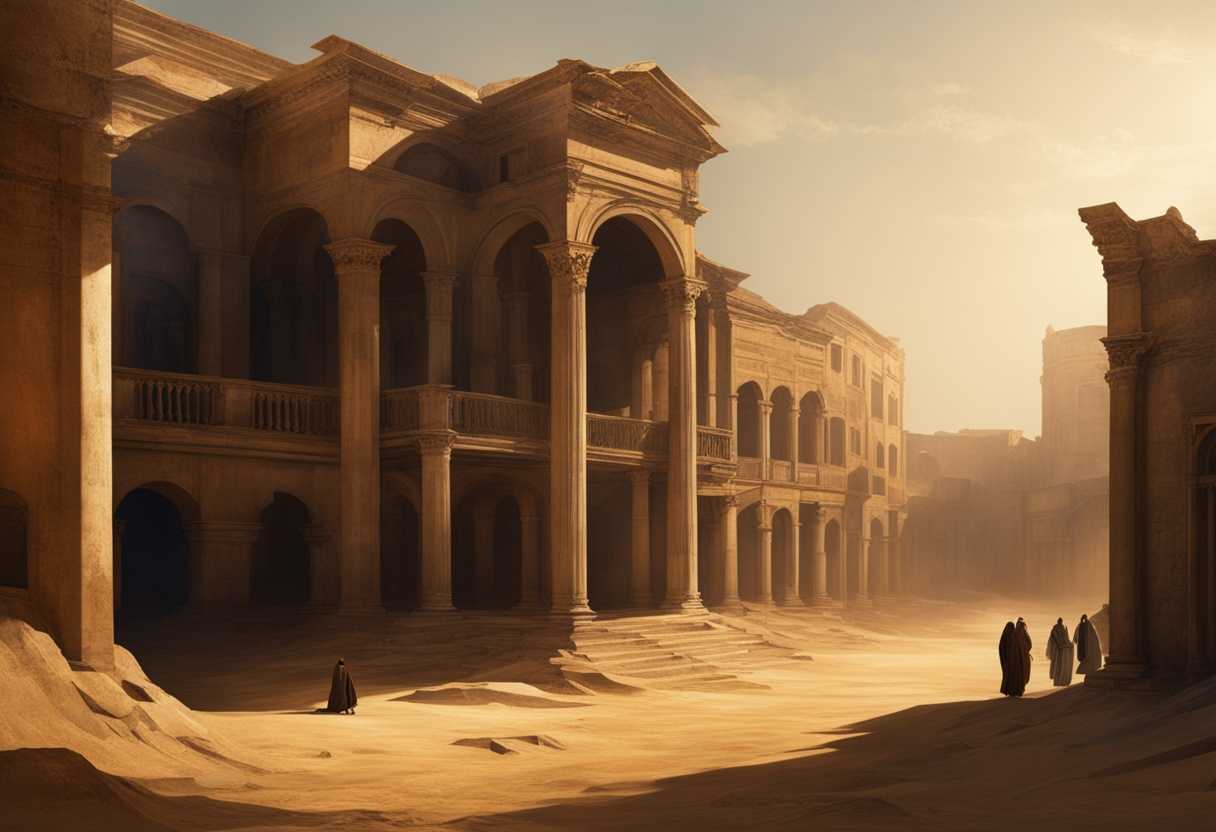
Setting the Scene for Isaiah 14:17
In Isaiah chapter 14, we find a vivid scene depicting the downfall of the king of Babylon. The setting is a grand court filled with opulence and power. The king, once a mighty ruler who exalted himself above all others, is now brought low in defeat. The atmosphere is tense as the once-proud monarch is now mocked and scorned by those around him.
Surrounding the fallen king are his former allies and subjects, now turned enemies, who have witnessed his dramatic downfall. They include his advisors, courtiers, and even neighboring rulers who once paid him tribute. The air is thick with a mix of fear, satisfaction, and uncertainty as they observe the once-mighty ruler reduced to a mere mortal.
The scene is a stark reminder of the fleeting nature of earthly power and the consequences of pride and arrogance. As the king of Babylon is humbled before all, those present are left to ponder the consequences of their own actions and the ultimate sovereignty of the divine over the affairs of humanity.
What is Isaiah 14:17 about?
This verse from the book of Isaiah paints a vivid and poignant picture of the consequences of sin and disobedience. It describes a world turned into a wilderness, with cities destroyed and captives held captive without any hope of returning home. This imagery conveys the devastating impact of turning away from God and His commands. It serves as a powerful warning about the consequences of rebellion and the importance of staying faithful to God’s word. This verse reminds us of the significance of our choices and actions as we reflect on it. Are we building up or tearing down? Are we leading others closer to God or further away? The verse challenges us to consider the consequences of our decisions and serves as a call to repentance and reconciliation with God. It invites us to examine our lives and ensure that we are walking in alignment with His will, so that we may avoid the wilderness and destruction described in the verse. Let us heed this warning and strive to walk in obedience and faithfulness, so that we may experience the abundant blessings and grace that come from living in alignment with God’s plan.
Understanding what Isaiah 14:17 really means
Isaiah 14:17, nestled within a larger narrative of the fall of the king of Babylon, serves as a poignant reflection on the consequences of pride and tyranny. The prophet Isaiah’s words paint a vivid picture of desolation and destruction wrought by the king’s actions, a stark reminder of the repercussions of unchecked ambition and cruelty. This verse is part of a broader theme in the Bible that warns against the dangers of arrogance and self-exaltation, emphasizing that pride inevitably leads to downfall.
Drawing parallels with related passages such as Isaiah 14:12-15, which describes the fall of Lucifer, and Proverbs 16:18, which warns that “pride goes before destruction,” we see a consistent message throughout Scripture about the perils of hubris. The imagery of Babylon’s fall in Revelation 18:2 further reinforces this theme, underscoring the ultimate fate of oppressive powers. These passages collectively remind us of the timeless truth that pride and injustice will ultimately be met with divine judgment.
In today’s world, where the allure of power and success often tempts individuals to prioritize self-interest over compassion, Isaiah 14:17 remains a relevant and sobering admonition. It challenges us to reflect on our own actions and motivations, prompting us to consider the impact of our choices on others. The verse serves as a moral compass, guiding us towards humility and empathy in a society that often celebrates pride and dominance.
To illustrate the enduring relevance of Isaiah 14:17, imagine a contemporary leader who rises to prominence through deceit and oppression, causing untold suffering in their quest for power. Initially appearing untouchable, their reign of tyranny eventually crumbles under the weight of their misdeeds, echoing the prophetic words of Isaiah. This modern-day parable underscores the universal truth that no one is immune to the consequences of their actions, no matter how mighty or invincible they may seem.
Delving into the specific phrases of Isaiah 14:17, such as “made the world a wilderness,” “overthrew its cities,” and “did not let his captives go home,” we uncover profound insights into the destructive nature of pride and tyranny. These expressions symbolize the ruin and devastation wrought by oppressive leadership, urging us to consider the broader implications of our choices on society. They serve as cautionary tales, reminding us of the importance of compassion, justice, and respect for the dignity of all individuals.
By contemplating the lessons encapsulated in Isaiah 14:17 and its related passages, we are invited to introspection and self-examination. Through these ancient words, we are encouraged to cultivate humility, empathy, and integrity in our interactions with others. As we navigate a world fraught with power struggles and injustices, may we heed the timeless wisdom of Scripture and strive to embody the virtues of compassion and righteousness in all our endeavors.
How does pride lead to destruction in our lives?
Pride can lead to destruction in our lives by causing us to exalt ourselves above others and above God. When we become consumed by our own importance and accomplishments, we can lose sight of our reliance on God and distance ourselves from His guidance and wisdom. This sense of self-sufficiency can lead to making decisions based solely on our desires and can ultimately result in negative consequences.
Additionally, pride can lead to a lack of humility and empathy towards others. When we are filled with pride, we may overlook the needs and feelings of those around us, leading to damaged relationships and isolation. We can unintentionally push away people who care about us and hinder our growth and development as individuals by prioritizing our own needs and agendas above all else. Allowing pride to reign in our lives can ultimately result in a sense of emptiness and fractured connections with others.
Application
Leave behind the chains of pride and authority. Embrace humility and surrender to God’s guidance. Dare to let go of control and embrace His sovereignty. It’s time to renew our spirits and be open to divine wisdom. Are you ready to humbly follow in faith?

Reverend Michael Johnson is an experienced Church Minister with a profound expertise in spirituality and guidance. With a serene presence and a compassionate heart, he has faithfully served his congregation for over 20 years, leading them on a spiritual journey towards inner peace and enlightenment. Reverend Johnson’s extensive knowledge of religious philosophies and profound understanding of human nature have made him a trusted confidant and mentor to many, as he seamlessly weaves his profound wisdom into life teachings. Reverend Johnson’s calming demeanor and empathetic nature continue to uplift and heal souls, nurturing a sense of unity and tranquility within his community.