
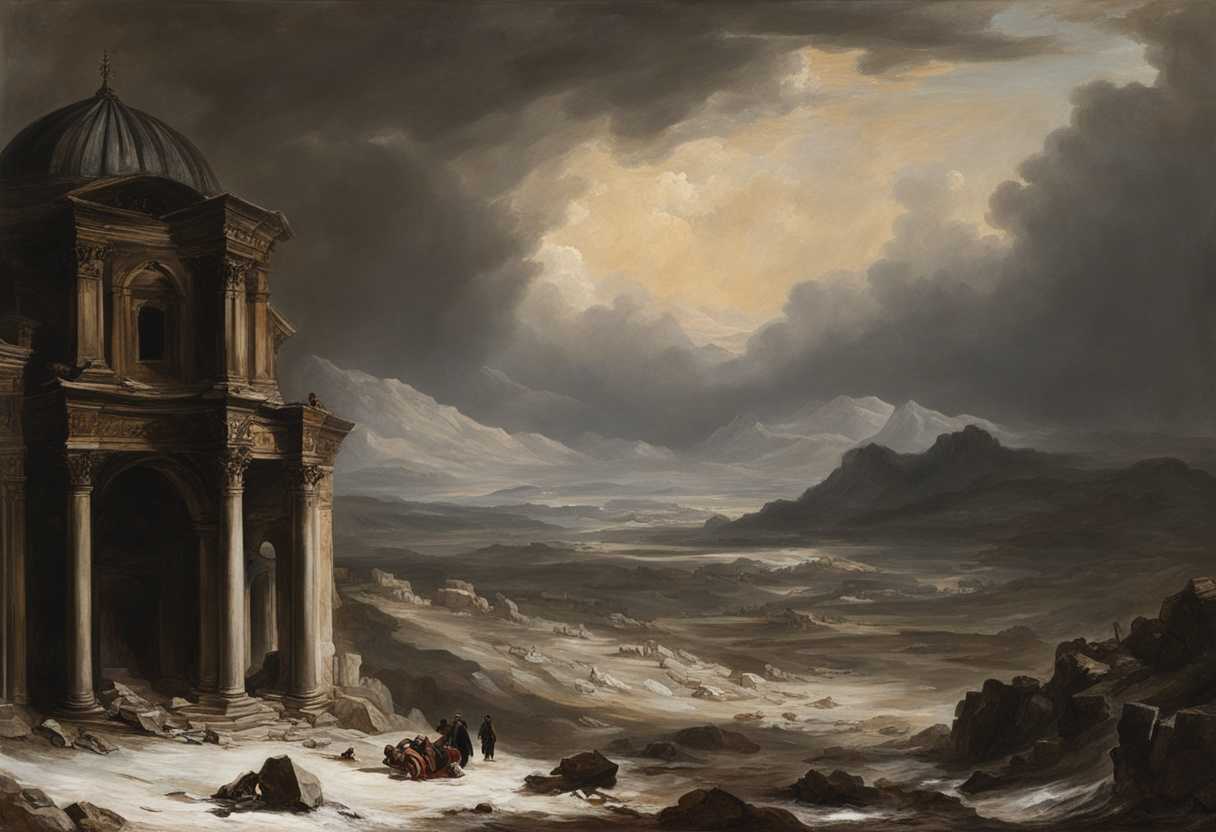
1 An oracle concerning Damascus. Behold, Damascus will cease to be a city and will become a heap of ruins.
2 The cities of Aroer are deserted; they will be for flocks, which will lie down, and none will make them afraid.
3 The fortress will disappear from Ephraim,
and the kingdom from Damascus;
and the remnant of Syria will be
like the glory of the children of Israel,
declares the Lord of hosts.
4 “And in that day the glory of Jacob will be brought low,
and the fat of his flesh will grow lean.”
5 And it shall be as when the reaper gathers standing grain and his arm harvests the ears, and as when one gleans the ears of grain in the Valley of Rephaim.
6 Gleanings will be left in it, as when an olive tree is beaten— two or three berries in the top of the highest bough, four or five on the branches of a fruit tree, declares the Lord God of Israel.
7 In that day man will look to his Maker, and his eyes will look on the Holy One of Israel.
8 They will not look to the altars, the work of their hands, and they will not have regard for what their fingers have made, either the Asherim or the altars of incense.
9 In that day their strong cities will be like the deserted places of the wooded heights and the hilltops, which they deserted because of the children of Israel, and there will be desolation.
10 For you have forgotten the God of your salvation and have not remembered the Rock of your refuge; therefore, though you plant pleasant plants and sow the vine-branch of a stranger,
11 In the day you plant, you fence it in; and in the morning you sow your seed, but the harvest will be a heap in a day of grief and incurable pain.
12 Ah, the thunder of many peoples;
they thunder like the thundering of the sea!
Ah, the roar of nations;
they roar like the roaring of mighty waters!
13 The nations roar like the roaring of many waters, but he will rebuke them, and they will flee far away, chased like chaff on the mountains before the wind and whirling dust before the storm.
14 In the evening, behold, terror! Before morning, they are no more! This is the portion of those who loot us, and the lot of those who plunder us.
The True Meaning of Isaiah 17
The Book of Isaiah is one of the most significant prophetic works in the Bible, written by the prophet Isaiah during the 8th century BCE. Isaiah provides a prophecy concerning the fate of Damascus and the northern kingdom of Israel in this particular chapter.
The chapter opens with a foreboding declaration about the impending destruction of Damascus, a once-powerful city. This prophecy is particularly noteworthy, as it foreshadows the eventual downfall of the northern kingdom, which had formed an alliance with Damascus against the Assyrian Empire. The chapter also touches on the consequences of this alliance, as the people of Israel are warned of the judgment that will befall them for their unfaithfulness to God.
Throughout the passage, Isaiah makes references to other biblical events and figures, such as the judgment of Ephraim (the northern kingdom) and the remnant of Jacob, which echoes the themes of divine judgment and the preservation of a faithful remnant found in other prophetic books, such as Jeremiah and Ezekiel.
Isaiah 17:1-3
Damascus will no longer be a city but will become a heap of ruins, as prophesied in Isaiah 17:1-3. The cities of Aroer will be deserted and left to flocks, which will lie down, with no one to make them afraid. The fortified city will disappear from Ephraim, and royal power from Damascus; the remnant of Aram will be like the glory of the Israelites,’ declares the Lord Almighty.”
Here, the prophet Isaiah delivers a prophecy against Damascus, the capital of Syria. He foretells its destruction and transformation into a heap of ruins, a fate that came true over the centuries through various conquests and wars. The mention of Aroer, a city on the northern bank of the Arnon River, signifies widespread desolation and abandonment. This imagery of deserted cities and flocks without fear paints a picture of utter devastation and loss of human habitation.
The downfall of Damascus and the loss of royal power from Ephraim symbolize the consequences of turning away from God. Throughout the Bible, we see examples of cities and nations facing destruction due to their disobedience and sin. The fall of powerful cities serves as a warning to all nations about the importance of staying faithful to God and living in accordance with His will. The imagery of once glorious nations being reduced to remnants highlights the fleeting nature of human power and the ultimate supremacy of God’s will. Prophecies like this one in Isaiah 17 remind us of God’s sovereignty over all nations and His ability to bring judgment upon those who reject Him in the larger context of the Bible. It also emphasizes the importance of repentance and turning back to God to avoid the consequences of disobedience. Just as Damascus faced destruction for its sins, individuals and nations today are called to reflect on their actions and seek forgiveness and reconciliation with God. This passage serves as a timeless message of the repercussions of straying from God’s path and the hope found in repentance and returning to His grace.
Isaiah 17:4-6
The glory of Jacob will wane, and the fatness of his flesh will grow lean in that day as stated in Isaiah 17:4-6.
It shall be as when the reaper gathers the standing grain and reaps the heads with his arm,
And it shall be as he who gathers heads of grain in the Valley of Rephaim.
Yet gleaning grapes will be left in it, like the shaking of an olive tree,
Two or three olives at the top of the uppermost bough,
Four or five in its most fruitful branches,” says the Lord God of Israel. Isaiah in this passage is prophesying about the judgment that will come upon the people of Jacob (representing Israel) due to their sins and disobedience. The imagery used here is of agricultural harvesting, where the once glorious and prosperous nation of Israel will become weakened and depleted, akin to the harvesting of grain and olives until only a small remnant is left. This impending judgment is a consequence of their turning away from God and prioritizing worldly pursuits over spiritual faithfulness.
The mention of the Valley of Rephaim here is symbolic, as it was a place known for its giants in ancient times. This reference may allude to the formidable enemies that Israel will face in the future due to their downfall and vulnerability. The dwindling of Jacob’s glory and prosperity signifies a loss of God’s favor and protection, leaving them exposed to external threats and hardships.
The idea of gleaning grapes and olives with only a few left symbolizes the idea of a remnant. Throughout the Bible, the concept of a remnant is recurrent, signifying a small group of faithful believers who remain true to God amidst widespread unfaithfulness and judgment. This remnant represents hope for the future restoration of God’s people and His faithfulness to His promises, even in the midst of divine judgment. These verses tie into the broader themes of repentance, judgment, and restoration in the larger context of the Book of Isaiah. The prophet Isaiah frequently warned Israel of the consequences of their sin and called for repentance, yet also offered hope in the promise of restoration and redemption through God’s mercy and faithfulness. This passage serves as a reminder that while judgment for disobedience is inevitable, there is always the hope of a remnant being preserved and ultimately restored by God’s grace.
Isaiah 17:7-8
People will look to their Maker and turn their eyes to the Holy One of Israel in that day, as the verse in Isaiah 17:7-8 reads. They will not look to the altars, the work of their hands, and they will have no regard for the Asherah poles and the incense altars their fingers have made.” These two verses contain significant messages regarding the spiritual turning of the people back to God.
The first part of the passage speaks of a transformation that will occur “in that day,” a common phrase in the Bible referring to a time of judgment or reckoning. This turning point signifies a shift in the people’s focus from worshiping idols and man-made altars to seeking their Maker, the Holy One of Israel. It emphasizes the importance of true worship and recognizing God’s sovereignty above all else.
The mention of “altars, the work of their hands” highlights the folly of placing trust in human efforts and creations rather than in the one true God. Throughout the Bible, there are numerous instances where the Israelites strayed from worshipping God alone and instead turned to idols and false gods. This passage serves as a reminder of the dangers of idolatry and the need to prioritize a genuine relationship with the Creator.
The reference to Asherah poles and incense altars alludes to the pagan practices that were prevalent in ancient Israel. Asherah poles were associated with the worship of a Canaanite goddess, while incense altars were used in rituals that went against God’s commands. The people demonstrate a rejection of their sinful ways and a return to the true faith by disregarding these symbols of false worship. Isaiah 17:7-8 emphasizes the importance of genuine, heartfelt worship directed towards God. It conveys a message of repentance, turning away from worldly distractions and focusing on the Holy One of Israel. This theme of spiritual renewal and restoration echoes throughout the Bible, from the Israelites’ cycles of disobedience and repentance in the Old Testament to the call for genuine faith in the New Testament. We, as believers today, can learn from the warnings and promises found in these verses. We are reminded to examine our own hearts and ensure that our worship is sincere and directed towards God alone. Just as the people in Isaiah’s time were called to turn back to their Maker, we are encouraged to seek a deep, authentic relationship with the Holy One of Israel, putting aside any idols or distractions that may hinder our faith.
Isaiah 17:9-11
His strong cities shall be as a forsaken bough and an uppermost branch, which they left because of the children of Israel, and there shall be desolation on that day. Thou shalt plant pleasant plants and set it with strange slips because thou hast forgotten the God of thy salvation and hast not been mindful of the rock of thy strength. Judgment and desolation will come upon the cities and people who have turned away from God in this passage. The strong cities being compared to forsaken boughs indicates that even the fortified and seemingly secure places will crumble and be left in ruin, much like branches that are discarded because they no longer bear fruit. This is a powerful metaphor for the consequences of forsaking God’s ways.
The mention of planting pleasant plants with strange slips symbolizes the people’s efforts to find security and prosperity through their own means, rather than relying on God. They may try to cultivate a life of comfort and ease, but ultimately, their harvest will turn to grief and sorrow. This serves as a warning against putting trust in material possessions or worldly success, rather than in God.
The theme of forgetting God and facing the consequences of neglecting His guidance is a recurring one throughout the Bible. Cities and nations in the Old Testament were brought to ruin due to their disobedience and turning away from God. For instance, the destruction of Sodom and Gomorrah in Genesis 19 serves as a stark reminder of the judgment that falls upon those who forsake God’s ways. The parable of the rich fool in Luke 12:16-21 in the New Testament also conveys a similar message about the folly of putting one’s trust in worldly possessions and neglecting to cultivate a relationship with God. The rich man in the parable hoards his wealth and plans for a life of ease, but he is ultimately called a fool by God because he is not rich toward God. The passage in Isaiah 17:9-11 underscores the importance of staying faithful to God and not being swayed by the temptations of worldly pleasures or false security. It serves as a reminder that true fulfillment and lasting security can only be found in God, and that turning away from Him will only lead to desolation and sorrow.
Isaiah 17:12-14
Isaiah in Isaiah 17:12-14 speaks of a time when nations will be like the rushing of many waters. This imagery conveys the idea of tumultuous and overwhelming nations, their noise and power likened to the roaring sea. The peoples will be in an uproar, like the roaring of the seas, they will be restless like the crashing waves. This chaos and disturbance among the nations reflect a state of disorder and turmoil, where nations are in constant conflict and upheaval.
The verse also portrays a scene where nations will be like the raging of mighty waters overflowing. This flood-like imagery suggests a sense of devastation and destruction that will come upon these nations. Just as a flood overwhelms everything in its path, these nations will also face overwhelming calamity and ruin. Despite their strength and power, they will be unable to withstand the forces that come against them. This serves as a warning of the consequences that await those who stray from God’s ways and rely on their own might and alliances for security.
Furthermore, the passage describes the situation when God rebukes these nations, and they flee far away, chased like chaff on the mountains before the wind and whirling dust before a storm. This imagery conveys a sense of God’s ultimate judgment and the futility of human power and protection in the face of divine retribution. The nations, likened to chaff and dust, will be scattered and driven away by the powerful wind of God’s judgment. This reflects the biblical theme of God’s sovereignty and the insignificance of human strength when compared to His might. These verses in Isaiah 17 serve as a warning to the nations, particularly to Israel which is also addressed in this chapter. Isaiah prophesied against the nations surrounding Israel, foretelling their downfall and destruction due to their disobedience and reliance on alliances with other nations instead of trusting in God. This message of judgment and warning is a recurring theme throughout the Bible, highlighting the consequences of turning away from God and the importance of placing one’s trust and faith in Him alone. The concept of nations facing judgment for their sins and disobedience is not unique to this passage in Isaiah in the broader scope of the Bible. Throughout the Old Testament, we see numerous examples of nations facing God’s judgment for their transgressions, such as the destruction of Sodom and Gomorrah in Genesis 19 or the fall of Babylon in Isaiah 13. These accounts serve as reminders of the righteousness and justice of God, as well as the need for repentance and obedience to avoid His judgment. God is the ultimate authority and His judgment is sure, ultimately pointing to the overarching biblical truth in Isaiah 17 that calls for all nations to turn to Him in repentance and faith.
After Isaiah 17
The people of Damascus had turned away from the Lord, and their city was left in ruins. The prophet Isaiah warned that the once-prosperous city would be reduced to a mere heap of stones. Yet, even in the midst of this devastation, a glimmer of hope remained. The chapter closed with a promise that a remnant would be spared, a small but faithful group who would turn back to the Lord and find redemption. We must heed the lessons of Damascus as we move forward. When we stray from the path of righteousness, the consequences can be severe. But the Lord, in His infinite mercy, always leaves a way for us to return to Him. The people of Judah faced a similar reckoning in the next chapter, and the choices they made would determine their fate.

Reverend Michael Johnson is an experienced Church Minister with a profound expertise in spirituality and guidance. With a serene presence and a compassionate heart, he has faithfully served his congregation for over 20 years, leading them on a spiritual journey towards inner peace and enlightenment. Reverend Johnson’s extensive knowledge of religious philosophies and profound understanding of human nature have made him a trusted confidant and mentor to many, as he seamlessly weaves his profound wisdom into life teachings. Reverend Johnson’s calming demeanor and empathetic nature continue to uplift and heal souls, nurturing a sense of unity and tranquility within his community.