
Isaiah 1:4-6 is about a metaphorical depiction of the sinful state of the people of Israel, likened to a body covered in bruises and sores, highlighting their rebellion and neglect of God’s ways.
4 Ah, sinful nation,
a people laden with iniquity,
offspring of evildoers,
children who deal corruptly!
They have forsaken the Lord,
they have despised the Holy One of Israel,
they are utterly estranged.
5 Why will you still be struck down? Why will you continue to rebel? The whole head is sick, and the whole heart faint.
6 From the sole of the foot even to the head,
there is no soundness in it,
but bruises and sores
and raw wounds;
they are not pressed out or bound up
or softened with oil.
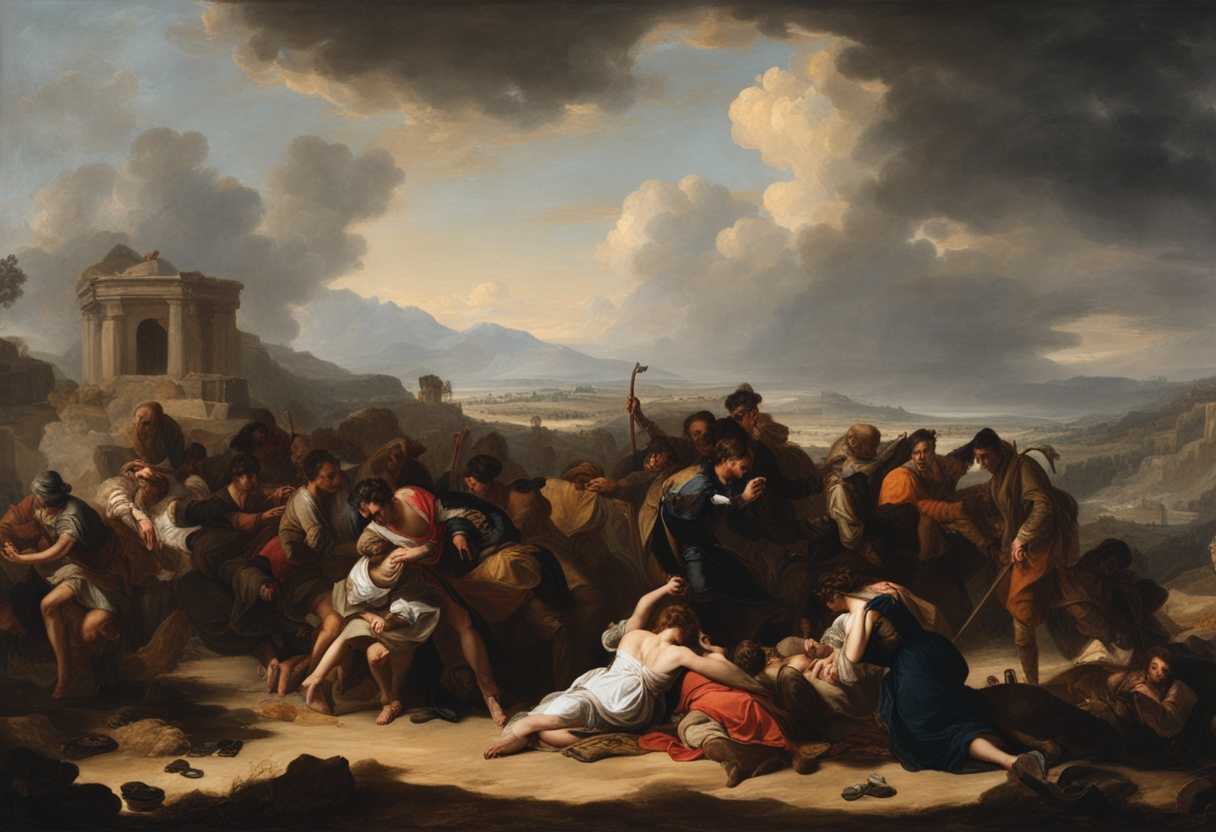
Setting the Scene for Isaiah 1:4-6
The scene in Isaiah 1:4-6 takes place in the city of Jerusalem, the capital of the Kingdom of Judah. The prophet Isaiah is addressing the people of Judah, delivering a message from God. The setting is a bustling marketplace, with merchants selling their goods and people going about their daily activities. The air is filled with the sounds of bargaining and the smells of various spices and foods.
Isaiah stands in the center of the marketplace, his voice booming as he calls out to the people of Judah. The crowd gathers around him, curious to hear what the prophet has to say. Among the crowd are priests, merchants, farmers, and ordinary citizens, all listening intently to Isaiah’s words. The prophet’s message is one of rebuke, as he chastises the people for their disobedience and lack of faithfulness to God.
As Isaiah speaks, the sun beats down on the city, casting long shadows across the marketplace. The people shift uncomfortably, feeling the weight of Isaiah’s words. The scene is tense, as the prophet’s message challenges the people to repent and turn back to God. The atmosphere is charged with a sense of urgency, as Isaiah implores the people to change their ways before it is too late.
What is Isaiah 1:4-6 about?
When God speaks of Israel as a sick body in need of healing, He is expressing His deep sorrow and concern for His people’s spiritual condition. Just like a sick person requires care, attention, and treatment to regain their health, God sees the waywardness and disobedience of Israel as a spiritual ailment that needs to be addressed. This metaphor highlights God’s desire for restoration and reconciliation with His chosen people.
Imagine a loving parent watching their child make harmful choices and deviate from the right path. That parent’s heart would ache, wanting nothing more than to see their child return to a healthy and fulfilling life. Similarly, God sees His people straying and rebelling against Him, and His compassion shines through as He longs for their repentance and renewal. This verse underscores the enduring love and unwavering commitment God has towards His people, even in the face of their unfaithfulness.
Understanding what Isaiah 1:4-6 really means
Introduction
The Book of Isaiah, penned by the prophet Isaiah, is a poignant message directed towards the people of Judah and Jerusalem. In this passage, we witness a heartfelt lament over the sinful state of the nation, coupled with a compelling call to acknowledge their spiritual destitution.
Key Phrases and Their Meanings
“Ah, sinful nation” echoes a cry of sorrow and disappointment, underscoring the collective guilt that burdens the people. The phrase “A people laden with iniquity” vividly portrays the weight of sin that the nation carries on its shoulders. “Offspring of evildoers, children who deal corruptly” signifies the pervasive and generational nature of their transgressions. “They have forsaken the Lord, they have despised the Holy One of Israel” points directly to the root cause of their spiritual decay—turning away from God. The rhetorical questions, “Why will you still be struck down? Why will you continue to rebel?” urge introspection and a call to repentance. “The whole head is sick, and the whole heart faint” metaphorically illustrates the comprehensive moral and spiritual decay within the nation. “From the sole of the foot even to the head, there is no soundness in it” emphasizes the totality of their corruption. “Bruises and sores and raw wounds” symbolize the visible and painful consequences of their sins.
Related Biblical Passages
In Jeremiah 2:13, we find a parallel warning: “For my people have committed two evils: they have forsaken me, the fountain of living waters, and hewed out cisterns for themselves, broken cisterns that can hold no water.” Romans 3:23 reinforces the universal reality of sin: “For all have sinned and fall short of the glory of God.” Hosea 4:1-2 paints a grim picture akin to Isaiah’s description, highlighting the moral decay within the land.
Relevance to People Today
This passage beckons us to engage in spiritual reflection, prompting individuals and communities to scrutinize their lives for areas where they may have strayed from God. It serves as a resounding call to repentance, mirroring the ancient plea for recognition of sins and a return to God. The vivid portrayal of the consequences of sin urges us to seek healing and restoration through God’s grace.
Anecdote for Illustration
Consider a family entrenched in a cycle of unhealthy habits—poor diet, lack of exercise, and disregard for medical advice. Over time, these choices lead to severe health issues for each family member. A doctor’s lament might echo, “Why persist in harmful ways when you know the damage they cause?” Similarly, Isaiah’s lament implores us to recognize the self-destructive nature of sin and to pursue a righteous, healthier path.
Conclusion
Isaiah 1:4-6 stands as a poignant reminder of the imperative to remain steadfast in our faithfulness to God and the peril of allowing sin to infiltrate our lives. It beckons us to introspection, repentance, and a renewed dedication to living in alignment with God’s will.
What kind of sacrifices does God desire from us?
God desires sacrifices that come from a heart of sincerity and obedience. God expresses His discontent with the superficial and insincere sacrifices being offered by the people in the mentioned verses of Isaiah. He desires sacrifices that are rooted in genuine devotion and obedience to His commandments rather than outward displays that lack true commitment and righteousness. God desires sacrifices that accompany acts of justice, mercy, and compassion. God rebukes the people in the same passage for their lack of care for the oppressed and marginalized in society. He emphasizes the importance of not only rituals and ceremonies but also of living out the values of justice and mercy in dealing with others. God ultimately desires sacrifices that lead to a transformed and righteous life. The sacrifices He desires are not simply ritualistic offerings but a way of living that reflects a heart devoted to Him and His ways. We, as believers, are called to offer sacrifices of praise, obedience, and selflessness, aligning our lives with God’s will and His desire for justice, mercy, and righteousness.
Application
Reflect on your actions and align them with your beliefs. Recognize your faults and commit to seeking forgiveness and making amends. Let the words of Isaiah compel you to grow spiritually and live authentically. Will you take this opportunity to evaluate your path and take steps towards a deeper connection with your faith?

Reverend Michael Johnson is an experienced Church Minister with a profound expertise in spirituality and guidance. With a serene presence and a compassionate heart, he has faithfully served his congregation for over 20 years, leading them on a spiritual journey towards inner peace and enlightenment. Reverend Johnson’s extensive knowledge of religious philosophies and profound understanding of human nature have made him a trusted confidant and mentor to many, as he seamlessly weaves his profound wisdom into life teachings. Reverend Johnson’s calming demeanor and empathetic nature continue to uplift and heal souls, nurturing a sense of unity and tranquility within his community.